• HOME
  • NEWS
  • EXPLORE
    • CAREER
      • Companies
      • Jobs
    • EVENTS
    • iGEM
      • News
      • Team
    • PHOTOS
    • VIDEO
    • WIKI
  • BLOG
  • COMMUNITY
    • FACEBOOK
    • INSTAGRAM
    • TWITTER
Thursday, April 16, 2026
BIOENGINEER.ORG
No Result
View All Result
  • Login
  • HOME
  • NEWS
  • EXPLORE
    • CAREER
      • Companies
      • Jobs
        • Lecturer
        • PhD Studentship
        • Postdoc
        • Research Assistant
    • EVENTS
    • iGEM
      • News
      • Team
    • PHOTOS
    • VIDEO
    • WIKI
  • BLOG
  • COMMUNITY
    • FACEBOOK
    • INSTAGRAM
    • TWITTER
  • HOME
  • NEWS
  • EXPLORE
    • CAREER
      • Companies
      • Jobs
        • Lecturer
        • PhD Studentship
        • Postdoc
        • Research Assistant
    • EVENTS
    • iGEM
      • News
      • Team
    • PHOTOS
    • VIDEO
    • WIKI
  • BLOG
  • COMMUNITY
    • FACEBOOK
    • INSTAGRAM
    • TWITTER
No Result
View All Result
Bioengineer.org
No Result
View All Result
Home NEWS Science News

Killing time: Study sheds light on phages and precision cell destruction

Bioengineer by Bioengineer
January 10, 2017
in Science News
Reading Time: 2 mins read
0
Share on FacebookShare on TwitterShare on LinkedinShare on RedditShare on Telegram
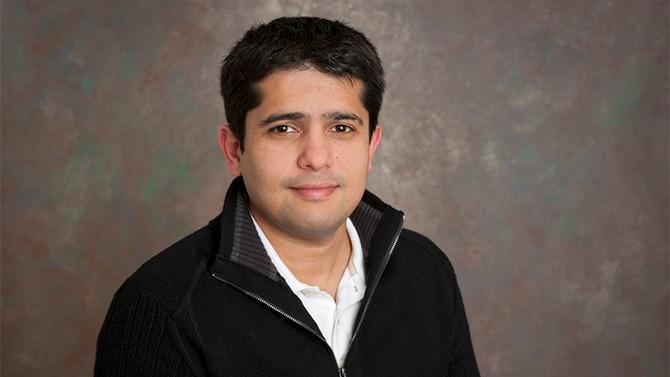
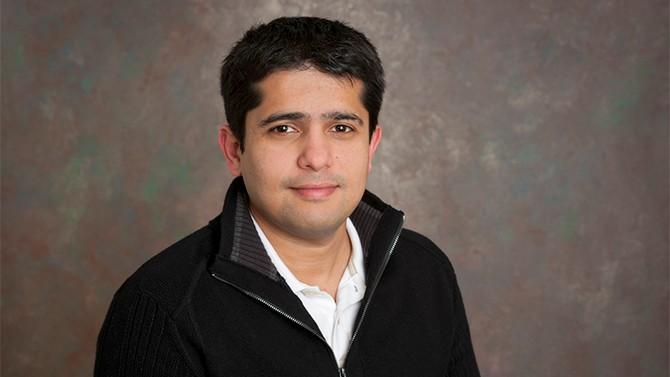
IMAGE

Credit: Evan Krape/University of Delaware

Phage therapy, which exploits the ability of certain viruses to infect and replicate within bacteria, shows promise for treating antibiotic-resistant bacterial infections.

But the design of such therapies depends on a solid understanding of how phages do their work.

"Phages can kill the cell immediately, or they can become dormant and kill it later," says Abhyudai Singh, assistant professor of electrical engineering at the University of Delaware.

"The data reveal a high level of precision in the kill time," he adds. "It takes about one hour for the virus to complete the process, but questions remain about how the cells control this precision in timing."

Singh and John Dennehy from Queens College and the Graduate Center of the City University of New York have collaborated on research to shed light on the molecular basis for this process.

Their findings appear in a paper, "A First-Passage Time Approach to Controlling Noise in the Timing of Intracellular Events," published online in the Proceedings of the National Academy of Sciences on Jan. 9.

Singh and doctoral student Khem Raj Ghusinga provided the theoretical contribution and Dennehy supplied the biological foundation for the work, which has important implications for medicine.

"The problem is that while there is an overall precision to this process, there is also inherent randomness from cell to cell," Singh says. "So our mathematical model is basically a framework, or model system, that brings order to this randomness and provides general biological insights that can be applied in the laboratory."

He explains that proteins called holins are essential for lysing, or destroying, the cell. They accumulate on the cell membrane, reach a critical threshold, and then form holes that rupture the cell and release phage "babies." But the same gene that expresses holin also expresses another protein called antiholin.

"It's curious that nature would make two versions of a protein that cancel each other out," Singh says. "But it turns out that it's actually antiholin which makes the timing precise. If we remove antiholin, the variation in the process increases."

Singh says that the formulas developed in the work shed counterintuitive insights into the regulatory mechanisms needed for scheduling an event at a precise time with minimal fluctuations.

"While we expected feedback to be an important part of the triggering mechanism, it turns out that negative feedback regulation can actually amplify noise, or confusion, in event timing," he says. "So in some cases, such as with our work on lysis in bacteriophages, precision in timing is obtained with no feedback at all."

"We believe that the analytical results and insights we obtained in this work have broader implications for timing phenomenon in chemical kinetics, ecological modeling and statistical physics."

###

Media Contact

Peter Bothum
[email protected]
302-831-1418
@UDResearch

http://www.udel.edu

############

Story Source: Materials provided by Scienmag

Share12Tweet8Share2ShareShareShare2

Related Posts

Cytoplasmic Lattices: Massive Storage in Oocytes

Cytoplasmic Lattices: Massive Storage in Oocytes

April 16, 2026

Pink-1 Mutation Sparks Gut, Brain Cell Damage

April 16, 2026

Ultra-Stretchable, Anti-Freezing Hydrogel Electrolytes Cross-Linked with Liquid Metal Particle Initiators for Advanced Soft Energy Storage Devices

April 16, 2026

Amplifying Voices: Advances in Vocal Fold Regeneration

April 16, 2026
Please login to join discussion

POPULAR NEWS

  • Scientists Investigate Possible Connection Between COVID-19 and Increased Lung Cancer Risk

    61 shares
    Share 24 Tweet 15
  • Boosting Breast Cancer Risk Prediction with Genetics

    47 shares
    Share 19 Tweet 12
  • Popular Anti-Aging Compound Linked to Damage in Corpus Callosum, Study Finds

    45 shares
    Share 18 Tweet 11
  • NSF funds machine-learning research at UNO and UNL to study energy requirements of walking in older adults

    94 shares
    Share 38 Tweet 24

About

We bring you the latest biotechnology news from best research centers and universities around the world. Check our website.

Follow us

Recent News

Cytoplasmic Lattices: Massive Storage in Oocytes

Pink-1 Mutation Sparks Gut, Brain Cell Damage

Ultra-Stretchable, Anti-Freezing Hydrogel Electrolytes Cross-Linked with Liquid Metal Particle Initiators for Advanced Soft Energy Storage Devices

Subscribe to Blog via Email

Enter your email address to subscribe to this blog and receive notifications of new posts by email.

Join 79 other subscribers
  • Contact Us

Bioengineer.org © Copyright 2023 All Rights Reserved.

Welcome Back!

Login to your account below

Forgotten Password?

Retrieve your password

Please enter your username or email address to reset your password.

Log In
No Result
View All Result
  • Homepages
    • Home Page 1
    • Home Page 2
  • News
  • National
  • Business
  • Health
  • Lifestyle
  • Science

Bioengineer.org © Copyright 2023 All Rights Reserved.