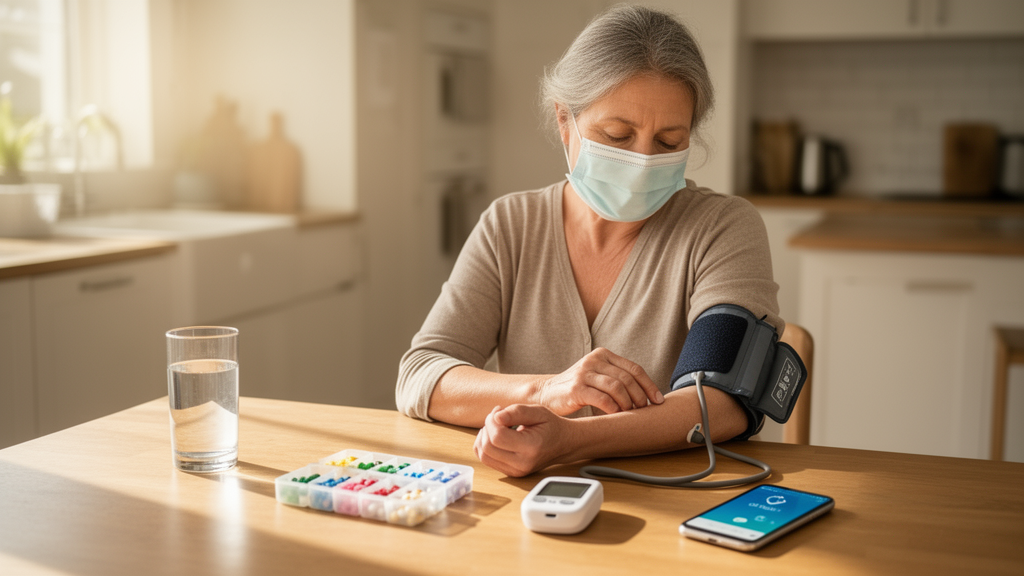
Kidney transplant recipients surveyed during the COVID-19 pandemic reported relatively high levels of self-management, according to a cross-sectional study published in BMC Nephrology. The findings, based on 84 patients followed in a nephrology outpatient clinic, also identify several factors linked to better self-management scores, including education level, dialysis history before transplantation, and pandemic-related behaviours such as taking protective measures and staying on treatment.
Renal transplant patients face a high risk of infection because of the immunosuppressive therapy they must take to keep their bodies from rejecting the donor organ. The researchers note that the pandemic disrupted these individuals’ access to healthcare services, which raised the importance of the skills patients use to manage their own condition day to day. That context motivated the study’s central question: how well did people who had undergone kidney transplantation manage their health during a public health crisis?
The study population consisted of all patients who had undergone renal transplantation and were followed up in the nephrology outpatient clinic. From this population, the researchers enrolled 84 patients who had received a transplant at least one month before joining the study and who agreed to participate voluntarily. The sample was calculated with a significance level of α = 0.05 and a statistical power of 1-β = 92 percent.
Data collection relied on two instruments: a questionnaire prepared from the literature and the Self-Management Scale for Kidney Transplant Recipients, abbreviated KTR-SMS. This scale captures three dimensions of self-management. The first, early detecting and coping with abnormalities after kidney transplantation, measures how well patients recognise and respond to problems that can arise after surgery. The second covers self-management behaviour in daily living and stress management. The third assesses self-monitoring, the routine tracking of one’s own condition.
The results showed mean scores of 17.10 ± 4.51 for early detecting and coping with abnormalities, 12.70 ± 2.72 for self-management behaviour in daily living and stress management, and 6.94 ± 2.45 for self-monitoring. The total KTR-SMS mean score was 36.75 ± 7.70. The authors concluded that these subscale and total mean scores were relatively high, reflecting a favourable level of self-management engagement among the kidney transplant recipients studied.
Several patient characteristics were associated with differences in scores. The total mean score differed significantly by educational level (p = 0.020), although not in a linear pattern: patients with primary school education scored significantly higher than those with secondary or high school education (p = 0.036). This non-linear relationship is a notable detail, since it does not fit the simple expectation that more formal schooling translates directly into better self-management.
Scores were also higher among patients who had not received dialysis treatment before transplantation, who had been informed about the pandemic, who took the necessary protective measures during that period, who did not interrupt their treatment, who made no change to their treatment, and who received support for their care during the pandemic. All of these differences were statistically significant at p < 0.05. Together, they suggest that information, protective behaviour, treatment continuity and social or practical support moved together with stronger self-management in this sample.
Because the study is cross-sectional, it captures a single point in time and cannot establish cause and effect. The associations reported here describe differences between groups of patients at the time of data collection, not proven causal effects of education, dialysis history or pandemic behaviour on self-management ability. The sample of 84 volunteers from a single outpatient clinic also limits how far the findings can be generalised to all kidney transplant recipients.
On the basis of their results, the researchers recommend that the self-management level of kidney transplant patients be evaluated under special circumstances such as a pandemic, and that necessary measures be taken where needed. Given the infection vulnerability created by immunosuppressive therapy and the demonstrated disruption of healthcare access during the crisis, the authors frame routine assessment of self-management as a practical step for protecting this patient group when normal care pathways come under strain.
Its distinctive contribution is the snapshot it provides of self-management during a public health emergency, along with the specific patient factors that accompanied higher scores in this cohort.
Subject of Research: Self-management levels and associated factors among kidney transplant recipients during the pandemic
Article Title: Self-management and associated factors in kidney transplant recipients: a cross-sectional study in a public health crisis context
Article References: Güzel, H., Serçe, S., Ovayolu, Ö., & Ovayolu, N. (2026). Self-management and associated factors in kidney transplant recipients: a cross-sectional study in a public health crisis context. BMC Nephrology. https://doi.org/10.1186/s12882-026-05461-4
Image Credits: AI Generated
DOI: 10.1186/s12882-026-05461-4
Keywords: kidney transplant, self-management, KTR-SMS, cross-sectional study, pandemic, immunosuppressive therapy, nephrology, dialysis, patient education, BMC Nephrology, associated, factors
News Source: Kristina Jarvis. (October 29, 2026). Kidney transplant recipients showed strong self-management during the pandemic, study finds. Scienmag.