• HOME
  • NEWS
  • EXPLORE
    • CAREER
      • Companies
      • Jobs
    • EVENTS
    • iGEM
      • News
      • Team
    • PHOTOS
    • VIDEO
    • WIKI
  • BLOG
  • COMMUNITY
    • FACEBOOK
    • INSTAGRAM
    • TWITTER
Saturday, April 4, 2026
BIOENGINEER.ORG
No Result
View All Result
  • Login
  • HOME
  • NEWS
  • EXPLORE
    • CAREER
      • Companies
      • Jobs
        • Lecturer
        • PhD Studentship
        • Postdoc
        • Research Assistant
    • EVENTS
    • iGEM
      • News
      • Team
    • PHOTOS
    • VIDEO
    • WIKI
  • BLOG
  • COMMUNITY
    • FACEBOOK
    • INSTAGRAM
    • TWITTER
  • HOME
  • NEWS
  • EXPLORE
    • CAREER
      • Companies
      • Jobs
        • Lecturer
        • PhD Studentship
        • Postdoc
        • Research Assistant
    • EVENTS
    • iGEM
      • News
      • Team
    • PHOTOS
    • VIDEO
    • WIKI
  • BLOG
  • COMMUNITY
    • FACEBOOK
    • INSTAGRAM
    • TWITTER
No Result
View All Result
Bioengineer.org
No Result
View All Result
Home NEWS Science News Chemistry

Key technology for mass-production of lignin-bio-aviation fuels for reducing greenhouse gas

Bioengineer by Bioengineer
July 17, 2020
in Chemistry
Reading Time: 3 mins read
0
IMAGE
Share on FacebookShare on TwitterShare on LinkedinShare on RedditShare on Telegram

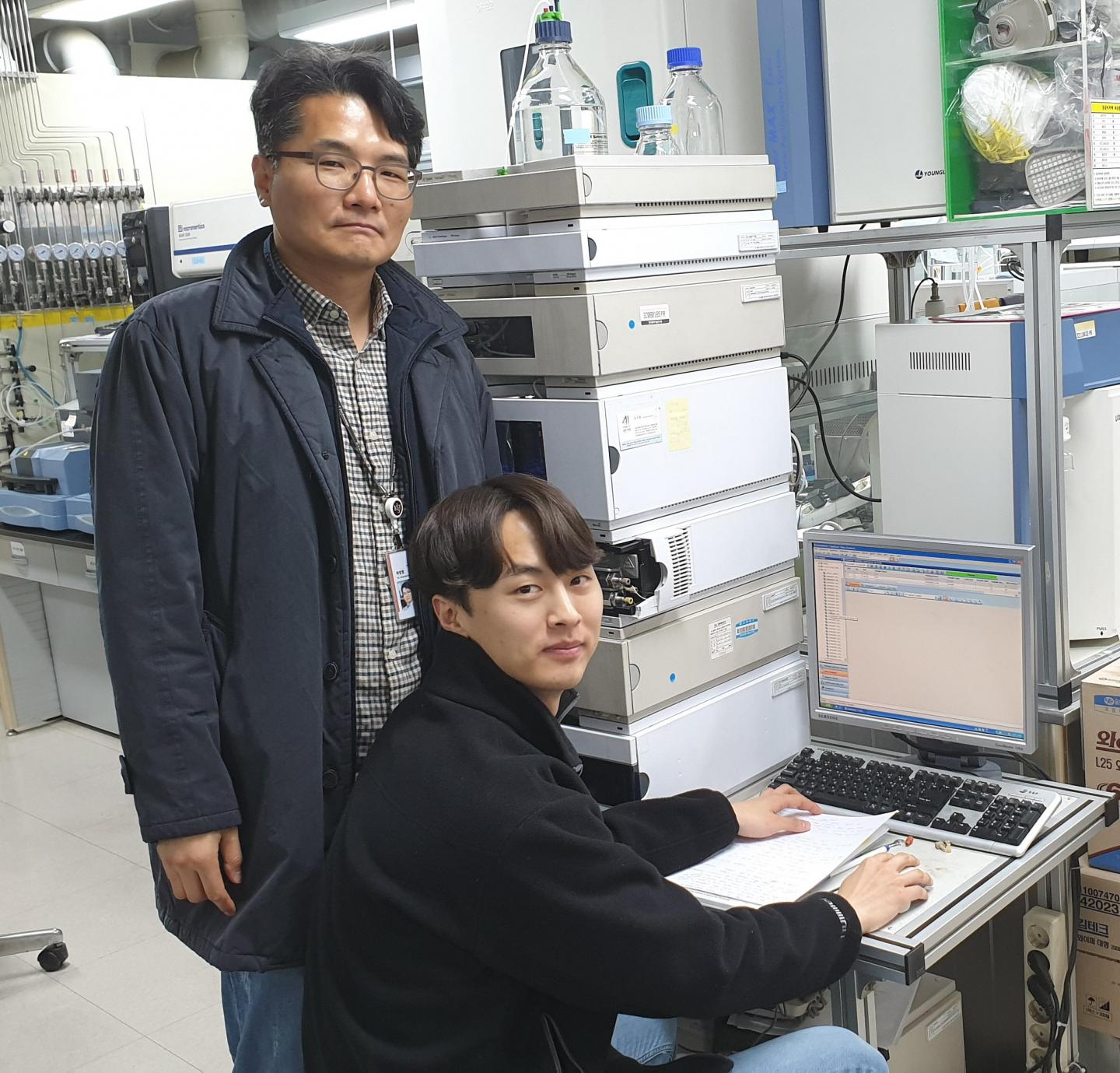
Technology for reducing the viscosity of lignin oil from wood wastes with a high potential for industrial applications. Potential for the mass-producing petroleum-replacing fuels and reducing greenhouse gas emissions through bio fuel
IMAGE

Credit: Korea Institue of Science and Technology(KIST)

A Korean research team has developed a key technology for the mass-production of bio-aviation fuels. The team, led by Dr. Jeong-Myeong Ha of the Clean Energy Research Center at the Korea Institute of Science and Technology (KIST), has announced its successful development of a technology that can be used to mass-produce aviation-grade fuels from wood wastes. The ability to produce aviation-grade fuel from oil derived from wood waste–which up until now has been difficult due to the high viscosity of the oil–is expected to help international aviation companies comply with the new strong

*emissions regulations, which are scheduled to go into effect in 2027.

*ICAO (the International Civil Aviation Organization) intends to regulate aviation industry greenhouse gas emissions starting in 2027.

Lignin constitutes 20 to 40 percent of lignocellulose including woods and grass, lignocellulose. Large volumes of lignin are generated as waste in the pulping processes that are used to produce paper. The pyrolysis of lignin produces an oil, which has little industrial utility due to its high viscosity. For this reason, lignin waste is typically used by paper mills as a low-grade boiler fuel, rather than as a high-grade fuel or as a raw material for chemical products.

The research team, led by Dr. Jeong-Myeong Ha of the KIST, used ‘**hydrocracking’ to prepare hydrocracked lignin oil, which was mixed at a ratio of (raw lignin oil:hydrocrackd oil =) 7:3 with raw lignin oil to substantially reduce the viscosity of the oil to 1/7 (from 750 cp to 110 cp; e.g. the viscosity of water is 1 cp, and the viscosity of cooking oil is 80 cp), allowing it to be used for industrial purposes.

** Hydrocracking: Technique used in the petrochemical and refining industry to break down crude oil which is difficult to use as fuel.

The mixed oil prepared in this manner can be recycled to ‘hydrocracking’ process for the continuous process to mass-produce the bio-aviation fuels. Further, the final fuel product, similar to the contents of jet fuel, has a low freezing point compared to gasoline and diesel, and has a high energy density, being sutiable to bio-aviation fuels.

Dr. Jeong-Myeong Ha of the KIST, who led the research, commented on the team’s research, saying, “Despite the digital revolution, a sharp increase in global parcel volumes supports the global paper production. Conventional chemical reaction methods were unable to convert the large volumes of lignin wastes from paper mills into high quality fuels, but our research has opened up the potential for the mass-production of jet fuels from the otherwise useless lignin wastes.” He added, “This achievement will allow Korea to proactively meet jet fuel greenhouse emissions regulations, which will go into effect starting from 2027.”

###

The research, backed by the Ministry of Science and ICT (MSIT), was conducted as an Institutional Research Program of the Korea Institute of Science and Technology (KIST) and as part of the Technology Development Program to Solve Climate Changes of the National Research Foundation (NRF) of Korea funded by the Ministry of Science and ICT. The results of the study were published in the latest issue of Energy Conversion and Management (JCR top 1.866%), an international academic journal in the field of energy science.

Media Contact
Kim, Do-Hyun
[email protected]

Related Journal Article

http://dx.doi.org/10.1016/j.enconman.2020.112728

Tags: Chemistry/Physics/Materials SciencesTechnology/Engineering/Computer Science
Share13Tweet8Share2ShareShareShare2

Related Posts

Biochar Enhances Soil Carbon Storage via Microbial Activity, with Effects Differing by Soil Depth

Biochar Enhances Soil Carbon Storage via Microbial Activity, with Effects Differing by Soil Depth

April 3, 2026
Breakthrough Tiny Detector for Microwave Photons Poised to Propel Quantum Technology Forward

Breakthrough Tiny Detector for Microwave Photons Poised to Propel Quantum Technology Forward

April 3, 2026

Children Residing Near Southern California’s Salton Sea Exhibit Reduced Lung Function Growth

April 3, 2026

SKKU Develops Advanced Platinum Catalyst, Paving the Way for High-Efficiency Hydrogen Fuel Cell Vehicles

April 3, 2026
Please login to join discussion

POPULAR NEWS

  • blank

    Revolutionary AI Model Enhances Precision in Detecting Food Contamination

    97 shares
    Share 39 Tweet 24
  • Imagine a Social Media Feed That Challenges Your Views Instead of Reinforcing Them

    1008 shares
    Share 398 Tweet 249
  • Promising Outcomes from First Clinical Trials of Gene Regulation in Epilepsy

    51 shares
    Share 20 Tweet 13
  • Popular Anti-Aging Compound Linked to Damage in Corpus Callosum, Study Finds

    44 shares
    Share 18 Tweet 11

About

We bring you the latest biotechnology news from best research centers and universities around the world. Check our website.

Follow us

Recent News

New Study Reveals Unexpected Complexity in the Link Between Narcissism and Relationship Satisfaction

April 3, 2026: Essential Ahead-of-Print Highlights from The Journal of Nuclear Medicine

Innovative Farming Technique Enhances Rice Production, Conserves Water, and Reduces Pollution

Subscribe to Blog via Email

Success! An email was just sent to confirm your subscription. Please find the email now and click 'Confirm' to start subscribing.

Join 78 other subscribers
  • Contact Us

Bioengineer.org © Copyright 2023 All Rights Reserved.

Welcome Back!

Login to your account below

Forgotten Password?

Retrieve your password

Please enter your username or email address to reset your password.

Log In
No Result
View All Result
  • Homepages
    • Home Page 1
    • Home Page 2
  • News
  • National
  • Business
  • Health
  • Lifestyle
  • Science

Bioengineer.org © Copyright 2023 All Rights Reserved.