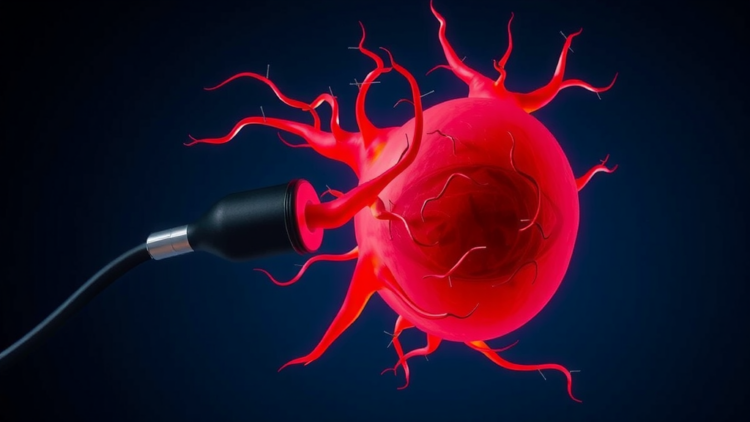
In a groundbreaking advancement that could revolutionize our understanding of malaria infection, researchers have identified a crucial protein complex that facilitates the invasion of red blood cells by malaria parasites. This complex, consisting of PTRAMP, CSS, and Ripr, has been demonstrated to be a highly conserved assembly essential for the merozoite stage of Plasmodium species as they breach erythrocyte defenses. The findings, detailed in a recent publication in Nature Communications, open new avenues for therapeutic interventions aimed at one of humanity’s deadliest infectious diseases.
Malaria, caused by Plasmodium parasites, continues to exert a devastating toll worldwide, particularly in tropical regions. The pathogenicity of malaria chiefly arises when the merozoite form of the parasite invades erythrocytes, leading to cycles of replication that manifest as the characteristic cyclical fevers and anemia. Although decades of research have heightened our conceptual framework around this process, the precise molecular mechanisms governing merozoite entry remain incompletely understood, hindering the development of effective targeted therapies.
At the heart of the newly elucidated mechanism is the protein complex formed by PTRAMP, CSS, and Ripr. These proteins, identified through sophisticated biochemical isolation techniques and structural analysis, collaborate in a molecular dance that enables Plasmodium merozoites to recognize, attach to, and penetrate human red blood cells. This finely tuned interplay orchestrates the parasite’s infiltration, driving the initial step towards its intracellular replication and subsequent disease progression.
PTRAMP, or Plasmodium thrombospondin-related apical merozoite protein, functions as a pivotal component that interacts with other proteins on both the parasite and host cell surfaces. It has been hypothesized that PTRAMP mediates adhesion between the merozoite and the erythrocyte, effectively acting as a molecular “lock and key” that facilitates initial attachment. Meanwhile, CSS (Cytoadherence Surface Protein) appears to stabilize this interaction, ensuring that the parasitic machinery remains firmly anchored during the invasion process.
Ripr, the third member of this critical complex, plays an indispensable role in modulating the structural conformation of the complex, preparing it for membrane fusion and entry. The research highlights Ripr’s function in coordinating the repositioning of parasite invasion machinery, allowing efficient transition through the erythrocyte membrane. This coordinated structural remodeling underscores the sophistication inherent in the parasite’s invasion strategy.
Through comparative genomic and proteomic studies across multiple Plasmodium species, the team confirmed the conservation of this protein complex, suggesting its fundamental importance throughout evolutionary history. Such conservation emphasizes the potential universality of targeting PTRAMP, CSS, and Ripr for anti-malarial drug development, transcending species-specific variations that often complicate malaria treatment strategies.
Technological breakthroughs in cryo-electron microscopy enabled unprecedented visualization of the PTRAMP-CSS-Ripr complex. High-resolution images revealed the spatial orientation and binding interfaces between these proteins, clarifying the conformational changes occurring during erythrocyte engagement. These insights provide a detailed blueprint for designing molecules that could disrupt these interactions, impeding merozoite invasion.
Functional assays employing gene knockout and conditional expression further validated the critical nature of this complex. Parasites deficient in any of the three proteins exhibited markedly reduced ability to invade erythrocytes, confirming the indispensable role of the assembly. The knockout models established a causal link between the presence of this complex and parasite virulence, firmly positioning it as a target for therapeutic intervention.
Additionally, antibody neutralization studies demonstrated that immune targeting of PTRAMP, CSS, or Ripr can block merozoite penetration. This reveals promising avenues not only for vaccine development but also for antibody-based therapies that could complement existing antimalarial drugs. The potential to generate immunity that effectively interrupts the invasion stage bears significant implications for disease prevention efforts.
The discovery fosters hope for the synthesis of small molecules or biologics tailored to destabilize the PTRAMP-CSS-Ripr complex, offering new treatment modalities to combat malaria, especially in regions where drug resistance has eroded the efficacy of traditional therapies. By incapacitating the parasite before it fully establishes itself within erythrocytes, such therapies could drastically reduce parasite load and transmission potential.
Moreover, the elucidation of this conserved invasion complex contributes profoundly to the broader understanding of host-pathogen interactions. It represents an elegant example of how parasites have evolved sophisticated protein assemblies to conquer cellular barriers, underscoring the intricate molecular warfare at the heart of infectious disease biology.
Future investigations will undoubtedly focus on the detailed mechanistic pathways downstream of this complex’s formation, probing how it interfaces with intracellular signaling cascades necessary for membrane penetration. Understanding these subsequent steps could reveal additional therapeutic targets, enabling a multifaceted approach to malaria intervention.
The collective work also raises pertinent questions about whether similar conserved complexes regulate invasion processes in related apicomplexan parasites, such as Toxoplasma gondii. Comparative analyses could unveil shared pathogenic strategies and broaden the impact of this research beyond malaria alone.
Ultimately, unraveling the PTRAMP-CSS-Ripr complex’s role deepens our molecular grasp of malaria pathogenesis and illuminates a critical vulnerability of the parasite. Harnessing this knowledge paves the way toward innovative, effective interventions that could one day bring humanity closer to obliterating a disease that has plagued us for millennia.
Subject of Research: PTRAMP, CSS, and Ripr protein complex essential for Plasmodium merozoite invasion into erythrocytes
Article Title: PTRAMP, CSS and Ripr form a conserved complex required for merozoite invasion of Plasmodium species into erythrocytes
Article References:
Seager, B.A., Lim, P.S., Xiao, X. et al. PTRAMP, CSS and Ripr form a conserved complex required for merozoite invasion of Plasmodium species into erythrocytes. Nat Commun (2026). https://doi.org/10.1038/s41467-026-68486-1
Image Credits: AI Generated
Tags: biochemical isolation techniques in researchcrucial protein complex in malariainnovative approaches to malaria treatmentmalaria parasite invasion mechanismmolecular mechanisms of malaria infectionPlasmodium merozoite stagePTRAMP CSS Ripr protein assemblyred blood cell invasion by malariastructural analysis of protein complexestargeting malaria merozoite entrytherapeutic interventions for malariaunderstanding malaria pathogenicity