• HOME
  • NEWS
  • EXPLORE
    • CAREER
      • Companies
      • Jobs
    • EVENTS
    • iGEM
      • News
      • Team
    • PHOTOS
    • VIDEO
    • WIKI
  • BLOG
  • COMMUNITY
    • FACEBOOK
    • INSTAGRAM
    • TWITTER
Thursday, June 25, 2026
BIOENGINEER.ORG
No Result
View All Result
  • Login
  • HOME
  • NEWS
  • EXPLORE
    • CAREER
      • Companies
      • Jobs
        • Lecturer
        • PhD Studentship
        • Postdoc
        • Research Assistant
    • EVENTS
    • iGEM
      • News
      • Team
    • PHOTOS
    • VIDEO
    • WIKI
  • BLOG
  • COMMUNITY
    • FACEBOOK
    • INSTAGRAM
    • TWITTER
  • HOME
  • NEWS
  • EXPLORE
    • CAREER
      • Companies
      • Jobs
        • Lecturer
        • PhD Studentship
        • Postdoc
        • Research Assistant
    • EVENTS
    • iGEM
      • News
      • Team
    • PHOTOS
    • VIDEO
    • WIKI
  • BLOG
  • COMMUNITY
    • FACEBOOK
    • INSTAGRAM
    • TWITTER
No Result
View All Result
Bioengineer.org
No Result
View All Result
Home NEWS Science News Biology

Key differences between prokaryotic and eukaryotic RNA silencing Argonaute enzyme unveiled

Bioengineer by Bioengineer
February 25, 2019
in Biology
Reading Time: 2 mins read
0
IMAGE
Share on FacebookShare on TwitterShare on LinkedinShare on RedditShare on Telegram

IMAGE

Credit: Hong Kong University of Science and Technology

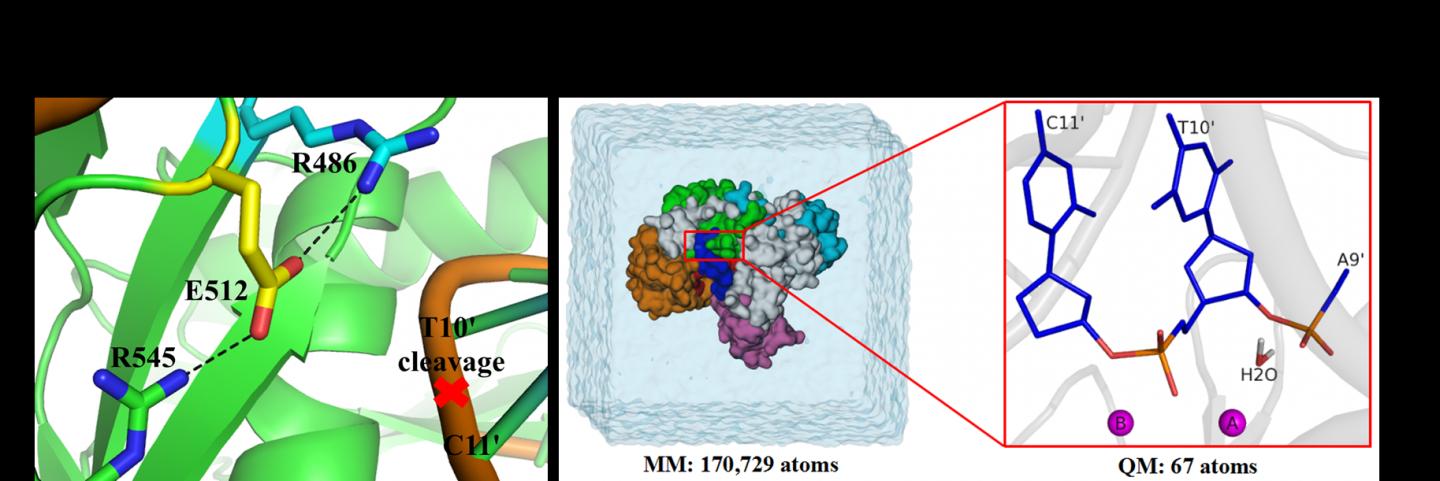
Enzymes have clearly defined active sites to allow the substrate molecule to fit intricately. This is often coupled with an enzymatic conformational change prior to the occurrence of the catalysis reaction. For Ago, the catalysis step requires insertion of a “glutamate finger” to form the catalytic plugged-in conformation, which can be stabilized through hydrogen-bonding networks provided by two symmetric positively-charged residues.

For Ago in eukaryotes, these two symmetric positively-charged residues play the identical role that is critical for cleavage. Hence, it was long speculated that the two analogous resides in prokaryotic Ago perform the same critical role in cleavage function. Surprisingly, this study (Fig. 1) showed that in pAgo, only one (Arginine 545) of the two residues is involved in cleavage function. When the other one (Arginine 486) was substituted with other amino acids, the enzyme was still able to maintain its cleavage activity. Based on these results, the study further suggested that R486 may play other roles such as assisting the insertion of the glutamate finger. The discovery of such striking differences in the roles of these symmetric resides between eAgos and pAgos provides novel insights on how the cleavage functions evolve during the evolution journey from prokaryote to eukaryote.

To achieve these results, computational methods combining Quantum Mechanics, Molecular Mechanics, and Molecular Dynamics (QM/MM) were applied to elucidate the cleavage reaction mechanism and identify functional roles of the amino acid residues. This research was made possible by large-scale high-performance computing resources, which were computed equivalent to 10,000 CPU cores for 25 weeks on the Shaheen II Supercomputer at KAUST in collaboration with Prof. Xin GAO’s group.

“This research was made possible due to current day computing capabilities and the precision that QM/MM modelling allows for,” said Prof. HUANG Xuhui. “Comparing which amino acid residues play a key part in the target DNA/RNA cleavage step in pAgo and eAgo sheds light on how Ago protein evolves from prokaryotes to eukaryotes to cleave DNA/RNA. This information may be useful in ultimately modifying the Ago protein for use as an enhanced gene editing tool in the future,” Prof. Huang explained.

###

This collaborative study on the bacterial Thermus thermophilus Ago (TtAgo; pAgo) enzyme was led by Prof. HUANG Xuhui, Padma Harilela Associate Professor of Science, from the Department of Chemistry at the Hong Kong University of Science and Technology (HKUST), alongside Prof. ZHANG Yinghai from New York University, and Prof. WANG Yanli from the Chinese Academy of Sciences. The goal behind this research was to identify and contrast the function(s) of key amino acid residues that are present in both pAgo and eAgo.

Details of the methodology and their findings were published in the Proceedings of the National Academy of Sciences of the United States of America (PNAS) journal on December 27, 2018. (DOI: 10.1073/pnas.1817041116)

Media Contact
Jamie Wong
[email protected]

Related Journal Article

http://dx.doi.org/10.1073/pnas.1817041116

Tags: BiochemistryBiologyBiomechanics/Biophysics
Share12Tweet8Share2ShareShareShare2

Related Posts

Decoding the Secret Code of a Crucial Immune Sensor

June 24, 2026

Decades of Data Reveal Which Orcas Call Puget Sound Home

June 24, 2026

Copal Tree Genetics Reveal Tropical Forest Connectivity

June 24, 2026

How Intestinal Mucus Influences Klebsiella pneumoniae Colonization and Antibiotic Effectiveness

June 24, 2026
Please login to join discussion

POPULAR NEWS

  • Saying Goodbye to PGY-6: Pediatric Fellowship Realities

    103 shares
    Share 41 Tweet 26
  • Multi-Hospital Study Reveals Long Covid Burden Is Twice as High as Current Estimates

    92 shares
    Share 36 Tweet 23
  • Detection of EDCs in Breast Milk and Infant Urine Up to Six Months Highlights Early Exposure Risks

    77 shares
    Share 31 Tweet 19
  • New Drug Candidate Developed at McMaster Shows Potential for Treating Brain Cancer

    58 shares
    Share 23 Tweet 15

About

We bring you the latest biotechnology news from best research centers and universities around the world. Check our website.

Follow us

Recent News

Asian Working Group Revises Sarcopenia Criteria 2019-2025

AI-Powered Platform Advances Structure-Based Drug Discovery

BALatrine Reduces Helminth Infections: Central Java Trial

Subscribe to Blog via Email

Enter your email address to subscribe to this blog and receive notifications of new posts by email.

Join 82 other subscribers
  • Contact Us

Bioengineer.org © Copyright 2023 All Rights Reserved.

Welcome Back!

Login to your account below

Forgotten Password?

Retrieve your password

Please enter your username or email address to reset your password.

Log In
No Result
View All Result
  • Homepages
    • Home Page 1
    • Home Page 2
  • News
  • National
  • Business
  • Health
  • Lifestyle
  • Science

Bioengineer.org © Copyright 2023 All Rights Reserved.