In an era when sweetened beverages dominate the diets of children and adolescents, scientists are increasingly asking what a lifetime of high-fructose corn syrup (HFCS) does to the developing body—and, in particular, to the reproductive system. A new study published in Reproductive Sciences by a Turkish research team offers a striking answer, at least in an animal model: daily kefir supplementation substantially protected the developing testes of juvenile rats from the cellular damage that eight weeks of HFCS exposure otherwise inflicted. The findings, which center on a cascade of apoptotic and inflammatory molecular markers, add a compelling new chapter to the growing literature on how fermented probiotic foods might shield male fertility from modern dietary stressors.
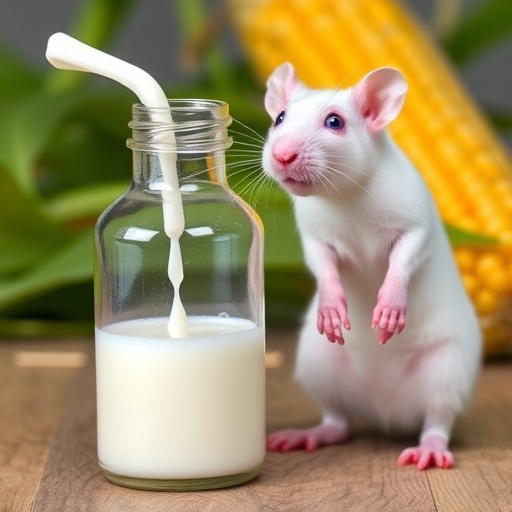
The research, led by Esra Aslan of Gaziantep Islam Science and Technology University and corresponding author Mehmet Bilgehan Pektaş of Afyonkarahisar Health Sciences University, focused on a critical developmental window. Twenty-four four-week-old male Wistar rats, each weighing approximately 100 grams, were randomly assigned to one of four groups: a control group receiving standard chow and water, a kefir-only group, an HFCS group, and a combined HFCS-plus-kefir group. Kefir was administered daily by gastric gavage at a dose of 1 milliliter per 100 grams of body weight, while the HFCS groups received a 20 percent (weight/volume) solution of HFCS-55—the ubiquitous sweetener blend that is 55 percent fructose—freely available in their drinking water for eight weeks. This ad libitum design mirrors, in broad strokes, the way humans consume fructose through sodas and sweetened drinks, without any caloric restriction or forced dosing.
At the end of the treatment period, the animals were anesthetized and their testicular tissues harvested for three parallel lines of analysis: biochemistry, classical histology, and immunohistochemistry. The choice of endpoints was deliberate. Seminiferous tubule diameters were measured as a structural proxy for spermatogenic health, and Johnsen’s scores—a standardized 10-point histological grading system that assesses the completeness of spermatogenesis within each tubule—were used to quantify functional tissue integrity. In parallel, a panel of antibodies was deployed to map the expression of key regulators of programmed cell death and inflammation, and TUNEL staining was used to count individual cells undergoing apoptosis. Together, these methods allowed the team to build a multi-layered picture of how a fructose-rich diet reshapes testicular architecture at both the tissue and molecular levels.
The results from the HFCS-only group were sobering. Eight weeks of fructose-loaded drinking water markedly increased the expression of p53, the canonical tumor-suppressor protein that initiates apoptosis when cellular damage is detected, along with Caspase-3, the executioner enzyme that dismantles the cell from within, and Bax, a pro-apoptotic member of the Bcl-2 family that perforates mitochondrial membranes to release apoptogenic factors. At the same time, Bcl-2—the anti-apoptotic counterpart that normally safeguards cells against premature death—was significantly reduced. The net effect was a molecular shift in favor of cell death. Consistent with this, the number of TUNEL-positive cells, which carry fragmented DNA characteristic of apoptosis, rose sharply in the fructose-exposed testes.
Inflammation told a parallel story. The HFCS group showed elevated expression of tumor necrosis factor-alpha (TNF-α), a potent pro-inflammatory cytokine, and nuclear factor kappa B (NF-κB), the master transcription factor that switches on inflammatory gene programs throughout the body. Because the testis is an immune-privileged organ whose function is exquisitely sensitive to inflammatory signaling, this dual activation of apoptotic and inflammatory pathways is particularly damaging. Previous work by some of the same collaborators and other groups has shown that fructose can suppress insulin signaling in the testis, activate macrophages, and degrade the blood-testis barrier, and the new study extends this picture to juveniles—an age when the seminiferous epithelium is still establishing the spermatogenic lineages that must last a lifetime.
Equally telling was what HFCS did to growth-factor signaling and tissue structure. Insulin-like growth factor 1 receptor alpha (IGF-1Rα), a receptor central to cell proliferation, survival, and the hormonal support of spermatogenesis, was significantly downregulated in the fructose-exposed animals. Seminiferous tubule diameters shrank, and Johnsen’s scores dropped, indicating a measurable impairment of spermatogenic activity. In practical terms, the developing testes of the HFCS-fed rats were not merely stressed; they were structurally and functionally compromised, with the cellular machinery of sperm production visibly deteriorating.
The kefir-supplemented animals fared dramatically better. In the HFCS-plus-kefir group, the expression of p53, Caspase-3, Bax, TNF-α, and NF-κB all declined substantially compared with the HFCS-only group, while the anti-apoptotic Bcl-2 was partially restored. Histologically, the seminiferous tubules retained a more organized architecture, tubule diameters were better preserved, Johnsen’s scores improved, and TUNEL-positive cell counts fell. IGF-1Rα expression also recovered toward healthier levels. The researchers interpret these converging signals as evidence that kefir’s protective effect operates through two complementary mechanisms: damping down the apoptosis that fructose triggers in germ cells and Sertoli cells, and suppressing the inflammatory signaling that amplifies tissue injury.
Why should a fermented milk drink be so protective? Kefir is produced by fermenting milk with kefir grains, a symbiotic matrix of lactic acid bacteria, acetic acid bacteria, and yeasts. The resulting beverage contains live microorganisms, but also an arsenal of bioactive molecules: bacterially synthesized exopolysaccharides such as kefiran, bioactive peptides released during the fermentation of milk proteins, organic acids, vitamins, and polyphenols. Previous studies have attributed anti-inflammatory effects to kefir peptides that inhibit the NF-κB pathway, demonstrated improvements in fatty liver and glycemic control in obese and diabetic animal models, and shown that kefir consumption improves apolipoprotein A1 levels in patients with metabolic syndrome in randomized clinical trials. The senior team behind the current study has previously reported that kefir protects liver tissue against HFCS-induced phosphodiesterase hyperactivity, limits adipose tissue expansion in fructose-fed rats, and even modulates bone development under high-fructose conditions—evidence of a remarkably broad systemic influence.
The gut-testis axis may be the unifying explanation. A growing body of research links gut microbiota composition to spermatogenesis, oxidative stress status, and male fertility, and kefir’s defining feature is its capacity to reshape the intestinal microbial ecosystem. By strengthening the gut barrier, reducing systemic endotoxin translocation, and lowering chronic low-grade inflammation, probiotic interventions can plausibly reduce the inflammatory and oxidative burden that reaches the testis. At the same time, the antioxidant constituents of kefir may directly scavenge the reactive oxygen species that fructose metabolism generates—fructose is notoriously prone to causing oxidative stress in mitochondria, a mechanism documented in muscle cells and hepatocytes and increasingly implicated in testicular degeneration. The restoration of IGF-1Rα expression observed in this study could reflect both direct antioxidant protection and improved metabolic and insulin-related signaling upstream of the testis.
The researchers are careful to frame their conclusions within the limits of the model. Twenty-four rats, eight weeks of exposure, and a fixed kefir dose of 1 milliliter per 100 grams of body weight do not translate directly into dietary advice for human adolescents, and the study did not measure fertility outcomes such as sperm counts in the epididymis, mating success, or offspring health. The team also notes that no external funding was received for the work, and that all procedures were approved by the Afyon Kocatepe University Ethical Animal Research Committee. Nevertheless, the central message is difficult to ignore: the molecular fingerprints of fructose-induced testicular injury—apoptosis driven by p53, Bax, and Caspase-3, inflammation driven by TNF-α and NF-κB, and the erosion of IGF-1Rα-dependent survival signaling—were all significantly blunted by a simple, inexpensive, and widely available fermented food.
As HFCS continues to permeate the global food supply, particularly in beverages marketed to young people, the possibility that it quietly undermines the reproductive development of boys is a public health concern that extends well beyond metabolic disease. This study does not prove that kefir can protect human fertility, but it demonstrates, with biochemical and histological precision, that a dietary probiotic intervention can counteract a substantial fraction of the harm that a fructose-heavy diet inflicts on the developing testis in a mammalian model. If future work in larger cohorts and eventually in humans confirms these effects, the humble kefir grain may earn a place in the growing toolkit of nutritional strategies for safeguarding male reproductive health in the age of added sugars.
Subject of Research: Animals
Subject of Research: Medicine
Article Title: Kefir Mitigates Testicular Histopathological and Immunohistochemical Alterations Induced by High-fructose Corn Syrup in Juvenile Wistar Rats
Article References: Aslan, E., Güzel, H., Pektaş, A., Yavaş, B. D., Yüksel, Y., Er, K., & Pektaş, M. B. (2026). Kefir Mitigates Testicular Histopathological and Immunohistochemical Alterations Induced by High-fructose Corn Syrup in Juvenile Wistar Rats. Reproductive Sciences, 33(8), 1611-1619. https://doi.org/10.1007/s43032-026-02147-y
Image Credits: AI Generated
DOI: 10.1007/s43032-026-02147-y
Keywords: Kefir, High-fructose corn syrup (HFCS), Testicular toxicity, Apoptosis, Inflammation, p53, Caspase-3, TNF-α, NF-κB, IGF-1Rα, Spermatogenesis, Probiotics
Cite Scienmag News
APA MLA Chicago
Daisy Hatcher. (September 7, 2026). Kefir Protects Young Rat Testes from Damage Caused by High-Fructose Corn Syrup. Scienmag. https://scienmag.com/kefir-protects-young-rat-testes-from-damage-caused-by-high-fructose-corn-syrup/
Daisy Hatcher. “Kefir Protects Young Rat Testes from Damage Caused by High-Fructose Corn Syrup.” Scienmag, 7 September 2026, https://scienmag.com/kefir-protects-young-rat-testes-from-damage-caused-by-high-fructose-corn-syrup/. Accessed 7 September 2026.
Daisy Hatcher. “Kefir Protects Young Rat Testes from Damage Caused by High-Fructose Corn Syrup.” Scienmag. September 7, 2026. https://scienmag.com/kefir-protects-young-rat-testes-from-damage-caused-by-high-fructose-corn-syrup/
Copy citation Download RIS
Tags: animal model studies on reproductive toxicityanimal model study of kefir and HFCSapoptosis and inflammation in testesdietary impact of high-fructose corn syrup on reproductive systemdietary influences on male fertilitydietary stressors and reproductive developmentdietary stressors and testicular damageearly developmental windows and reproductive healtheffects of HFCS on developing reproductive systemeffects of HFCS on juvenile rat testeseffects of sugary beverages on juvenile reproductive organsfermented probiotic foods and male fertilityhigh-fructose corn syrup reproductive damageimpact of high-fructose corn syrup on reproductive healthinflammatory and apoptotic markers in testicular healthjuvenile rat model for dietary toxin effectskefir protection against testicular damageKefir protective effects on juvenile rat testeskefir supplementation forprobiotic intervention in diet-induced testicular injuryprobiotic kefirprotective role of kefir against cellular damageprotective role of probiotics in male reproductive health