The summer of 2021 in Western Canada was one of the hottest on record. In BC alone, 59 weather stations registered their hottest temperatures ever on June 27.
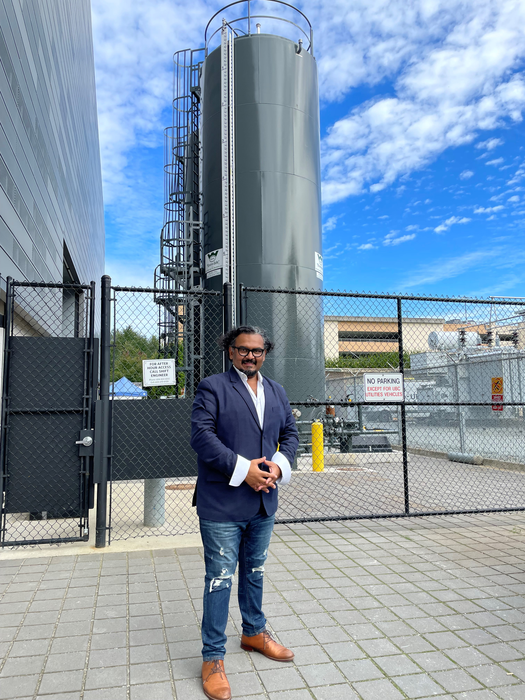
Credit: UBC Okanagan
The summer of 2021 in Western Canada was one of the hottest on record. In BC alone, 59 weather stations registered their hottest temperatures ever on June 27.
For those lucky enough to have air conditioners, keeping their homes cool during the heat dome was relatively easy. However, the comfort lasted only until the utility bills arrived. As a result of heatwaves around the world, global electricity demand increased by five per cent so far in 2021 and it is expected to continue to increase annually, says UBCO researcher Dr. Mohammad Al Hashmi.
“Rapid population growth has led to significant demand for residential buildings around the world. At the same time, there is a growing energy demand associated with increased greenhouse gas emissions,” he says. “Buildings in hot and arid climatic conditions demand high energy for creating habitable indoor environments. Enormous amounts of energy are required to maintain a cool temperature in hot regions.”
Using data from Saudi Arabia, Dr. Al Hashmi developed a framework for reducing energy consumption related to residential buildings. The operational framework looks at methods to keep homes cool with minimum adverse environmental impacts.
He used Saudi Arabia as a basis of this research, since residential building energy demand attributes for 52 per cent of the entire country’s electricity consumption.
Dr. Al Hashmi and his colleagues at UBC Okanagan’s Lifecycle Management Lab analyzed forecasted energy consumption for the next 30 years and examined potential energy interventions. They selected six different renewable power generation systems—including solar, wind and photovoltaic array panels—and some hybrid combinations. The researchers also examined energy storage systems such as a battery bank, fuel cells and hydrogen tank storage. All together they conducted more than 180 simulations, enabling a full scenario analysis to calculate the savings based on each system.
The residential building energy demand in arid countries such as Saudi Arabia is supplied with fossil fuel. Dr. Al Hashmi says the existing consumption pattern of fossil fuels in Saudi Arabia is not sustainable due to the depletion of these resources. This has far-reaching environmental impacts.
“Our research focused on Saudi Arabia, but the findings can easily be applied to other countries and geographical areas such as the Okanagan,” says Dr. Al Hashmi who graduated with his PhD this spring.
According to Dr. Al Hashmi, embracing renewable energy could have a substantial impact on reducing greenhouse gas emissions related to cooling residential buildings. His research shows the need for a community-government partnership framework that would combine building interventions and clean energy approaches.
“It will take a holistic approach to reduce energy consumption for homes, including building retrofits, renewable energy solutions and government sustainability policies,” he says. “This framework enables us to reach greater efficiency for these multi-unit residential buildings while downsizing residential energy demands.”
In the Canadian context, Dr. Al Hashmi acknowledges that the challenge is two-fold with buildings requiring retrofits that address extremes of both hot and cold.
“A certain level of co-operation is required between the community and the government in terms of financial investments and the best combinations of retrofits and clean energy measures, but our analysis indicates that reducing carbon emissions is reachable.”
The research was recently published in the journal Energies.
Journal
Energies
DOI
10.3390/en14164954
Method of Research
Meta-analysis
Subject of Research
Not applicable
Article Title
Framework for Developing a Low-Carbon Energy Demand in Residential Buildings Using Community-Government Partnership: An Application in Saudi Arabia
Article Publication Date
12-Aug-2021