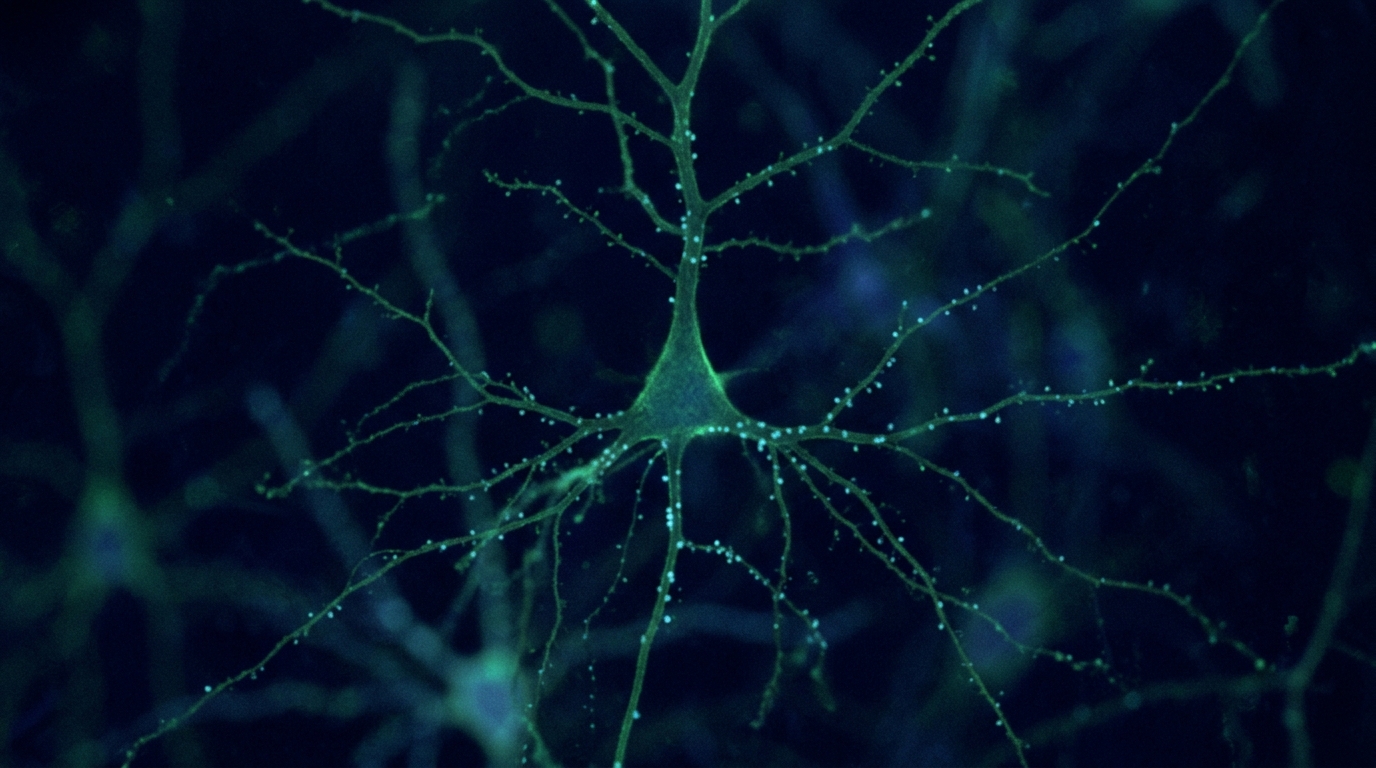
The electrophysiological maturation of thalamocortical (TC) neurons is crucial to tune growing circuitry and ensure the fidelity of information processing, and their electrical behavior depends on a subthreshold potassium current known as the M-current. The work, published in Frontiers in Molecular Neuroscience, combines patch-clamp recordings in mouse brain tissue with heterologous expression experiments in Chinese hamster ovary cells to dissect the roles of the Kv7 channel subunits encoded by Kcnq2 and Kcnq3.
Kv7 channels, often called M-channels, normally assemble as heterotetramers containing both Kcnq2 and Kcnq3 subunits. These channels mediate a subthreshold potassium current that regulates intrinsic excitability and neuronal firing signatures. Using retigabine, a pharmacological opener of Kcnq channels, the team found that the magnitude of the M-current increases gradually across the first 30 postnatal days in ventrobasal thalamocortical neurons. Notably, this functional maturation occurred while the relative abundance of Kcnq2 and Kcnq3 transcripts remained unchanged across development, suggesting that mechanisms other than altered gene expression drive the developmental increase in current.
To probe the functional consequences of losing Kcnq3, the researchers turned to transgenic mouse lines carrying Kcnq3 mutations that correspond to human orthologous variants associated with childhood forms of epilepsy. In mice with either a complete deletion of Kcnq3 or a single functional copy, a condition known as haploinsufficiency, thalamocortical neurons showed hyperexcitability. The cells exhibited enhanced burst firing, and their single action potential waveforms were altered compared with neurons from control animals. These changes occurred during a period when somatosensory pathways, formed before birth, are being refined through activity-dependent mechanisms.
The complementary experiments in Chinese hamster ovary cells examined the differential contribution of KCNQ2 and KCNQ3 channels to IM generation. When the researchers expressed human KCNQ2 and KCNQ3 plasmids at defined subunit ratios, equimolar co-expression of the two subunits produced larger currents than either KCNQ2-dominant or KCNQ3-dominant compositions.
The electrophysiological maturation of thalamocortical neurons during the early postnatal window is crucial for tuning growing circuitry and ensuring the fidelity of information processing, and perturbations in ionic homeostasis during this vulnerable period might result in neurodevelopmental disorders. The authors suggest that Kcnq3 channels play a central role in stabilizing the membrane properties and firing mode of developing thalamocortical neurons.
The study did not directly demonstrate seizures in the transgenic mice, but it characterized the electrophysiological properties of the neurons.
The authors conclude that Kcnq3 channels play a central role in stabilizing the membrane properties and firing mode of developing thalamocortical neurons, thereby supporting the faithful transmission of peripheral input to the cerebral cortex.
Retigabine, a Kcnq channel opener, was used to reveal the developmental increase in M-current magnitude. The authors did not propose retigabine or any other Kcnq modulator as a treatment for Kcnq3-related developmental disorders, and the study’s scope was limited to electrophysiological characterization in mice and heterologous cells rather than therapeutic testing.
The patch-clamp recordings were performed in the mouse ventrobasal thalamic complex. The researchers expressed human gene plasmids in Chinese hamster ovary (CHO) cells at defined subunit ratios to determine the differential contribution of KCNQ2 and KCNQ3 channels to IM generation. The transgenic mice carried Kcnq3 mutations corresponding to human orthologous variants associated with childhood forms of epilepsy.
Subject of Research: The role of Kcnq3 potassium channel subunits in the electrophysiological maturation and excitability of developing mouse thalamocortical neurons
Article Title: Kcnq3 channels shape active membrane properties and firing signatures of thalamocortical neurons during postnatal development
Article References: Fazio, L., Cerina, M., Vinnenberg, L., Karabatak, E., Meiritz, V., Oliver, D., Seebohm, G., Meuth, S. G., & Budde, T. (2026). Kcnq3 channels shape active membrane properties and firing signatures of thalamocortical neurons during postnatal development. Frontiers in Molecular Neuroscience, 19, Article 1944560. https://doi.org/10.3389/fnmol.2026.1944560
Image Credits: AI Generated
DOI: 10.3389/fnmol.2026.1944560
Keywords: Kcnq3, Kv7 channels, M-current, thalamocortical neurons, postnatal development, retigabine, haploinsufficiency, intrinsic excitability, thalamus, burst firing, patch-clamp, childhood epilepsy
News Source: Ophelia Keating. (November 7, 2026). Kcnq3 channels stabilize developing thalamocortical neurons against hyperexcitability. Scienmag.