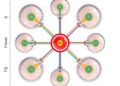
While scientific advances are made daily, foundational breakthroughs are rare and require exceptional researchers with unique points of view and questions, plus the necessary means to explore those ideas. One such researcher, Harold H. Flor, became a seminal figure in the study of plant pathology after developing the gene-for-gene concept in the mid-1900s. The gene-for-gene concept (namely, for each gene governing the host response, there is a corresponding gene in the pathogen) still stands as one of the most significant contributions to plant pathology—forever changing how scientists approach plant-microbe interactions and, more specifically, the molecular mechanisms behind those interactions.
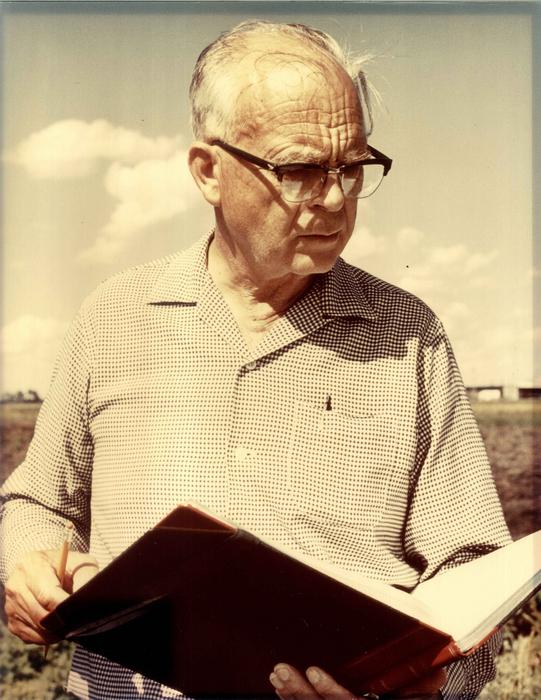
Credit: The Department of Plant Pathology, North Dakota State University
While scientific advances are made daily, foundational breakthroughs are rare and require exceptional researchers with unique points of view and questions, plus the necessary means to explore those ideas. One such researcher, Harold H. Flor, became a seminal figure in the study of plant pathology after developing the gene-for-gene concept in the mid-1900s. The gene-for-gene concept (namely, for each gene governing the host response, there is a corresponding gene in the pathogen) still stands as one of the most significant contributions to plant pathology—forever changing how scientists approach plant-microbe interactions and, more specifically, the molecular mechanisms behind those interactions.
Flor established this model long before modern molecular biology, or even a complete understanding of genetic material or protein-protein interactions, emerged. However, his concept has proven true in the latest research on molecular plant-microbe interactions (MPMI). To honor both Flor’s enduring legacy and the impact of current scientists who persist in making strides toward more scientific breakthroughs, the journal Molecular Plant-Microbe Interactions (MPMI) created the H. H. Flor Distinguished Review manuscript category. “Based on the landmark research done by Flor, it was an obvious choice to use his namesake to help define what this distinguished review category was all about,” Editor-in-Chief of MPMI Tim Friesen comments.
This new series of reviews, spearheaded by Friesen and his editorial board, presents articles written by visionary scientists who have significantly changed our collective point of view in an area of molecular plant-microbe interactions. These distinguished reviews will ultimately include all categories of plant-microbe interactions, from pathogenic to symbiotic interactions. The first papers in this series, written by Peter N. Dodds and Jijie Chai and colleagues, have been published in Volume 36, Number 8 of MPMI.
“It is our intent to invite leaders in the MPMI field to write authoritative reviews that provide not only a historical perspective, but also provide a vision for where their respective fields are moving—ultimately providing a valuable resource to the MPMI community,” Friesen says.
Regarding the series’ origin in terms of familial consent, Friesen shares that the editorial board of MPMI reached out to Flor’s grandchildren, and they were excited to have their grandfather’s scientific legacy highlighted in the H. H. Flor Distinguished Review series. “I personally spoke with Flor’s granddaughter, and she was excited to see this happen,” Friesen remarks.
MPMI is equally as excited to share this new series with the scientific community. In the dynamic world of plant-microbe interactions—where intricate relationships between plants and microorganisms shape ecosystems, agricultural systems, and even human health—comprehensive review articles that summarize past research, explain current research, and guide future research are paramount and, perhaps, could help facilitate the next scientific breakthrough.
Read the first papers published in this new series
From Gene-for-Gene to Resistosomes: Flor’s Enduring Legacy
Peter N. Dodds
New Biochemical Principles for NLR Immunity in Plants
Jijie Chai, Wen Song, and Jane E. Parker
Follow us on X @MPMIjournal and visit https://apsjournals.apsnet.org/journal/mpmi to learn more.
Journal
Molecular Plant-Microbe Interactions
DOI
10.1094/MPMI-36-8
Article Publication Date
13-Sep-2023