• HOME
  • NEWS
  • EXPLORE
    • CAREER
      • Companies
      • Jobs
    • EVENTS
    • iGEM
      • News
      • Team
    • PHOTOS
    • VIDEO
    • WIKI
  • BLOG
  • COMMUNITY
    • FACEBOOK
    • INSTAGRAM
    • TWITTER
Sunday, February 8, 2026
BIOENGINEER.ORG
No Result
View All Result
  • Login
  • HOME
  • NEWS
  • EXPLORE
    • CAREER
      • Companies
      • Jobs
        • Lecturer
        • PhD Studentship
        • Postdoc
        • Research Assistant
    • EVENTS
    • iGEM
      • News
      • Team
    • PHOTOS
    • VIDEO
    • WIKI
  • BLOG
  • COMMUNITY
    • FACEBOOK
    • INSTAGRAM
    • TWITTER
  • HOME
  • NEWS
  • EXPLORE
    • CAREER
      • Companies
      • Jobs
        • Lecturer
        • PhD Studentship
        • Postdoc
        • Research Assistant
    • EVENTS
    • iGEM
      • News
      • Team
    • PHOTOS
    • VIDEO
    • WIKI
  • BLOG
  • COMMUNITY
    • FACEBOOK
    • INSTAGRAM
    • TWITTER
No Result
View All Result
Bioengineer.org
No Result
View All Result
Home NEWS Science News Health

Jones receives $2.87 million for Gulf war illness study

Bioengineer by Bioengineer
April 30, 2021
in Health
Reading Time: 2 mins read
0
IMAGE
Share on FacebookShare on TwitterShare on LinkedinShare on RedditShare on Telegram

IMAGE

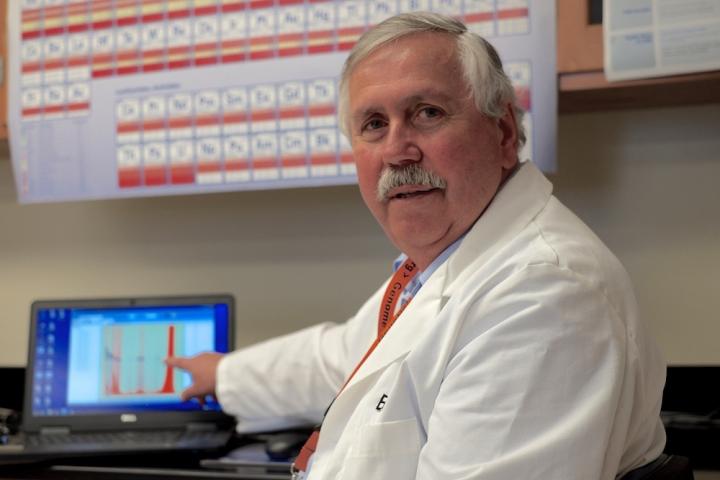
Credit: UTHSC

Memphis, Tenn. (April 30, 2021) – The National Institute of Environmental Health Sciences has awarded Byron C. Jones, PhD, professor in the Department of Genetics, Geonomics, and Informatics at the University of Tennessee Health Science Center, $2.87 million for his continuing study of genetic alterations associated with Gulf War illness among former military personnel.

During the 1990-91 Gulf War, 700,000 troops were sent to the Persian Gulf. Of those who returned, 25%-35% suffered from what became known as the Gulf War Illness, a multisymptomatic malady with complaints ranging from gastrointestinal problems to cognitive difficulties. Sickness behaviors were disabling, and neither cause nor treatment were known. Nearly 30 years later, most of those afflicted are still sick. Exposure to organophosphate compounds (nerve gas and insecticides), coupled with being in a high stress environment, have emerged as a possible cause of illness and a focus of study.

Dr. Jones’ project will build upon past studies his lab has conducted to determine why some combatants became sick, while others did not. By duplicating exposure conditions in animal models, Dr. Jones’ team has previously identified genes and biochemical pathways involved in individual differences to susceptibility.

Focusing on these systems, his team will now look for genetic-based individual differences in which genes are permanently altered in expression following the same exposure. Findings from this project will increase understanding of which biochemical processes are involved, and provide a basis for developing treatment.

“Initial studies show acute changes in proinflammatory cytokine genes and changes in methylation of genes following the exposure regimen,” Dr. Jones said. “We have seen significant differences in proinflammatory gene expression response to the treatment among animal models, and have been able to map to a region of DNA which mediates this effect. Our research takes the next steps to understand how genetics relate to the ongoing effects of Gulf War Illness.”

The study, titled “Genetics of epigenetic response to high inflammatory reducing hormones and environmental compounds,” is being funded for five years.

###

As Tennessee’s only public, statewide, academic health system, the mission of the University of Tennessee Health Science Center is to bring the benefits of the health sciences to the achievement and maintenance of human health through education, research, clinical care, and public service, with a focus on the citizens of Tennessee and the region. The main campus in Memphis includes six colleges: Dentistry, Graduate Health Sciences, Health Professions, Medicine, Nursing and Pharmacy. UTHSC also educates and trains medicine, pharmacy, and/or health professions students, as well as medical residents and fellows, at major sites in Knoxville, Chattanooga and Nashville. For more information, visit http://www.uthsc.edu. Find us on Facebook: facebook.com/uthsc, on Twitter: twitter.com/uthsc and on Instagram: instagram.com/uthsc.

Media Contact
Amber Carter
[email protected]
Tags: Medicine/Health
Share14Tweet9Share3ShareShareShare2

Related Posts

Group Therapy Boosts Recovery in Elderly Depression

February 8, 2026

Evaluating Biosimilar Trastuzumab for Breast Cancer in Thailand

February 8, 2026

Decoding Phantom Limb Movements via Intraneural Signals

February 8, 2026

Attitudes Toward Aging Impact Early Nursing Home Quality

February 8, 2026
Please login to join discussion

POPULAR NEWS

  • Robotic Ureteral Reconstruction: A Novel Approach

    Robotic Ureteral Reconstruction: A Novel Approach

    82 shares
    Share 33 Tweet 21
  • Digital Privacy: Health Data Control in Incarceration

    63 shares
    Share 25 Tweet 16
  • Breakthrough in RNA Research Accelerates Medical Innovations Timeline

    53 shares
    Share 21 Tweet 13
  • Mapping Tertiary Lymphoid Structures for Kidney Cancer Biomarkers

    50 shares
    Share 20 Tweet 13

About

We bring you the latest biotechnology news from best research centers and universities around the world. Check our website.

Follow us

Recent News

Group Therapy Boosts Recovery in Elderly Depression

Evaluating Biosimilar Trastuzumab for Breast Cancer in Thailand

Decoding Phantom Limb Movements via Intraneural Signals

Subscribe to Blog via Email

Success! An email was just sent to confirm your subscription. Please find the email now and click 'Confirm' to start subscribing.

Join 74 other subscribers
  • Contact Us

Bioengineer.org © Copyright 2023 All Rights Reserved.

Welcome Back!

Login to your account below

Forgotten Password?

Retrieve your password

Please enter your username or email address to reset your password.

Log In
No Result
View All Result
  • Homepages
    • Home Page 1
    • Home Page 2
  • News
  • National
  • Business
  • Health
  • Lifestyle
  • Science

Bioengineer.org © Copyright 2023 All Rights Reserved.