Credit: Johns Hopkins Medicine
Hospitals should be cautious of group purchasing organizations, or entities that act as middlemen between health care providers and manufacturers, says Martin Makary, M.D., M.P.H., a professor of surgery at the Johns Hopkins University School of Medicine.
"The group purchasing industry has morphed from a business centered on bulk purchasing in order to provide significant discounts for hospitals to a business littered with pay-to-play deals and kickbacks," says Makary, senior author of an Oct. 18 JAMA article on group purchasing.
Since their inception in 1910, group purchasing organizations (GPOs) have helped streamline the process of hospitals purchasing medical supplies from thousands of manufacturers by cataloging hospital supplies ranging from hand soap to epinephrine. A recent estimate by the Healthcare Supply Chain Association found that 98 percent of hospitals use a GPO for their main purchasing needs. GPO advocates point to their ability to negotiate lower prices for hospitals, as well as the time and resources hospitals are spared by avoiding negotiating and contracting with multiple manufacturers.
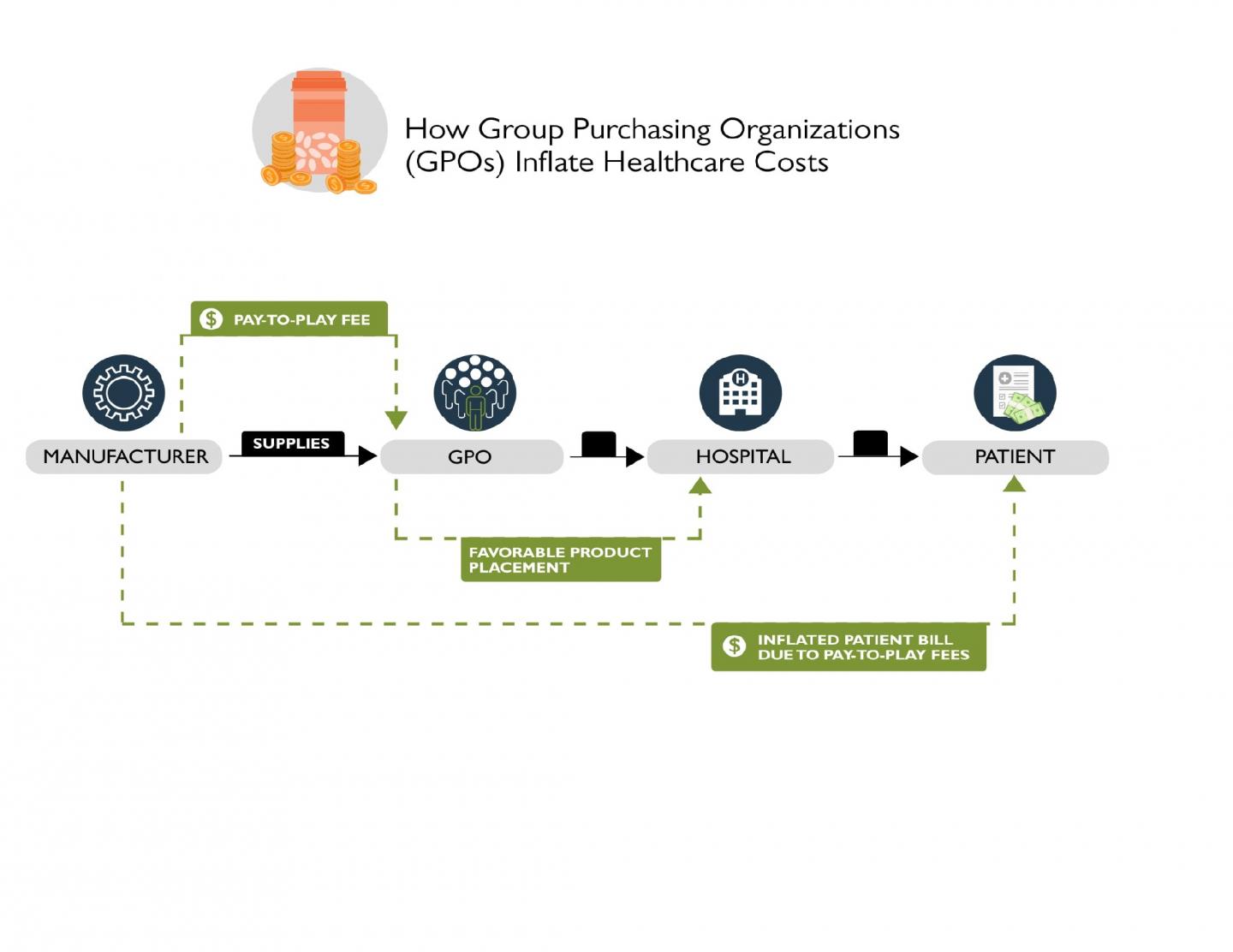
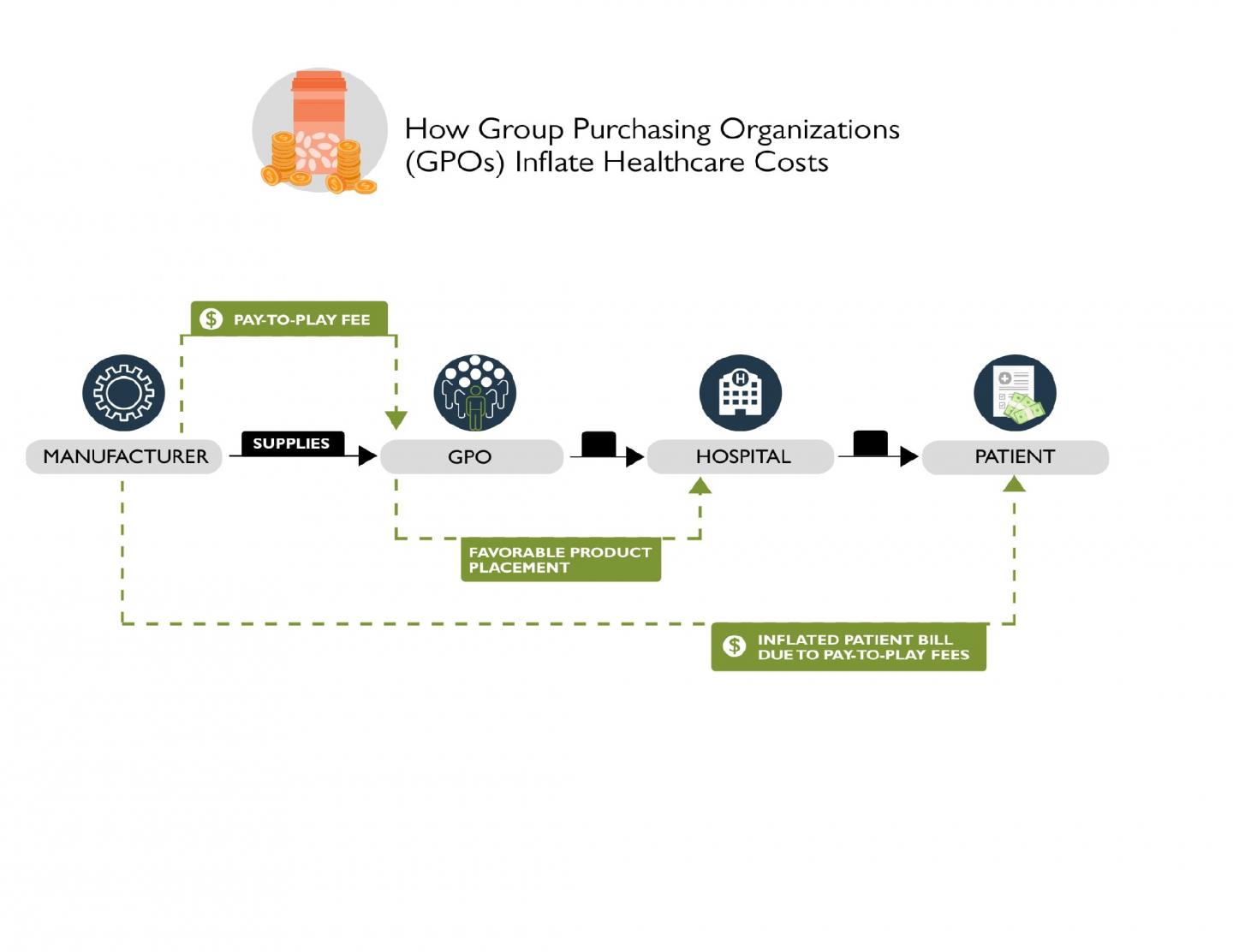
However, the Johns Hopkins researchers point out that current law allows GPOs to receive undisclosed fees from manufacturers to list products more favorably in their catalogs. In order to offset these extra fees, manufacturers incorporate the payment in the price of the products in the catalog.
"These secret deals are a little-known driver of escalating hospital supply costs, including that of drugs, which end up falling on the patient to pay," says Will Bruhn, a research fellow at the Johns Hopkins University School of Medicine and co-author of the study. "These deals can also contribute to sudden critical shortages of drugs that have been common and inexpensive for decades."
These fees, which are banned by federal law in most industries, are permitted because in 1987 GPOs received exemption from a 1972 law that banned kickbacks, bribes or rebates for furnishing items or services. This exemption has allowed GPOs to solicit fees to have products placed in catalogs, or premiums for manufacturers to become sole suppliers. This can then halt competition, says Makary, resulting in only one or two manufacturers gaining market dominance.
For a premium pay-to-play fee, GPOs sometimes designate a manufacturer as the sole supplier of a product, creating a regional or national dependence on one company or supply chain. This can create shortages of the most basic and essential hospital supplies if the sole manufacturer has supply chain problems. The authors point out how these GPO contractual arrangements may have contributed to the widespread shortage of saline bags in the United States after Hurricane Maria hit Puerto Rico and damaged the manufacturing plant that dominated the U.S. saline bag market.
"The money games of paying extra to become a sole supplier is one reason doctors are seeing a surge of critical shortages of drugs and supplies that have been around for over 50 years," adds Makary.
Makary says GPOs can provide a valuable service and they shouldn't be eliminated, but he urges GPOs to avoid sole supplier contracts and hospitals to avoid exclusive contracts with GPOs to ensure competition.
Makary also recommends that policymakers reevaluate laws that exempt GPOs from anti-kickback statutes in order to protect consumers and increase price transparency.
###
Media Contact
Chanapa Tantibanchachai
[email protected]
410-502-9433
@HopkinsMedicine
http://www.hopkinsmedicine.org
Original Source
https://www.hopkinsmedicine.org/news/newsroom/news-releases/johns-hopkins-researchers-detail-how-middlemen-suppliers-can-increase-hospital-bills-and-drug-prices