• HOME
  • NEWS
  • EXPLORE
    • CAREER
      • Companies
      • Jobs
    • EVENTS
    • iGEM
      • News
      • Team
    • PHOTOS
    • VIDEO
    • WIKI
  • BLOG
  • COMMUNITY
    • FACEBOOK
    • INSTAGRAM
    • TWITTER
Thursday, July 9, 2026
BIOENGINEER.ORG
No Result
View All Result
  • Login
  • HOME
  • NEWS
  • EXPLORE
    • CAREER
      • Companies
      • Jobs
        • Lecturer
        • PhD Studentship
        • Postdoc
        • Research Assistant
    • EVENTS
    • iGEM
      • News
      • Team
    • PHOTOS
    • VIDEO
    • WIKI
  • BLOG
  • COMMUNITY
    • FACEBOOK
    • INSTAGRAM
    • TWITTER
  • HOME
  • NEWS
  • EXPLORE
    • CAREER
      • Companies
      • Jobs
        • Lecturer
        • PhD Studentship
        • Postdoc
        • Research Assistant
    • EVENTS
    • iGEM
      • News
      • Team
    • PHOTOS
    • VIDEO
    • WIKI
  • BLOG
  • COMMUNITY
    • FACEBOOK
    • INSTAGRAM
    • TWITTER
No Result
View All Result
Bioengineer.org
No Result
View All Result
Home NEWS Science News Biology

Jackdaws flap their wings to save energy

Bioengineer by Bioengineer
August 11, 2017
in Biology
Reading Time: 2 mins read
0
Share on FacebookShare on TwitterShare on LinkedinShare on RedditShare on Telegram
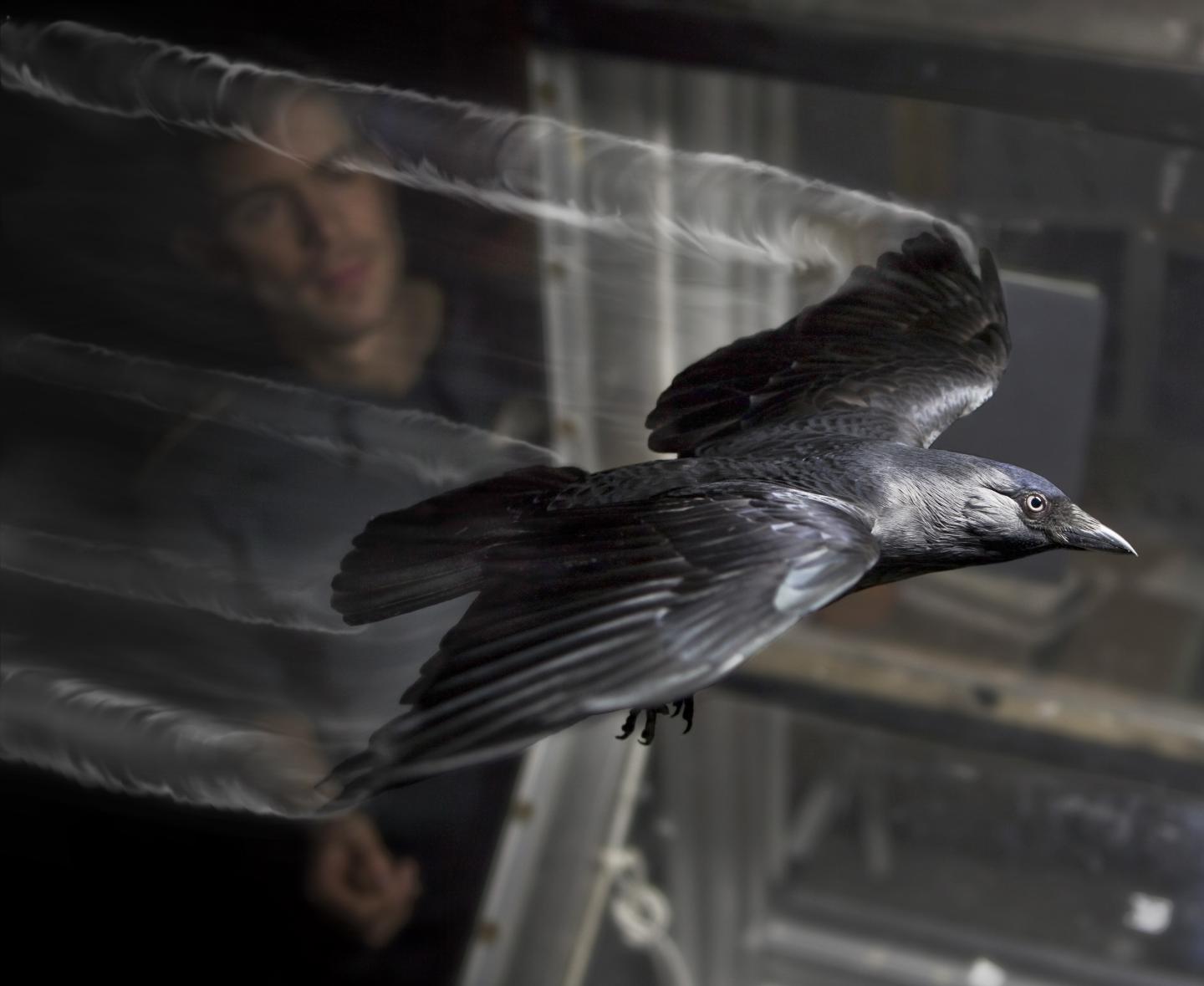
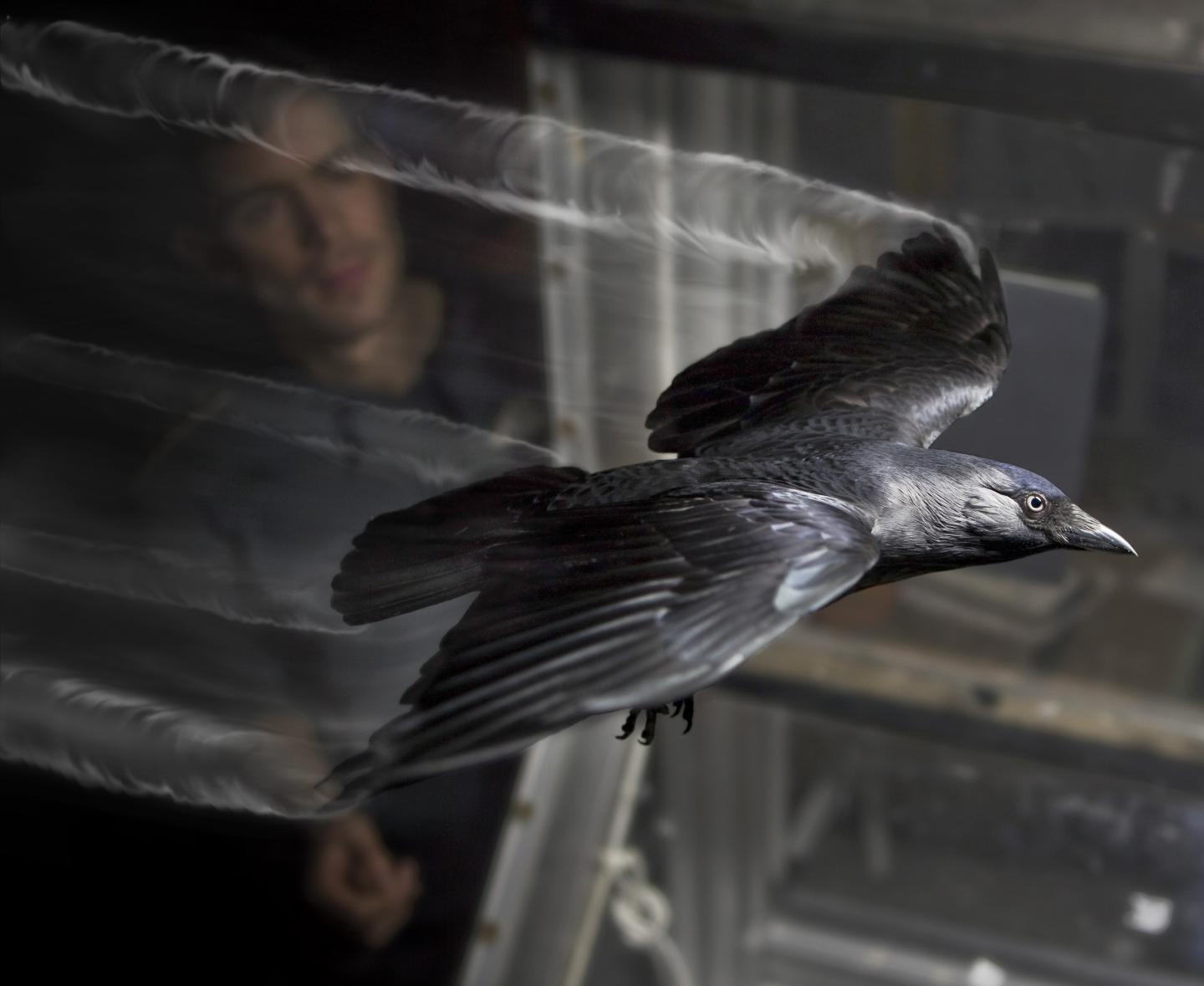
IMAGE

Credit: Photographer Aron Hejdström

For the first time, researchers have observed that birds that fly actively and flap their wings save energy. Biologists at Lund University in Sweden have now shown that jackdaws minimise their energy consumption when they lift off and fly, because the feathers on their wing tips create several small vortices instead of a single large one. The discovery could potentially be applied within the aeronautical industry.

Previously, multiple wingtip vortices have only been associated with large gliders such as eagles, vultures and storks. Now biologists Anders Hedenström, Christoffer Johansson and Marco Klein Heerenbrink of the Faculty of Science at Lund University in Sweden have discovered the same phenomenon in jackdaws, which flap their wings when they lift off and fly.

The experiments were conducted in a wind tunnel at the Department of Biology in Lund. The jackdaw lifted off and flew through a thin mist that reflects laser light, which is captured by advanced cameras. By using multiple images from several cameras, the researchers were able to build up three-dimensional images of the air flow around the jackdaw's wing tips.

"The feathers on the wing tips can be compared to the spread fingers of a hand. The wing tip generates several small air vortices instead of one large vortex, as on an aeroplane with rectangular or elliptical wing tips. It requires more energy and costs more to lift off when only one large wing tip vortex is generated", says Anders Hedenström, professor of theoretical ecology.

According to the researchers, their success in proving that not only large gliders generate several small vortices around each wing tip could mean that wing tips with slotted feathers originally evolved to make flapping active flight more efficient.

The aeronautical industry has realised that there is money to be made in reducing the strength of the wing tip vortex. Some planes are already constructed with wing tips that are bent upwards. This reduces the strength of the vortex and thereby fuel consumption.

Anders Hedenström believes that his and his colleagues' discovery could also be significant for the design of future drones.

"We could potentially build more efficient drones to fly with active wingbeats. Within a ten-year period, we could see drones which have the morphology of a jackdaw", he says.

The research findings have been published in an article in the Journal of The Royal Society Interface.

###

For more information

Anders Hedenström, Professor of Theoretical Ecology
Department of Biology, Lund University
46-46-222 41 42
46-70-543 19 36
[email protected]

Media Contact

Anders Hedenström, Professor of Theoretical Ecology
[email protected]
46-705-431-936
@lunduniversity

http://www.lu.se

Related Journal Article

http://dx.doi.org/10.1098/rsif.2017.0099

Share12Tweet8Share2ShareShareShare2

Related Posts

Caddisfly Silk Gene Rapidly Evolves While Keeping Its Stickiness

Caddisfly Silk Gene Rapidly Evolves While Keeping Its Stickiness

July 9, 2026
New Research Reveals Necks Exist in Fishes and Amphibians

New Research Reveals Necks Exist in Fishes and Amphibians

July 9, 2026

New Genetic Screen Advances Understanding of Human Development

July 9, 2026

California Gray Wolves Mainly Consume Cattle, Raising Human-Wildlife Conflicts

July 9, 2026
Please login to join discussion

POPULAR NEWS

  • Detection of EDCs in Breast Milk and Infant Urine Up to Six Months Highlights Early Exposure Risks

    77 shares
    Share 31 Tweet 19
  • New Drug Candidate Developed at McMaster Shows Potential for Treating Brain Cancer

    58 shares
    Share 23 Tweet 15
  • KTU Researchers Explore Ultrasound’s Role in Enhancing Blood Flow Beyond Diagnostics

    53 shares
    Share 21 Tweet 13
  • 高齢者の骨粗鬆症治療の持続性比較

    51 shares
    Share 20 Tweet 13

About

We bring you the latest biotechnology news from best research centers and universities around the world. Check our website.

Follow us

Recent News

Universal Cell Embedding Advances Foundational Models in Cell Biology Research

US adult misuse of ADHD medication decreases, study reveals

Cutting living space key to lowering building CO2 emissions

Subscribe to Blog via Email

Enter your email address to subscribe to this blog and receive notifications of new posts by email.

Join 84 other subscribers
  • Contact Us

Bioengineer.org © Copyright 2023 All Rights Reserved.

Welcome Back!

Login to your account below

Forgotten Password?

Retrieve your password

Please enter your username or email address to reset your password.

Log In
No Result
View All Result
  • Homepages
    • Home Page 1
    • Home Page 2
  • News
  • National
  • Business
  • Health
  • Lifestyle
  • Science

Bioengineer.org © Copyright 2023 All Rights Reserved.