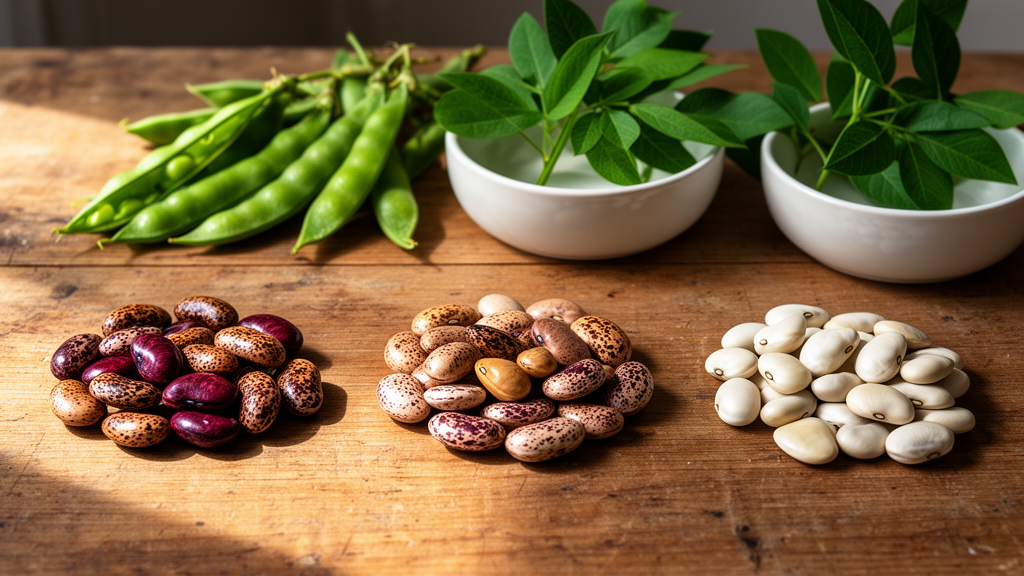
Researchers from Côte d’Ivoire have completed a detailed assessment of the genetic diversity in Phaseolus lunatus, commonly known as the lima bean, using microsatellite markers. The study, published in Discover Plants, analyzed 87 accessions collected from 33 localities across the country’s four main agroecological zones. By applying ten polymorphic microsatellite loci, the team aimed to quantify genetic variation and understand the population structure of this food legume, which is widely appreciated in the region but remains poorly documented in terms of its genetic makeup.
The primary objective of the research was to identify redundancy within the national germplasm and to guide future conservation and breeding efforts. The accessions were stratified by three distinct levels: collection zone, seed-coat color, and morphological group. This multi-faceted approach allowed the researchers to determine which descriptor best predicts the underlying genetic structure. The morphological groups were defined through hierarchical cluster analysis of phenotypic data, separating the accessions into four categories based on flowering and cycle length, ranging from semi-early to very late accessions.
For the molecular analysis, the team selected the most distant accessions from different zones and seed-coat types to maximize the representation of genetic variation. A total of 379 individuals were genotyped, with three to five individuals per accession. DNA extraction was performed using an improved protocol adapted for plant tissues containing polysaccharides and polyphenols. The PCR amplification of the ten microsatellite loci was carried out with specific thermal cycling conditions, and the resulting products were separated on agarose gels to estimate allele sizes against a molecular size standard.
The results indicated moderate genetic diversity across the studied population. The polymorphism information content (PIC) of the SSR loci ranged from 0.51 to 0.79, with a mean of 0.66, suggesting that the markers were highly informative for discriminating among accessions. However, the mean number of alleles per locus varied significantly depending on the stratification level, ranging from 1.66 across seed-color classes to 2.33 across morphological groups. The proportion of polymorphic loci also varied, reaching 100% in specific morphological groups and southern collections, while remaining lower in other strata.
Observed heterozygosity was consistently low across all strata, with means ranging from 0.06 to 0.10. This pattern is expected in a predominantly self-pollinating species like Phaseolus lunatus. The Shannon index, which measures genetic diversity, was highest for the morphological groups at 0.59, suggesting that this stratification captures the most genetic variation. Analysis of molecular variance attributed 12% to 30% of the total variation to differences among the different strata.
Bayesian clustering analysis using the STRUCTURE software supported the existence of four distinct gene pools, corresponding to K = 4. These clusters aligned with both geographic zones and morphological groups, with limited admixture observed between them. Cluster 1 was dominated by southern accessions and showed little admixture, while Clusters 2 and 3 corresponded to the Centre and West zones. Cluster 4 primarily grouped accessions from morphological groups G2 and G4. The clear genetic structuring indicates that seed exchange and movement of planting material between zones have been restricted, likely due to local trading and on-farm saving of seeds.
The study highlights that morphological groups provide the most useful proxy for the underlying gene pools, capturing more genetic variation than either seed color or geographic origin. This finding has practical implications for conservation strategies, as it suggests that future collecting missions should focus on southern Côte d’Ivoire and sample across different morphological groups and seed-coat types. By prioritizing these diverse groups, researchers can maximize the genetic diversity captured for a given sampling effort, which is crucial for assembling a core collection and for breeding locally adapted varieties.
Compared to other West African studies, the diversity reported in this research is moderate. In Benin, similar studies identified three subpopulations with lower polymorphism information content. The diversity in Côte d’Ivoire is also lower than that found in the South American center of origin, where Shannon indices approach 0.95. This reduction in allelic diversity in West African material is likely explained by a founder effect during the transatlantic introduction of the crop. Despite this, the variation present in the Ivorian collection is sufficient to be exploited for varietal improvement and to enhance the nutritional quality of local diets.
The researchers noted several limitations in their study. The resolution of the scoring method used, which relied on agarose gels, may underestimate the number of alleles per locus and fail to detect some heterozygotes. Consequently, the observed heterozygosities should be read as lower bounds, and fixation indices as upper bounds. Additionally, the West zone was represented by only three accessions, which limits the reliability of diversity estimates for that specific region. The use of only ten markers provides limited genome coverage, and future work using genotyping by sequencing could offer genome-wide resolution to validate these estimates.
In conclusion, the study provides a comprehensive overview of the genetic diversity of Phaseolus lunatus in Côte d’Ivoire. The identification of four distinct gene pools and the superior utility of morphological groups for stratification offer valuable insights for conservation and breeding programs. By focusing on the most diverse accessions and understanding the population structure, stakeholders can better manage the germplasm resources. This work underscores the importance of characterizing orphan crops to improve food security and nutritional quality in sub-Saharan Africa, where undernutrition remains a significant challenge.
The agronomic and nutritional value of Phaseolus lunatus provides crucial context for its role in West African agriculture. Across sub-Saharan Africa, persistent malnutrition contributes to forty-five percent of child mortality under five years of age and was linked to the stunting of sixty-two million children in 2022. Micronutrient deficiencies affect over two hundred million people across the region, where cereal-dominated agricultural landscapes remain vulnerable to erratic rainfall and soil degradation. The lima bean addresses these deficits by delivering seeds containing fifteen to twenty-six percent protein by dry weight, thirteen to thirty-three percent dietary fiber, and notable levels of iron, potassium, and folate. Furthermore, because the legume fixes atmospheric nitrogen to sustain soil fertility and withstands drought alongside acidic soils, it supports smallholder production while aligning with the Sustainable Development Goals adopted in 2015.
The germplasm collection spanned thirty-three localities unevenly distributed among the country’s four main agroecological zones: forty-nine accessions originated from the South, twenty-six from the East, nine from the Centre, and three from the West. Field sampling complied with national regulations and International Union for Conservation of Nature directives, relying upon verbal authorization granted by local producers. Phenotypic evaluations conducted at University Nangui Abrogoua in Abidjan assessed twenty morphological traits, applying UPGMA clustering to pairwise Euclidean distances to differentiate four distinct phenological groupings. Group G1 encompassed semi-early accessions completing their cycle in under 150 days, group G2 contained very late accessions requiring approximately 180 days, group G3 comprised late-flowering types blooming 123 days after sowing, and group G4 included early-flowering accessions reaching bloom in 74 days. In addition, visual classification recorded twenty distinct seed-coat color configurations.
Extraction procedures relied on an optimized isolation method tailored to overcome secondary metabolites in plant tissues. Seeds were planted in ridges at three-centimeter depths, and juvenile leaves were harvested from seedlings seven to fifteen days after emergence before being preserved in silica gel. Technicians ground twenty milligrams of leaf tissue with a GenoGrinder and incubated the homogenate at sixty-five degrees Celsius in seven hundred microliters of CTAB extraction buffer containing Tris-HCl, sodium chloride, EDTA, SDS, sarkosyl, and polyvinylpyrrolidone. After precipitation with isopropanol and ethanol washes, nucleic acids were resuspended in TE buffer at roughly one hundred nanograms per microliter. Polymerase chain reactions amplified ten microsatellite loci across forty cycles featuring denaturation at ninety-four degrees Celsius, annealing between fifty-seven and sixty degrees, and extension at seventy-two degrees. Amplification products were separated on agarose gels stained with SYBR Safe and visualized under ultraviolet illumination.
Individual marker informativeness varied across loci, with polymorphism information content spanning from 0.51 at locus BM154 to 0.79 at locus BM211. Regional comparisons demonstrated pronounced diversity in the South, which displayed an average of 2.50 alleles per locus, an effective allele count of 1.84, and completely polymorphic loci. In contrast, accessions from the West exhibited the lowest values, registering 1.40 alleles per locus, an effective allele count of 1.25, and forty percent polymorphic loci. Unbiased expected heterozygosity reached 0.41 in southern collections while falling to 0.15 in the West, with observed heterozygosity dropping to 0.03 in the Centre. Analysis of molecular variance partitioned thirteen percent of total variation among collection zones, seventy-four percent among individuals within zones, and thirteen percent within individuals, yielding a differentiation index of 0.131. Nei’s genetic distance was narrowest between the South and East at 0.047, while reaching 0.422 between the West and Centre.
Pairwise genetic distances reached 0.98 between white speckled with black and uniform light red types. To capitalize on this divergence, breeders can cross late-maturing southern accessions from morphological group G2 with distinct seed types from the East or Centre, establishing structured core collections to safeguard local germplasm on smallholder farms.
Subject of Research: Genetic diversity assessment of Phaseolus lunatus in Côte d’Ivoire using microsatellite markers
Article Title: Assessment of genetic diversity in Phaseolus lunatus varieties cultivated in Côte d’Ivoire through microsatellite markers
Article References: Mobio, A. D. S., Bonny, B. S., Kouke, R. J. U., Kouadio, K. W. T., & Koffi, K. K. (2026). Assessment of genetic diversity in Phaseolus lunatus varieties cultivated in Côte d’Ivoire through microsatellite markers. Discover Plants, 3(1), Article 534. https://doi.org/10.1007/s44372-026-00980-8
Image Credits: AI Generated
DOI: 10.1007/s44372-026-00980-8
Keywords: Phaseolus lunatus, genetic diversity, microsatellite markers, Côte d’Ivoire, lima bean, population structure, Bayesian clustering, morphological groups, seed-coat color, agroecological zones, conservation genetics, food legumes, self-pollination, germplasm characterization, West African crops, polymorphism information content, heterozygosity, fixation index, breeding programs, orphan crops
News Source: Juliet Wilcox. (November 12, 2026). Ivorian Lima Bean Study Reveals Four Distinct Gene Pools. Scienmag.