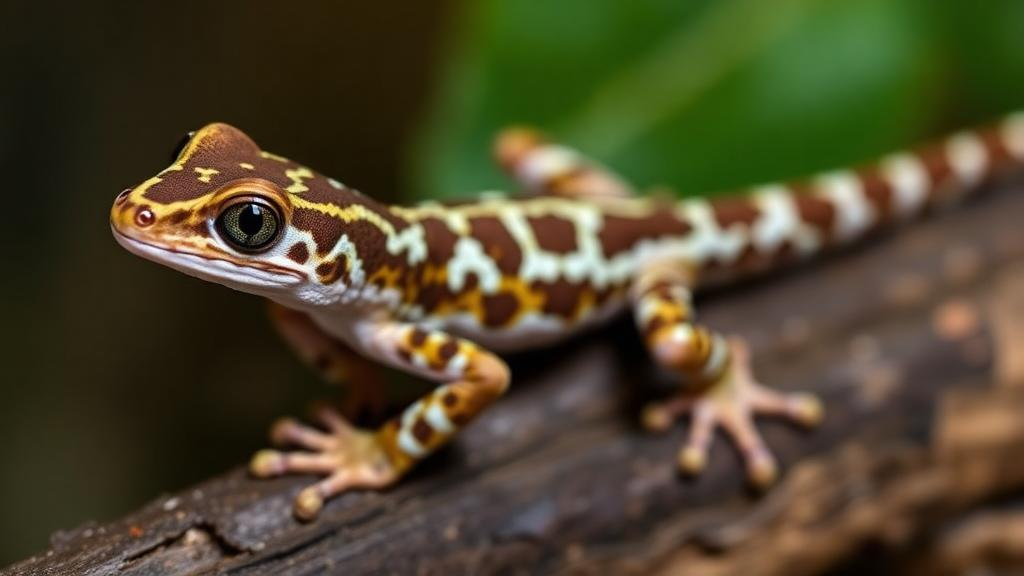
House geckos are among the most successful colonizers of the world’s islands, but their histories are surprisingly difficult to reconstruct. The animals can drift long distances on ocean currents, hitchhike in cargo, and establish populations in buildings far from their native ranges. For the tiny Îles Éparses in the western Indian Ocean, genetic evidence now reveals a mixed picture: some geckos appear to be recent human-mediated arrivals, while others belong to a deeply localized lineage whose origins remain uncertain. A study of specimens collected from Juan de Nova, Europa, Tromelin and Grande Glorieuse used partial mitochondrial DNA sequences to identify the species, trace likely routes of colonization and reassess whether the island populations are native or alien.
The Îles Éparses are scattered around Madagascar and form part of France’s Southern and Antarctic Lands. They are geologically young volcanic islands or coral formations that have never been connected to a continental source population. As a result, every gecko living there must have crossed the sea, either by natural dispersal or with human assistance. That distinction matters for conservation: an alien population may require management, whereas a naturally colonized species can reveal how isolated islands are colonized and how regional biodiversity develops. The challenge is that Hemidactylus geckos have a long record of both abilities, and the historically recognized H. mabouia grouping combined several species that look similar externally.
Researchers gathered the reptiles during fieldwork between 2013 and 2017. They removed small tail-tip samples, extracted DNA with a high-salt method and amplified part of the mitochondrial 16S ribosomal RNA gene. Twenty-one sequences were generated: 19 from geckos assigned to the H. mabouia–H. mercatorius complex and two from H. platycephalus. The sequences were aligned with representative specimens available in GenBank, and evolutionary relationships were estimated through maximum-likelihood phylogenetic analysis. Model selection identified the GTR+I+G substitution model for both datasets, while 1,000 bootstrap replicates assessed support for the resulting trees. This approach allowed the researchers to place island haplotypes among previously defined lineages without requiring a complete genome or new formal species descriptions.
On Juan de Nova, the two H. platycephalus specimens shared a mitochondrial haplotype and belonged to a lineage containing populations from continental Africa, Madagascar, the Comoros and Zanzibar. Their sequence differed by only one nucleotide from a known sample from Mozambique, a pattern consistent with a recently introduced population rather than a long-established island lineage. Historical records had not confirmed H. platycephalus on Juan de Nova before the past 25 years, strengthening the case for human transport. The geckos’ close relationship to African and western Indian Ocean populations also points toward a continental source, although the genetic marker alone cannot identify the exact route or timing.
The islands’ other geckos revealed a more complicated history. The population on Juan de Nova was identified as H. mabouia sensu stricto, a lineage associated with human-aided dispersal across Africa and the Americas and also recorded from Comoros, Seychelles, Tanzania, Zanzibar, Pemba and Réunion. By contrast, the geckos on Europa and Tromelin fell within H. mercatorius and closely matched specimens from Madagascar. All 15 specimens examined from Europa had the same haplotype, and the single Tromelin specimen carried that same sequence. Because Europa and Tromelin are far apart, and because H. mercatorius was not documented on Tromelin until comparatively recently, the evidence supports a recent transfer from Europa to Tromelin.
That proposed route has a plausible carrier. Logistics vessels remove waste from Europa and land on Tromelin every two or three years, creating repeated opportunities for geckos or eggs to be transported unintentionally between the islands. The genetic match is exact at the marker examined, strengthening the connection between the populations. Nevertheless, the study does not claim that the pathway was directly observed. It instead identifies a probable mechanism consistent with both the genetic evidence and the chronology, illustrating how shipping can subtly connect even extremely remote island ecosystems.
The status of geckos already present in historical records remains less certain. Reports under the name “H. mabouia” date the presence of geckos on Grande Glorieuse and Juan de Nova to the 1890s and on Europa from 1903. Such records predate modern transport networks, but they are not sufficiently precise to establish species identity or prove natural colonization. Juan de Nova’s H. mabouia and Europa’s H. mercatorius each carry a distinct haplotype not exactly matched in available samples from potential source populations. This leaves open two major possibilities: the island populations may be native relicts whose continental relatives remain unsampled, or they may descend from introduced animals whose source populations have not yet been genetically characterized.
Grande Glorieuse produced the study’s most intriguing discovery. Its H. mercatorius specimens all shared a previously unknown haplotype embedded in a diverse lineage known only from the Aldabra archipelago, which includes Aldabra, Cosmoledo, Astove and Assumption. Earlier work had found 12 haplotypes across those four islands, and the new Grande Glorieuse sample increased the known diversity of the lineage. This pattern raises the possibility of an ancient regional stock rather than a straightforward recent invasion. Yet human transport cannot be excluded because Seychelles companies held concessions for coconut plantations in parts of the region during the twentieth century, potentially creating routes through which geckos could have been carried between islands.
The high diversity of the Aldabra lineage is difficult to reconcile with a simple recent introduction. Aldabra was completely inundated about 136,000 years ago, while other islands in the surrounding region may be only around 15,000 years old, although geological evidence for marine terraces on Assumption suggests that some neighboring islands could be older than a uniform age would imply. The presence of Assumption just 27 kilometers from Aldabra offers a plausible setting in which geckos could have colonized repeatedly, diversified and later experienced local extinctions. Fossil evidence indicates that two or three additional gecko species inhabited Aldabra after its inundation and before the formation of its central lagoon roughly 5,000 years ago, showing that the archipelago sustained repeated reptile colonization over relatively short evolutionary intervals.
Overall, the evidence points to two clear recent introductions: H. platycephalus on Juan de Nova and H. mercatorius transported from Europa to Tromelin. The H. mabouia population on Juan de Nova and the H. mercatorius population on Europa remain biogeographically ambiguous, while Grande Glorieuse expands the known diversity of an unusual H. mercatorius lineage centered on Aldabra. Resolving these uncertainties will require broader genetic sampling of Madagascar, continental Africa and every island in the Aldabra group, together with surveys of other organisms that may carry comparable regional signatures. The findings show how DNA can untangle island histories that old names and scattered observations cannot, while also demonstrating that every arrival—natural or human-assisted—can alter the genetic structure of even the most remote reefs and sand islands.
Subject of Research: Genetic origins and taxonomic status of island Hemidactylus geckos in the western Indian Ocean.
Article Title: Origins and taxonomic status of Hemidactylus geckos on the Îles Éparses of the Western Indian Ocean
Article References: Harris, D. J., Sanchez, M., & Rocha, S. (2024). Origins and taxonomic status of Hemidactylus geckos on the Îles Éparses of the Western Indian Ocean. Herpetozoa, 37, 181-187. https://doi.org/10.3897/herpetozoa.37.e118699
Image Credits: AI Generated
DOI: 10.3897/herpetozoa.37.e118699
Keywords: Hemidactylus geckos, Îles Éparses, Indian Ocean islands, mitochondrial DNA, taxonomy, island biogeography, invasive species, human-mediated dispersal, Aldabra archipelago, Madagascar, Origins, taxonomic
News Source: Violet Maxwell. (October 19, 2026). Island DNA Reveals Gecko Introductions and Ancient Indian Ocean Lineages. Scienmag.