• HOME
  • NEWS
  • EXPLORE
    • CAREER
      • Companies
      • Jobs
    • EVENTS
    • iGEM
      • News
      • Team
    • PHOTOS
    • VIDEO
    • WIKI
  • BLOG
  • COMMUNITY
    • FACEBOOK
    • INSTAGRAM
    • TWITTER
Wednesday, May 20, 2026
BIOENGINEER.ORG
No Result
View All Result
  • Login
  • HOME
  • NEWS
  • EXPLORE
    • CAREER
      • Companies
      • Jobs
        • Lecturer
        • PhD Studentship
        • Postdoc
        • Research Assistant
    • EVENTS
    • iGEM
      • News
      • Team
    • PHOTOS
    • VIDEO
    • WIKI
  • BLOG
  • COMMUNITY
    • FACEBOOK
    • INSTAGRAM
    • TWITTER
  • HOME
  • NEWS
  • EXPLORE
    • CAREER
      • Companies
      • Jobs
        • Lecturer
        • PhD Studentship
        • Postdoc
        • Research Assistant
    • EVENTS
    • iGEM
      • News
      • Team
    • PHOTOS
    • VIDEO
    • WIKI
  • BLOG
  • COMMUNITY
    • FACEBOOK
    • INSTAGRAM
    • TWITTER
No Result
View All Result
Bioengineer.org
No Result
View All Result
Home NEWS Science News Biology

Is home management by remote self-monitoring an alternative for women with intermediate- and high-risk pregnancies?

Bioengineer by Bioengineer
December 8, 2021
in Biology
Reading Time: 1 min read
0
Is home management by remote self-monitoring an alternative for women with intermediate- and high-risk pregnancies?
Share on FacebookShare on TwitterShare on LinkedinShare on RedditShare on Telegram

In a study published in Acta Obstetricia et Gynecologica Scandinavica that included 400 women with intermediate- and high-risk pregnancies, self-monitoring — in which the women themselves collected blood pressure, temperature, cardiotocography and other parameters (including blood samples in selected cases) and transferred the information to healthcare professionals using a mobile device platform — was a viable substitute for in-person visits. 
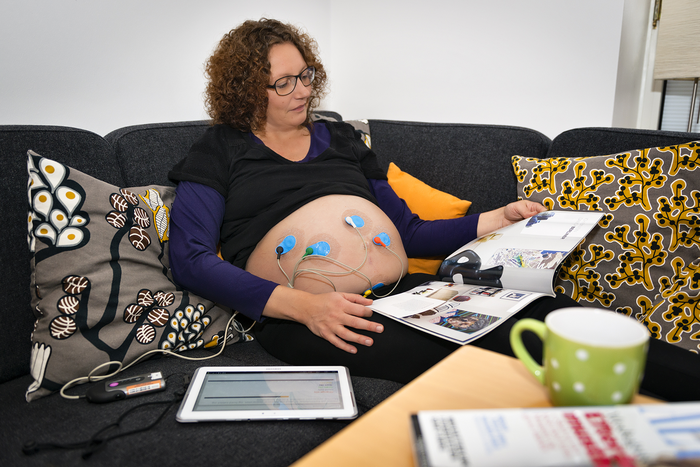
Is home management by remote self-monitoring an alternative for women with intermediate- and high-risk pregnancies?

Credit: Dr. Zizzo

In a study published in Acta Obstetricia et Gynecologica Scandinavica that included 400 women with intermediate- and high-risk pregnancies, self-monitoring — in which the women themselves collected blood pressure, temperature, cardiotocography and other parameters (including blood samples in selected cases) and transferred the information to healthcare professionals using a mobile device platform — was a viable substitute for in-person visits. 

Outcomes were comparable to or better than reported with inpatient care. No severe maternal complications were observed. Nine fetal or neonatal deaths occurred, all secondary to malformations, severe fetal growth restriction, extreme prematurity, or lung hypoplasia. None of the deaths were attributable to the self-monitoring program.  

“Home-monitoring including remote self-monitoring of fetal and maternal well-being in intermediate- and high-risk pregnancies seems to be a safe alternative in selected cases to inpatient or frequent outpatient care,” said lead author Anne Rahbek Zizzo, MD, PhD of Aarhus University Hospital, in Denmark. 


DOI

10.1111/aogs.14294

Share12Tweet7Share2ShareShareShare1

Related Posts

Brookfield Zoo Chicago Achieves Major Milestone in Puerto Rican Crested Toad Conservation with Over 12,000 Tadpoles — Biology

Brookfield Zoo Chicago Achieves Major Milestone in Puerto Rican Crested Toad Conservation with Over 12,000 Tadpoles

May 19, 2026
Decoding p53 Vulnerability: Unraveling Why the Genome Guardian Often Fails — Biology

Decoding p53 Vulnerability: Unraveling Why the Genome Guardian Often Fails

May 19, 2026

New Imaging Technique Simultaneously Maps Brain Activity in Nine Cell Types — Over Four Times the Previous Limit

May 19, 2026

Decoding the Tumor Microenvironment Chemokine Network: From Immune Evasion to Innovative Multi-Target Therapies

May 19, 2026

POPULAR NEWS

  • blank

    New Study Reveals Plants Can Detect the Sound of Rain

    732 shares
    Share 292 Tweet 183
  • Research Indicates Potential Connection Between Prenatal Medication Exposure and Elevated Autism Risk

    846 shares
    Share 338 Tweet 212
  • Breastmilk Balances E. coli and Beneficial Bacteria in Infant Gut Microbiomes

    58 shares
    Share 23 Tweet 15
  • ESMO 2025: mRNA COVID Vaccines Enhance Efficacy of Cancer Immunotherapy

    246 shares
    Share 98 Tweet 62

About

BIOENGINEER.ORG

We bring you the latest biotechnology news from best research centers and universities around the world. Check our website.

Follow us

Recent News

Cerebral NIRS: Key in Managing Post-Hemorrhagic Dilation?

Evaluating APR-246 Response in Ovarian Cancer Mutants

Shattering Barriers: Integrated Solar-Powered Approach for Upcycling Biomass and Plastic Waste

Subscribe to Blog via Email

Enter your email address to subscribe to this blog and receive notifications of new posts by email.

Join 82 other subscribers
  • Contact Us

Bioengineer.org © Copyright 2023 All Rights Reserved.

Welcome Back!

Login to your account below

Forgotten Password?

Retrieve your password

Please enter your username or email address to reset your password.

Log In
No Result
View All Result
  • Homepages
    • Home Page 1
    • Home Page 2
  • News
  • National
  • Business
  • Health
  • Lifestyle
  • Science

Bioengineer.org © Copyright 2023 All Rights Reserved.