


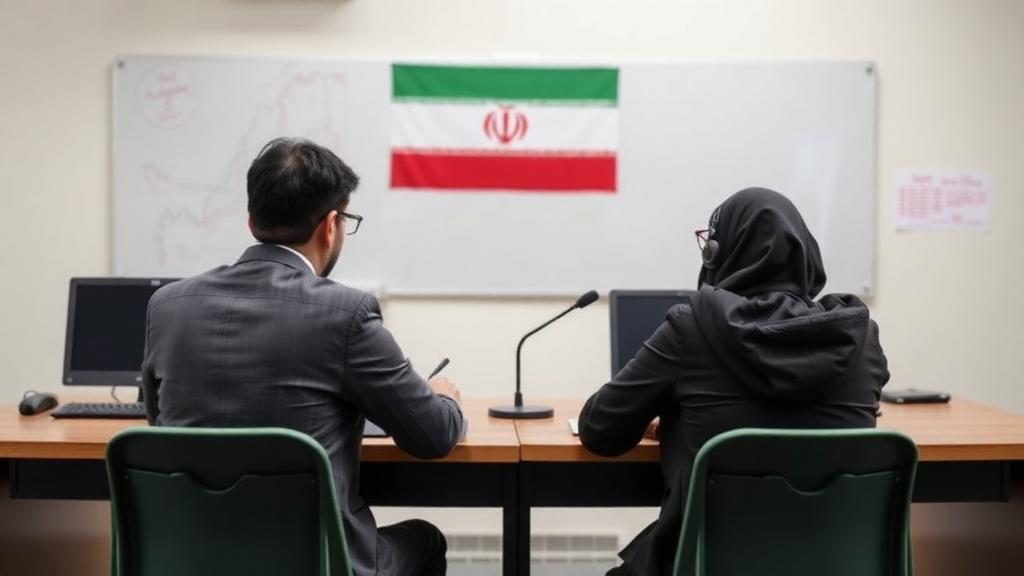
Using a fuzzy analytic hierarchy process combined with thematic analysis of written narratives, the exploratory study asked 14 expert educators to weigh six pedagogical values against six studio teaching models. The result was strikingly consistent: hybrid or blended studios, which combine in-person design critiques and fieldwork with online platforms for discussion, collaboration and feedback, ranked highest across every criterion. Traditional workshops and design charrette models scored lowest. Yet the educators’ own words revealed why the models they prefer are not the ones they can easily adopt: institutional rigidity, centralized curricula and uneven resources stand squarely in the way.
The study, published as an open-access research article in Frontiers of Urban and Rural Planning, is explicitly framed as an investigation of educator perceptions rather than a measurement of student learning. Its authors, Ali Soltani and Mohsen RouhaniGhadikolaei, surveyed educators drawn from major Iranian universities across six cities, selecting them for extensive teaching experience in urban planning, urban design or regional planning graduate programs. Of 25 educators approached between October and November 2024, 18 returned questionnaire sheets, a 72 percent response rate, and four cases were dropped for incomplete or incorrect responses, leaving a final panel of 14. Nine of the 14 panel members hold doctoral degrees or have conducted research at international institutions in Europe, North America or Australia, which the authors argue ensured their evaluations of emerging models were informed by comparative experience rather than purely aspirational expectations.
The quantitative core of the study is the fuzzy analytic hierarchy process, or FAHP, a decision-modeling technique that converts expert pairwise comparisons on a nine-point scale into weighted priorities. Each educator compared six pedagogical values, engagement, real-world applicability, critical thinking, communication, creativity and ethics or sustainability, and then judged six studio models against them: skills-based labs, studio-based learning workshops, the case study method, project-based learning, design charrette models and hybrid blended studios. The six criteria were synthesized from established pedagogical frameworks and prior studies of planning studio effectiveness. The authors stress that the panel size of 14 is consistent with published FAHP applications, where panels typically range from 5 to 20 experts, and that the goal was not statistical generalizability but in-depth perspectives from a purposively selected panel.
The criteria priorities that emerged paint a revealing portrait of what Iranian educators consider most fragile in their current studio system. Student engagement and collaboration received the highest defuzzified weight at 0.26, followed by real-world applicability at 0.21, critical thinking and problem-solving at 0.17, communication skills at 0.14, creativity and innovation at 0.12, and ethical and sustainability awareness at 0.10. The authors interpret this ordering as a diagnosis: process quality and situated practice outweigh product-centric outputs, while the comparatively lower weight given to ethics and sustainability reflects not irrelevance but the difficulty of institutionalizing normative reasoning within tightly scheduled studios and assessment rubrics. They caution that FAHP weights should be read as indicators of decision salience in this context, not as claims about what planning education ought to value.
The ranking of the six teaching methods was remarkably stable. Hybrid blended studios achieved the highest global weight at approximately 0.259, followed by project-based learning at 0.212, the case study method at 0.174, studio-based learning workshops at 0.142, skills-based labs at 0.117 and design charrette models at 0.096. An equivalent composite priority index computed in the study’s appendix corroborated the same order. Notably, the identical preference structure emerged under every sub-criterion, from active participation and teamwork to visual clarity and ethical awareness, which the authors attribute to a very high degree of consensus among the 14 experts, with a consistency ratio of 0.073. Sensitivity analyses, including varying individual criterion weights and applying plus-or-minus 30 percent shifts in weighting influence, confirmed that hybrid studios remained dominant across the full range, while lower-ranked options showed flatter trajectories and limited potential to outperform even under favorable weight shifts.
The qualitative half of the study explains the quantitative rankings through the lived experience of the educators. Eleven of the 18 participants provided sufficiently detailed written narratives in the open-ended sections of their questionnaires, and these responses were analyzed using Braun and Clarke’s six-step thematic approach. Two independent researchers coded the material manually, generating 63 initial codes that were consolidated into seven overarching themes, with inter-coder agreement of 82 percent. The authors acknowledge that the analysis remains limited by the brevity of questionnaire-based responses compared with formal interviews.
The most prominent theme, structural rigidity versus pedagogical flexibility, captures a widespread frustration with linear, task-oriented studio formats. One educator described the three-phase model as giving no room for failure or experimentation and called it outdated; another noted that the linear format provides structure but leaves no space to explore political or social feasibility. A second theme, contextualization and real-world grounding, reflected calls to link studio projects to pressing local crises such as flooding, displacement and pollution, though one educator recounted a success in which students interviewing shopkeepers in the Tabriz Bazaar proposed adaptive reuse ideas that were later used in real funding proposals. Other themes addressed equity, ethics and reflective practice, with educators observing that studios train students in form while neglecting who benefits from planning decisions, and that journaling rather than drawing produced some of the deepest student insights. Digital and hybrid formats were credited with increasing engagement for shy students and flexibility for rural commuters, while also exposing struggles among weaker students online. Further themes covered student agency and failure as learning, institutional constraints on faculty agency, and regional inequity, with educators outside Tehran reporting limited access to live planning projects and supportive municipal offices, which they said affects student confidence and exposure.
The synthesis of the two strands of evidence gives the rankings their explanatory depth. The top score for hybrid blended studios is echoed in educators’ accounts of enhanced engagement, geographic flexibility and better documentation of student work, particularly during and after the pandemic. The second-ranked project-based learning aligns with the demand for real-world grounding, since educators believed only practice-oriented projects could overcome the detachment of simulation-based studios. Case study methods were valued for urgency and data-led learning but seen as partial substitutes for genuine practice without direct stakeholder engagement. Traditional workshops were held back by rigid sequencing and task-oriented instruction, skills-based labs by faculty trained in technical instruction rather than facilitation and workload structures that do not reward innovation, and design charrettes by weak stakeholder access and logistical barriers outside Tehran.
Context matters for interpreting these judgments. Urban planning in Iran was first established in the late 1990s at the Universities of Tehran and Shiraz and has since expanded to about 50 universities with more than 7,000 students and 400 faculty. The undergraduate program involves approximately 130 credits, with project-based studios forming the backbone of practical education across a hierarchically structured sequence of five progressively scaled courses, from site and neighbourhood scales up to city, regional and strategic policy scales. The authors position Iran as an analytically informative case of a centralized, resource-constrained higher-education setting common in the Global South, where globally circulating studio models are selectively adopted and reshaped by local institutional conditions, rather than as an isolated national exception.
The discussion translates these findings into a two-level reform agenda. At the institutional and curricular level, the authors call for reduced student-faculty ratios, expanded digital infrastructure, incentives for faculty innovation and more equitable resource distribution across regions. They sketch a concrete vision of an ideal hybrid blended studio in the Iranian context as a 40/60 pedagogical split, with 40 percent of the course using synchronous digital platforms for international guest lectures, peer-to-peer digital pin-ups and collaborative mapping, and 60 percent devoted to in-person site visits and physical studio critiques, a model intended to address regional inequity by letting students in smaller cities access experts in Tehran or abroad virtually. At the pedagogical level, they urge that reflection, ethics and student agency be embedded in studio teaching, while noting that faculty innovation currently relies on individual initiative rather than systemic support, with one educator remarking that the system rewards compliance, not pedagogical risk.
The authors are careful to bound their claims. They state that the findings represent educators’ perceptions at a specific moment, October to November 2024, rather than direct evidence of student learning outcomes, and that FAHP rankings reflect perceived pedagogical fit rather than causal effectiveness. They also note methodological caveats: pairwise comparisons can be sensitive to panel composition and defuzzification choices, and the hierarchical model assumes independence among criteria that may interact in practice. The recommended path forward is framed as an evolution rather than a wholesale replacement of the studio model, retaining experiential learning, iterative design and the integration of theory and practice while adding hybrid learning environments, stronger community partnerships and more equitable access to digital infrastructure and live projects. Future research, they conclude, should incorporate student surveys, interviews, studio observations, assessment evidence and longitudinal evaluation to determine how these perceived priorities translate into actual learning experiences and outcomes.
Subject of Research: From rigidity to flexibility: reforming urban planning studio pedagogies in developing nations
Article Title: From rigidity to flexibility: reforming urban planning studio pedagogies in developing nations
Article References: Soltani, A., & RouhaniGhadikolaei, M. (2026). From rigidity to flexibility: reforming urban planning studio pedagogies in developing nations. Frontiers of Urban and Rural Planning, 4(1), Article 12. https://doi.org/10.1007/s44243-026-00083-8
Image Credits: AI Generated
DOI: 10.1007/s44243-026-00083-8
Keywords: rigidity, flexibility, reforming, urban, planning, studio, pedagogies, developing, nations, scientific research
News Source: Courtney Benton. (October 29, 2026). Iranian Planning Educators Rank Hybrid Studios Top but Blame Rigid Systems for Blocking Reform. Scienmag.



