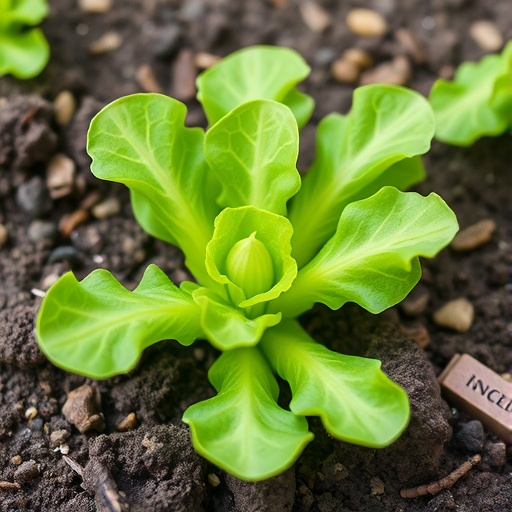
In a breakthrough study poised to redefine our understanding of plant-microbe interactions and soil nutrient dynamics, researchers have unveiled the pivotal role of seed endophytic bacteria from the invasive species Lactuca serriola in enhancing soil phosphorus availability amid phosphorus-deficient conditions. This discovery not only illuminates the intricate symbiosis between invasive plants and their microbiota but also opens promising avenues for sustainable agricultural practices and ecosystem management.
Phosphorus, an essential macronutrient, underpins fundamental biological processes in plants, ranging from energy transfer and photosynthesis to nucleic acid synthesis. However, soil phosphorus often exists in forms that are poorly accessible to plants due to its strong affinity for soil minerals, binding tightly to iron, aluminum, and calcium compounds. This bioavailability constraint poses a significant challenge for crop productivity worldwide, especially in phosphorus-impoverished soils.
The research team, led by Kim TM and colleagues, focused on the invasive species Lactuca serriola, commonly known as wild lettuce, which has rapidly expanded its range in diverse ecosystems. Unlike many plants that suffer under phosphorus scarcity, Lactuca serriola thrives, suggesting adaptive mechanisms that circumvent nutrient limitations. Central to their hypothesis was the potential involvement of seed endophytic bacteria—microorganisms residing within plant tissues that are transmitted through seeds—acting as hidden allies to facilitate nutrient acquisition.
Harnessing cutting-edge genomic and biochemical analyses, the team isolated and characterized these seed endophytes. They discovered that the bacterial communities inside Lactuca serriola seeds possess remarkable traits, including the production of organic acids and phosphatases, enzymes capable of mobilizing phosphorus from otherwise insoluble compounds within the soil matrix. This enzymatic activity effectively liberates phosphate ions into the soil solution, making them accessible for plant uptake.
Detailed soil assays demonstrated that soils inoculated with these endophytic bacteria exhibited significantly elevated levels of available phosphorus compared to controls lacking bacterial inoculation. Moreover, soil phosphorus enhancement was not transient; the bacteria established persistent populations, contributing to sustained phosphorus cycling over extended periods. These findings were corroborated by controlled pot experiments where Lactuca serriola plants inoculated with their native seed endophytes showed increased biomass and improved phosphorus nutrition.
Intriguingly, this bacterial-mediated phosphorus solubilization mechanism was particularly effective under phosphorus-starvation conditions, highlighting an adaptive cooperative strategy that could confer competitive advantages to invasive plants. Such microbe-assisted nutrient acquisition could partly explain the invasive success of Lactuca serriola, allowing it to colonize and dominate nutrient-poor habitats where native species might falter.
The implications of this discovery extend beyond ecological curiosity. Phosphorus fertilizers are a finite and environmentally taxing resource, often leading to eutrophication via runoff and subsequent water quality degradation. Exploiting natural plant-microbe partnerships to enhance phosphorus bioavailability offers a sustainable alternative to chemical fertilizers, aligning with global efforts to promote eco-friendly agricultural inputs.
Furthermore, the study’s insights into seed-transmitted endophytes highlight a previously underappreciated pathway for microbiome inheritance and plant adaptation. Vertical transmission ensures the persistence of beneficial traits across plant generations, potentially accelerating evolutionary responses to environmental stressors such as nutrient deficiency.
From a molecular biology perspective, the identification of key bacterial genes encoding phosphatases and organic acid biosynthesis pathways invites biotechnological exploration. These genetic components could be harnessed to engineer microbial inoculants tailored to various crops, potentially extending the benefits observed in Lactuca serriola to agriculturally significant species.
Additionally, the research underscores the complex interplay between invasive species and their microbiomes, raising important questions about ecosystem invasibility and resilience. While invasive plants are often viewed negatively, their associated microbes might possess untapped utility in bioremediation or nutrient cycling enhancement, provided their applications are carefully managed to avoid adverse ecological consequences.
This comprehensive study, published in Scientific Reports (2026), sets a new benchmark for investigating the ecological functions of seed endophytes in resource acquisition. As phosphorus scarcity looms as a critical challenge in the face of global food security demands and environmental sustainability goals, understanding and leveraging such microbial partnerships could revolutionize agronomy and ecosystem management.
Future research directions proposed by the authors include exploring the diversity of seed endophytes across other invasive and native species, deciphering the molecular dialogue between plants and their endophytes under nutrient stress, and field trials to assess the scalability of these findings. Interdisciplinary collaborations spanning microbiology, plant physiology, soil science, and ecology will be paramount in translating these insights into practical solutions.
This study exemplifies the transformative potential of integrating microbiome biology with plant sciences to solve pressing agricultural and environmental problems. By unveiling the microbe-driven mechanisms enhancing soil phosphorus availability, the researchers have opened the door to innovative strategies that harness the power of nature’s own nutrient cycling agents, promising a greener and more resilient future for global agriculture.
As the scientific community continues to unravel the hidden networks beneath our feet, the discovery of Lactuca serriola’s seed endophytic bacteria as key facilitators of phosphorus mobilization serves as a beacon of hope, demonstrating how even invasive species can harbor biological solutions critical for sustaining life on Earth.
Subject of Research:
Seed endophytic bacteria in invasive Lactuca serriola and their role in increasing soil phosphorus availability under phosphorus-deficient conditions.
Article Title:
Seed endophytic bacteria from invasive Lactuca serriola increase soil available phosphorus under phosphorus deficiency.
Article References:
Kim, TM., Jeong, S., Choi, B. et al. Seed endophytic bacteria from invasive Lactuca serriola increase soil available phosphorus under phosphorus deficiency. Sci Rep (2026). https://doi.org/10.1038/s41598-026-40933-5
Image Credits:
AI Generated
DOI:
https://doi.org/10.1038/s41598-026-40933-5
Keywords:
Seed endophytic bacteria, Lactuca serriola, invasive species, soil phosphorus, phosphorus deficiency, phosphorus solubilization, plant-microbe interactions, nutrient cycling, phosphatase enzymes, organic acids, sustainable agriculture, microbial inoculants
Tags: endophyte-driven crop productivityinvasive plant seed endophytic bacteriainvasive species nutrient adaptationLactuca serriola soil phosphorus enhancementphosphorus bioavailability in agriculturephosphorus mobilizing soil bacteriaplant-microbe symbiosis phosphorus uptakeseed-transmitted beneficial bacteriasoil nutrient cycling with invasive plantssoil phosphorus deficiency solutionssustainable phosphorus management in cropswild lettuce microbiota benefits