


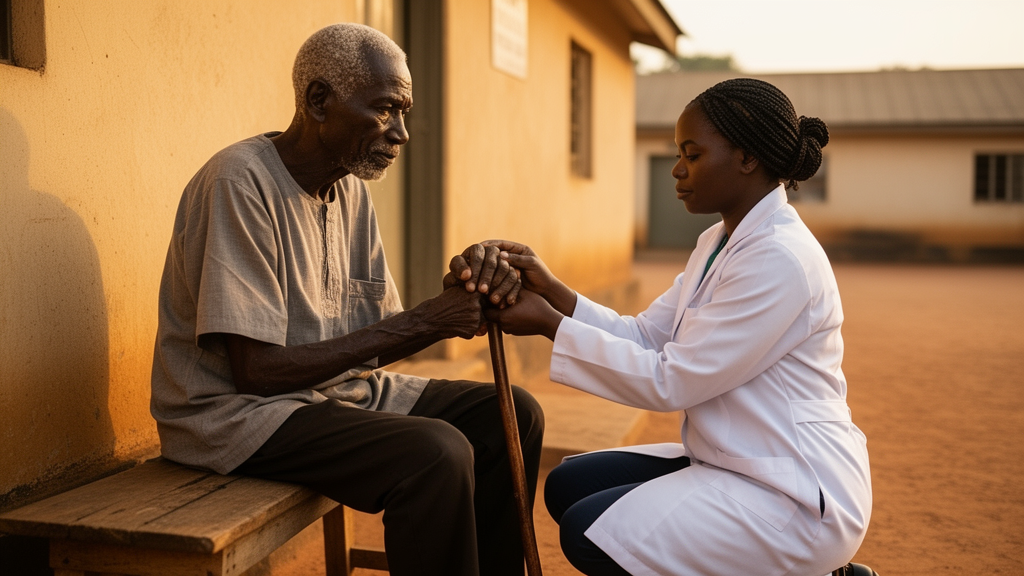
People living with HIV who receive antiretroviral therapy at a clinic in Plateau State, Nigeria, show markedly reduced intrinsic capacity compared with HIV-negative peers, according to a cross-sectional study published in AIDS Research and Therapy.
The research team, led by Oluseye Ajayi with colleagues including Prosper Okonkwo, assessed 239 age-matched people living with HIV on antiretroviral therapy and 234 people living without HIV attending the same clinic setting. Screening relied on the WHO nine-item ICOPE brief screening tool, which flags signs of loss across the individual capacity domains. Any participant showing a sign of loss in one or more domain items was classified as having impaired intrinsic capacity.
The headline result was stark. Overall composite impaired intrinsic capacity was recorded in 217 of the participants living with HIV, or 98.0 percent, against 109 of those living without HIV, or 46.6 percent, a difference the authors characterise as roughly elevenfold and statistically significant. The groups were not identical at baseline: the mean age was 41.4 years among people living with HIV versus 38.5 years among the comparison group, and 77.8 percent of the HIV group were women compared with 65.0 percent of the comparison group, differences that reached statistical significance.
Across the separate capacity domains, impairment was three to four times more common among people living with HIV than among those without the virus, with the notable exception of the mobility domain, where the gap was not observed.
Using univariate and multivariate logistic regression at a 0.05 significance level, the researchers identified three factors associated with intrinsic capacity in the HIV group after adjusting for confounders: current age, duration on antiretroviral therapy and CD4 count. The association with treatment duration is intriguing but, given the cross-sectional design, cannot establish whether longer exposure to therapy, longer time living with the virus, or unmeasured disease history drives the signal.
The authors frame the findings as evidence that HIV may compromise the biological systems underpinning intrinsic capacity, potentially accelerating ageing and raising vulnerability to adverse health outcomes among people living with HIV. They argue that ageing assessments in this population should adopt a functional approach rather than a disease-based one, so that declines in capacity are detected early and functional ability is preserved.
Several caveats deserve emphasis. The study is cross-sectional and analytical, so it captures associations at a single point in time and cannot demonstrate that HIV causes capacity decline over a person’s lifetime. The sample comes from a single clinic in Plateau State, and the age and sex composition of the two groups differed, factors the statistical adjustments may only partly address. The ICOPE tool is a brief screening instrument, so an impaired classification indicates flagged concerns that would typically warrant fuller clinical evaluation rather than confirmed diagnoses.
The article was published as open access on 10 October 2026 and, at the time of this report, is being shared as an early peer-reviewed accepted version that remains citable and carries a permanent DOI ahead of the final version of record.
Subject of Research: Intrinsic capacity impairment and its associated factors among people ageing with HIV in Nigeria
Article Title: Intrinsic capacity and associated factors in people ageing with human immunodeficiency virus in Nigeria
Article References: Ajayi, O., Ajayi, O., Adetoye, D., & Okonkwo, P. (2026). Intrinsic capacity and associated factors in people ageing with human immunodeficiency virus in Nigeria. AIDS Research and Therapy. https://doi.org/10.1186/s12981-026-00955-5
Image Credits: AI Generated
DOI: 10.1186/s12981-026-00955-5
Keywords: HIV, intrinsic capacity, ageing, Nigeria, antiretroviral therapy, ICOPE screening tool, cross-sectional study, CD4 count, functional ability, WHO, Intrinsic, capacity
News Source: Beatrice Stafford. (October 29, 2026). Intrinsic Capacity Heavily Impaired in Nigerians Ageing with HIV. Scienmag.



