• HOME
  • NEWS
  • EXPLORE
    • CAREER
      • Companies
      • Jobs
    • EVENTS
    • iGEM
      • News
      • Team
    • PHOTOS
    • VIDEO
    • WIKI
  • BLOG
  • COMMUNITY
    • FACEBOOK
    • INSTAGRAM
    • TWITTER
Monday, August 24, 2026
BIOENGINEER.ORG
No Result
View All Result
  • Login
  • HOME
  • NEWS
  • EXPLORE
    • CAREER
      • Companies
      • Jobs
        • Lecturer
        • PhD Studentship
        • Postdoc
        • Research Assistant
    • EVENTS
    • iGEM
      • News
      • Team
    • PHOTOS
    • VIDEO
    • WIKI
  • BLOG
  • COMMUNITY
    • FACEBOOK
    • INSTAGRAM
    • TWITTER
  • HOME
  • NEWS
  • EXPLORE
    • CAREER
      • Companies
      • Jobs
        • Lecturer
        • PhD Studentship
        • Postdoc
        • Research Assistant
    • EVENTS
    • iGEM
      • News
      • Team
    • PHOTOS
    • VIDEO
    • WIKI
  • BLOG
  • COMMUNITY
    • FACEBOOK
    • INSTAGRAM
    • TWITTER
No Result
View All Result
Bioengineer.org
No Result
View All Result
Home NEWS Science News Biology

Into a competitive world, guppies are born not just bigger, but more mature

Bioengineer by Bioengineer
July 31, 2017
in Biology
Reading Time: 3 mins read
0
Share on FacebookShare on TwitterShare on LinkedinShare on RedditShare on Telegram
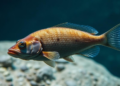
IMAGE

Credit: Terry Dial

PROVIDENCE, R.I. [Brown University] — Throughout nature, moms engage in a trade-off: Churn out a bevy of offspring and hope for the best, or have fewer kids but invest more in their survival. Trinidadian guppies provide a model example of this pervasive parenting poser, but a new study by Brown University researchers provides uniquely deep insight into how guppy moms equip their babies for the environment they'll face.

Essentially one of two fates confront the guppies who inhabit the South American island's mountain streams. Guppies who live lower down the mountain face a constant threat of predators. Fish higher up the slope live a relatively predator-free life, but it's no paradise because in waters teeming with fellow guppies, the competition for limited food is stiff. Up to now, what scientists had observed is that guppy moms in the high-predation (HP) waters produced scads of smaller young while guppies in the low-predation areas (LP) produced fewer but larger young.

In the new study in Scientific Reports, Brown postdoctoral researcher Terry Dial and colleagues report that the size difference of a couple of millimeters of length may not be the most meaningful one. Instead, the larger guppies in the LP streams are born significantly more mature, at least where it counts for their way of eating. It's their internal anatomy that may promote their survival.

LP guppy mouth joints swing twice as widely (22 degrees instead of 11), the researchers found. As a result their jaws open to a bigger gape. The heads of LP guppies are 90 percent hardened at birth, while HP guppies are only 20 percent hardened. Finally, the muscles controlling the jaws are bigger in LP guppies. Eventually, HP guppies will catch up – if they survive – but LP guppies are born better at scraping algae and diatoms off stream rocks for dinner.

"There is more to it than just an investment in sheer size," Dial said. "This is the first time we'd really gone into the morphology and anatomy of these animals and tried to tease apart what is different about these fish other than just size."

Dial found that not only were the HP and LP populations significantly different in this regard, but also the larger newborns within LP populations were significantly more mature than the smaller newborns in LP populations.

Of course the guppies aren't consciously strategizing. Instead, Dial said, evolution in LP environments apparently selects for moms that produce more fully mature newborns, because those babies are better at competing for food and are therefore more likely to survive and carry on mom's lineage. On the other hand, in HP streams where the main danger is predators, evolution may favor moms who produce so many young, because surely some number will survive to grow up and reproduce without being eaten.

"The mother's fitness is tied into the offspring's fitness," Dial said.

###

In addition to Dial, the paper's other authors are Beth Brainerd of Brown University and Patricia Hernandez of George Washington University.

The National Science Foundation (grants: 1655756, 1601377 and 1025845) and the Bushnell Research and Education Fund supported the study.

Media Contact

David Orenstein
[email protected]
401-863-1862
@brownuniversity

http://news.brown.edu/

Original Source

https://news.brown.edu/articles/2017/07/guppies http://dx.doi.org/10.1038/s41598-017-06414-6
Share12Tweet7Share2ShareShareShare1

Related Posts

RAS Rewires Ribosomes, Reshaping How Cells Read the Genetic Code

RAS Rewires Ribosomes, Reshaping How Cells Read the Genetic Code

August 24, 2026
Young Survivors Face Lifelong Risk of New Aneurysms After Subarachnoid Hemorrhage

Young Survivors Face Lifelong Risk of New Aneurysms After Subarachnoid Hemorrhage

August 24, 2026

Soil Microbes Commonly Depend on Metabolite Cross-Feeding

August 24, 2026

How Plant-Specific and Conserved PAF1 Complex Mechanisms Respond to Replication Stress

August 24, 2026
Please login to join discussion

POPULAR NEWS

  • Scientists develop radioafterglow nanoprobes to image hydrogen peroxide deep inside tissues

    29 shares
    Share 12 Tweet 7
  • Roadmap Advances End-to-End, Task-Agnostic Exoskeleton Control

    29 shares
    Share 12 Tweet 7
  • HisToSpatialCNV Predicts Spatial Copy-Number Variations from Pathology Images Using Interpretable Deep Learning

    29 shares
    Share 12 Tweet 7
  • Open dataset helps Europe redesign buildings for a vanished climate

    29 shares
    Share 12 Tweet 7

About

We bring you the latest biotechnology news from best research centers and universities around the world. Check our website.

Follow us

Recent News

Scientists develop radioafterglow nanoprobes to image hydrogen peroxide deep inside tissues

Roadmap Advances End-to-End, Task-Agnostic Exoskeleton Control

HisToSpatialCNV Predicts Spatial Copy-Number Variations from Pathology Images Using Interpretable Deep Learning

Subscribe to Blog via Email

Enter your email address to subscribe to this blog and receive notifications of new posts by email.

Join 85 other subscribers
  • Contact Us

Bioengineer.org © Copyright 2023 All Rights Reserved.

Welcome Back!

Login to your account below

Forgotten Password?

Retrieve your password

Please enter your username or email address to reset your password.

Log In
No Result
View All Result
  • Homepages
    • Home Page 1
    • Home Page 2
  • News
  • National
  • Business
  • Health
  • Lifestyle
  • Science

Bioengineer.org © Copyright 2023 All Rights Reserved.