


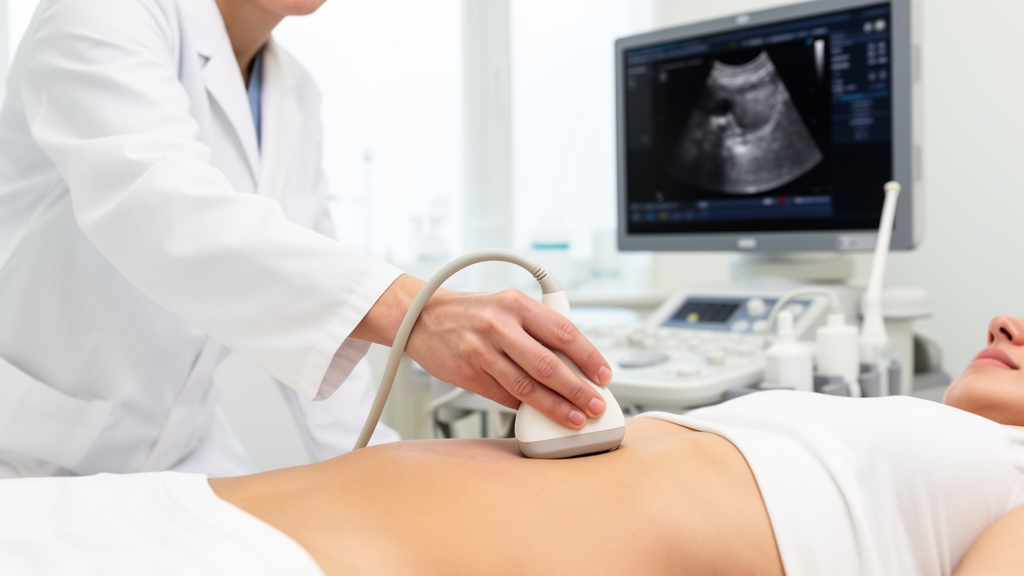
Intestinal ultrasound, scored with a standardized index, closely matched clinical symptoms, blood and stool biomarkers, and CT or MRI findings in a new prospective study of patients with Crohn’s disease, suggesting the bedside, radiation-free technique could take on a larger role in routine monitoring of this chronic inflammatory bowel condition.
The study, published in the Egyptian Journal of Radiology and Nuclear Medicine, enrolled 28 patients with pathologically proven Crohn’s disease at a single university hospital center between January 2024 and May 2025. The cohort included 18 males and 10 females, with a mean age of about 30 years and an age range of 10 to 49 years. All participants were recruited during routine follow-up for established disease, meaning every patient had prior treatment exposure and varying degrees of treatment response, a design the authors describe as a real-world follow-up population rather than a newly diagnosed group.
Each patient underwent intestinal ultrasound using high-resolution convex and linear transducers operating at 5 to 12 megahertz, covering the small and large bowel with particular attention to the terminal ileum. The examiners measured bowel wall thickness, graded color Doppler blood flow signals on a scale from L0 to L3, assessed whether the normal layered structure of the bowel wall was preserved or lost, and looked for inflammatory mesenteric fat and nearby enlarged lymph nodes. These components were combined into the International Bowel Ultrasound Segmental Activity Score, known as IBUS-SAS, a 0-to-100 index calculated as four times bowel wall thickness plus fifteen times inflammatory fat, plus seven times the Doppler signal and four times the wall stratification score. Clinical activity data, including the Crohn’s Disease Activity Index, C-reactive protein, and fecal calprotectin, were reviewed only after the ultrasound examinations were complete, so that the clinical picture could not influence image acquisition.
The results showed a striking alignment between the ultrasound score and conventional measures of activity. The mean IBUS-SAS was 47.1, with values ranging from 10 to 90, and intestinal ultrasound classified 19 of the 28 patients, or 67.9 percent, as having active disease. The score correlated strongly with the Crohn’s Disease Activity Index, with a Spearman coefficient of 0.915, and almost as strongly with fecal calprotectin at 0.828 and C-reactive protein at 0.823, all statistically significant. When patients were grouped by clinical status, median scores rose in a clear stepwise pattern, from 11 in remission to 24.5 in mild-to-moderate disease and 69.5 in moderate-to-severe disease. Similar gradients appeared across biomarker strata: median scores climbed from 11 to 20 to 70 as fecal calprotectin moved from inactive to borderline to active ranges, and patients with elevated C-reactive protein had a median score of 64 compared with 12 for those with normal levels.
Receiver operating characteristic analysis quantified how well the ultrasound score discriminated active from inactive disease. For detecting any clinical activity, defined as a Crohn’s Disease Activity Index above 150, the optimal cut-off was 24.5, yielding an area under the curve of 0.978, sensitivity of 90 percent, specificity of 87.5 percent, and diagnostic accuracy of 89.3 percent. For moderate-to-severe activity, defined as an index above 220, a cut-off of 38 achieved an area under the curve of 1.000, with 100 percent sensitivity and 84.6 percent specificity. The authors caution, however, that these cut-offs are hypothesis-generating and require external validation, since the cohort was small, came from a single center, and lacked a formal a priori sample-size calculation.
Beyond scoring inflammation, the ultrasound examinations detected complications in 13 patients, or 46.4 percent of the cohort. These included four inflammatory strictures, four fistulas, two cases with sinus tracts and abscesses, two cases of ulceration with sinus tracts, and one recurrence at an ileocolic surgical anastomosis. Bowel wall thickness ranged from 2.3 to 11 millimeters, with a mean of 5.25 millimeters, and was greatest in the ileum at a mean of 4.28 millimeters, followed by the caecum and ascending colon, a distribution consistent with Crohn’s disease’s typical predilection for the terminal ileum and ileocecal region. Fat wrapping, a sign of longstanding transmural inflammation, was present in just over half of the patients, and loss of mural stratification, which can indicate more severe inflammation, was seen in 28.6 percent.
To validate the ultrasound findings against cross-sectional imaging, 20 of the 28 patients also underwent CT or MRI as clinically indicated, with 17 receiving CT and 3 receiving MRI. The ultrasound exams were performed within one to two weeks of the cross-sectional study and, importantly, before the CT or MRI results were reviewed, minimizing review bias. Agreement between the two modalities, measured with Cohen’s kappa, was substantial to almost perfect for most parameters: perfect agreement for abscesses and anastomotic recurrence, 0.900 for ileal or ileocolic thickening, 0.832 for strictures, and 0.773 for colonic mural thickening. Agreement for fistulas and sinus tracts was moderate at 0.639, and perianal disease was the clear weak point: both affected patients had their perianal involvement missed on ultrasound, with no agreement at all.
That limitation matters clinically, and the authors are explicit about where intestinal ultrasound falls short. Deep pelvic and perianal disease remain better seen on MRI, which the study suggests should be reserved for such specific indications, along with indeterminate sonographic findings. The modality’s operator-dependent nature is another constraint; although an experienced radiology consultant independently reviewed the findings, the study included no formal inter-observer reproducibility analysis. Other acknowledged limitations include the absence of endoscopic correlation, since the clinical index and biomarkers used as comparators are imperfect surrogates for true intestinal inflammation, the small number of MRI examinations, which precluded modality-specific analysis, and a predominance of moderate-to-severe disease that may have introduced spectrum bias and inflated diagnostic performance estimates. The lack of longitudinal follow-up also meant the study could not test whether the score tracks changes in disease activity over time in individual patients.
Even with those caveats, the findings add to a growing body of evidence supporting intestinal ultrasound as a frontline monitoring tool. The technique’s practical advantages are considerable: it involves no ionizing radiation, unlike CT; it is far cheaper and more accessible than MRI; it can be performed at the bedside in real time; and it can be repeated as often as needed, which is particularly valuable for young patients who would otherwise face repeated endoscopies or imaging studies over decades of disease. Endoscopy, while the gold standard for grading intraluminal activity, is invasive, poorly tolerated, and limited to the mucosal layer, whereas ultrasound can assess the full thickness of the bowel wall and extramural complications.
For patients with Crohn’s disease, whose condition typically demands frequent reassessment across a lifetime, a reliable, repeatable, non-invasive window on intestinal inflammation could meaningfully change how treatment response is monitored and how flares and complications are caught early. This study, in a modest but real-world Middle Eastern cohort where such data had been lacking, indicates that a standardized ultrasound score can deliver that window with accuracy approaching that of cross-sectional imaging for most bowel complications, provided clinicians remember its blind spots and confirm suspicious deep or perianal findings with MRI.
Subject of Research: Intestinal ultrasound scoring for assessing Crohn's disease activity and complications
Article Title: Intestinal ultrasound assessment of Crohn’s disease activity and complications: correlation with clinical, biochemical, and cross-sectional imaging findings
Article References: Khaled, M., afify, A. H., Emara, D. M., ABDELFATTAF, N. M. A., & Hussein, M. A. A. (2026). Intestinal ultrasound assessment of Crohn’s disease activity and complications: correlation with clinical, biochemical, and cross-sectional imaging findings. Egyptian Journal of Radiology and Nuclear Medicine, 57(1), Article 221. https://doi.org/10.1186/s43055-026-01875-0
Image Credits: AI Generated
DOI: 10.1186/s43055-026-01875-0
Keywords: Crohn's disease, intestinal ultrasound, IBUS-SAS, fecal calprotectin, C-reactive protein, CDAI, MRI, CT enterography, bowel wall thickness, diagnostic accuracy, inflammatory bowel disease, medical imaging
News Source: Ophelia Keating. (October 29, 2026). Intestinal ultrasound score tracks Crohn’s disease activity with high accuracy. Scienmag.



