Researchers at the Institute of Radiation Medicine, Chinese Academy of Medical Sciences and Peking Union Medical College, have demonstrated that sustained intestinal delivery of molecular hydrogen significantly enhances exercise endurance in mice. Published in Materials Today Bio, the study identifies a coordinated metabolic response across the gut, liver, and skeletal muscle that supports improved physical performance. The findings address a major pharmacokinetic limitation of hydrogen therapy, where rapid systemic diffusion and an extremely short biological half-life typically restrict its use to acute, supervised settings requiring impractical high-frequency dosing.
To overcome this translational bottleneck, the team engineered an orally administered, intestine-targeted hydrogen-generating micro-reactor designated Mg@SiO2@ES. This single-dose formulation consists of a silica-encapsulated magnesium core protected by an enteric coating. The design permits sustained near-zero-order hydrogen release exclusively inside the intestinal lumen, bypassing the need for the cumbersome regimen of repeated hydrogen-rich water gavage that previously provided preliminary experimental support for the proposed metabolic model.
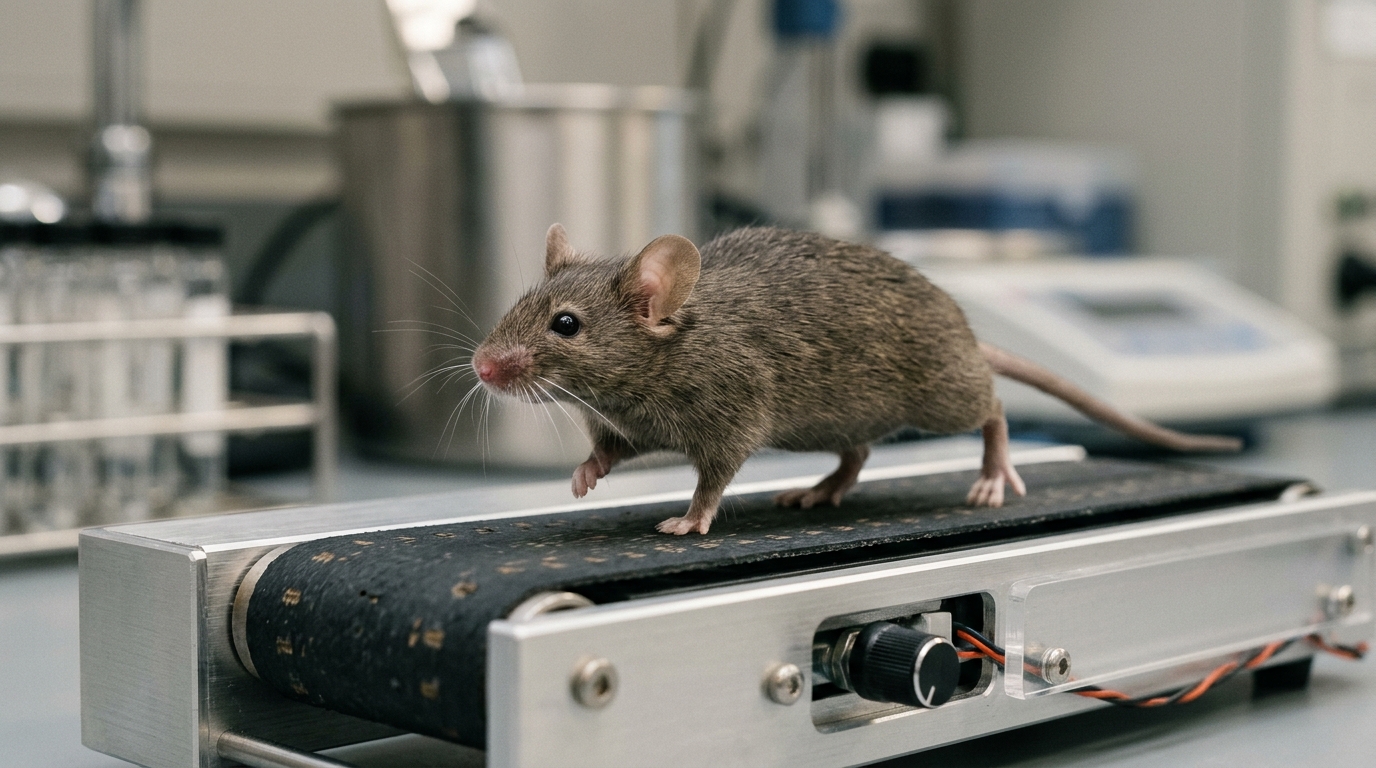
In acute exhaustive treadmill-running models, mice receiving repeated hydrogen-rich water gavage ran significantly longer distances before exhaustion compared with control groups. This functional improvement coincided with reduced exercise-provoked metabolic and oxidative stress markers. Specifically, exhaustive exercise elevated skeletal-muscle reactive oxygen species, serum blood urea nitrogen, and serum lactate concentrations in control animals, whereas hydrogen treatment blunted these changes. The treatment also mitigated the exercise-induced drop in blood glucose and preserved intramuscular glycogen reserves.
The study extended these observations to a long-term strenuous-exercise model, where mice completed 30 consecutive days of 30-minute daily treadmill running. In this paradigm, long-term strenuous exercise increased skeletal-muscle reactive oxygen species and serum blood urea nitrogen. Hydrogen treatment partially reversed these perturbations and was associated with lower serum concentrations of pro-inflammatory cytokines, including interleukin-1 beta, interleukin-6, and tumor necrosis factor alpha. Consistent with acute-exercise observations, serum creatine kinase and lactate dehydrogenase levels did not differ substantially between the treated and control exercise cohorts.
Molecular analysis revealed coordinated changes in skeletal muscle lactate handling and hepatic gluconeogenesis-related expression. In skeletal muscle, hydrogen treatment increased the mRNA abundance of Ldhb and Slc16a1, while Ldha expression showed no additional elevation. At the protein level, monocarboxylate transporter 1 and lactate dehydrogenase B levels were higher in the treated group, whereas lactate dehydrogenase A abundance remained comparable. Parallel profiling of glycolysis-related molecules demonstrated higher mRNA and protein levels of hexokinase 2, phosphofructokinase platelet, and pyruvate kinase M2 in the treated skeletal muscle.
In liver tissue, hydrogen exposure was associated with modified FOXO1-related signaling and elevated downstream gluconeogenic-enzyme abundance. The treated group displayed elevated FOXO1 and phosphoenolpyruvate carboxykinase 1 abundance relative to controls. While pyruvate carboxylase, glucose-6-phosphatase catalytic subunit, and fructose-1,6-bisphosphatase protein levels were not statistically different between the two exercise groups, the overall molecular signature suggests increased hepatic gluconeogenic potential under strenuous exercise. These data indicate coordinated skeletal-muscle-liver glucose-lactate-related responses during exertion.
The engineered Mg@SiO2@ES micro-reactor was designed to replicate these benefits with a single oral dose. Scanning electron microscopy confirmed the uniform spherical morphology of the microparticles, and energy-dispersive X-ray spectroscopy verified the co-localization of magnesium and silicon elements. Gas chromatography measurements revealed that the silica shell extended hydrogen-generating duration from approximately 1.5 hours for bare magnesium microparticles to over 8 hours. The outer Eudragit S100 enteric coating conferred gastric stability at pH 2.0 while enabling selective dissolution and hydrogen release within the intestinal lumen at physiological pH 7.4.
In vivo verification using a hydrogen microsensor confirmed that detectable hydrogen was recovered throughout the gastrointestinal tract six hours post-administration, with peak concentrations measured in the ileum. A single pre-exercise gavage of Mg@SiO2@ES at a dose of 100 mg/kg reproduced multiple key phenotypes seen with repeated hydrogen-rich water gavage. Mice treated with the micro-reactor achieved significantly longer exhaustive-running distances, accompanied by reduced post-exercise skeletal-muscle reactive oxygen species and serum blood urea nitrogen. The formulation also blunted serum lactate accumulation and maintained higher blood-glucose and intramuscular-glycogen concentrations following exhaustive exertion.
Control experiments with magnesium sulfate and magnesium-free SiO2@ES were performed to isolate contributions from magnesium ions and the carrier material alone. Neither of these controls reproduced the functional improvements relative to the double-distilled water controls, supporting the specific role of the engineered hydrogen-generating system. Preliminary biosafety assessments indicated that histological examination of major organs, including the stomach, intestine, liver, and kidney, revealed no obvious tissue pathological abnormalities in treated animals compared with controls. Serum magnesium concentrations also showed no significant elevation after oral administration.
The study acknowledges several limitations, including the lack of direct genetic perturbation of FOXO1 and quantitative measurements of hepatic gluconeogenic flux or whole-body lactate turnover. The researchers note that definitive validation of the proposed mechanisms will require future genetic or pharmacological studies and stable-isotope tracing. Additionally, the dextran sulfate sodium and whole-abdominal irradiation models used to assess intestinal protection produce severe pathological damage that does not fully recapitulate mild physiological inflammation associated with heavy exercise. The 12-hour fast imposed before acute exhaustive exercise tests may also alter baseline metabolic states, limiting the generalizability of the acute-exercise observations.
Despite these constraints, the findings establish sustained intestinal hydrogen delivery as a biologically relevant paradigm for improving systemic exercise endurance. The Mg@SiO2@ES platform offers a feasible path toward prolonging intestinal hydrogen exposure for exercise-related applications and provides a foundational framework for hydrogen-based interventions in metabolic medicine. The coordinated metabolic responses observed in the gut-liver-muscle axis suggest that targeted hydrogen delivery may modify metabolic adaptations triggered by strenuous physical exertion, opening new avenues for research in exercise physiology and metabolic disease.
The study utilized seven-week-old male C57BL/6 mice housed under controlled temperature and humidity with a 12-hour light-dark cycle. For the acute exhaustive exercise trials, animals underwent a 12-hour food and water deprivation period to standardize pre-exercise metabolic status before treadmill testing. The treadmill protocol began at a speed of 10 meters per minute with a 5-degree incline, increasing by 2 meters per minute every 5 minutes until a maximum speed of 20 meters per minute was reached. Exhaustion was strictly defined as the inability to maintain running despite the application of 0.5 mA electrical stimulation. This standardized approach allowed for precise quantification of endurance performance as total running distance, with blood and tissue samples harvested immediately upon exhaustion to capture the acute physiological state.
Hydrogen-rich water used in the repeated gavage experiments was generated using a commercial hydrogen-enrichment cup, achieving a concentration of 6000 ppb. To maintain stable hydrogen exposure throughout the exercise sessions, mice received an initial 150 microliter intragastric bolus before exercise initiation, followed by additional 150 microliter doses every 15 minutes. Control animals received equivalent volumes of double-distilled water via gavage, ensuring that any observed effects were attributable to hydrogen rather than the mechanical stress of the gavage procedure itself. This high-frequency dosing strategy was necessary to counteract the rapid systemic diffusion and short biological half-life of molecular hydrogen, which otherwise limits its therapeutic utility to acute, supervised settings.
To investigate the molecular mechanisms underlying the observed metabolic shifts, the researchers combined transcriptome profiling with protein expression analysis of skeletal muscle and liver tissues. Skeletal muscle samples were subjected to RNA sequencing, where differential expression analysis identified genes with a log2 fold-change greater than zero and a P-value less than 0.05. KEGG pathway enrichment analysis of the top 100 hydrogen-responsive differentially expressed genes highlighted multiple signaling and inflammatory pathways, including FoxO, MAPK, TNF, and IL-17 signaling. This computational approach justified the subsequent targeted investigation of specific metabolism-associated genes and proteins, linking systemic metabolic changes to distinct transcriptional signatures within the muscle tissue.
In vitro experiments further characterized the cellular responses to hydrogen exposure. Mouse RAW264.7 macrophages were exposed to 100 ng/mL lipopolysaccharide to induce an inflammatory state, with or without hydrogen-rich water treatment for 36 hours. Hydrogen treatment suppressed the LPS-stimulated mRNA expression of Nos2 and pro-inflammatory cytokines, including Il1b, Il6, and Tnf. Additionally, C2C12 myotubes were used to probe glycolytic enzyme regulation. Hydrogen exposure increased the protein abundance of PFKP and PKM2, while its effect on HK2 was modest. When Hk2 was silenced using siRNA, hydrogen treatment partially restored PFKP and PKM2 protein expression, suggesting that HK2-associated pathways contribute to the glycolysis-related expression shifts observed in vivo.
The synthesis of the Mg@SiO2@ES microparticles involved a multi-step chemical process designed to ensure stability and targeted release. Magnesium microparticles were first coated with silica via the hydrolysis of tetraethyl orthosilicate in an acetone suspension. This silica shell was then encapsulated with Eudragit S100, an enteric polymer, by dispersing the powder in isopropanol and injecting it into liquid paraffin. The resulting microspheres were cured at 70 degrees Celsius and treated with hydrochloric acid to eliminate residual surface impurities. This fabrication method ensures that the magnesium core remains protected from aqueous media until the enteric coating dissolves in the distal intestine, where the physiological pH triggers the gradual reaction of magnesium with intestinal fluid to generate hydrogen.
Statistical analysis of the data was conducted using one-way analysis of variance followed by Tukey’s multiple-comparison test, with a P-value less than 0.05 defined as the threshold for statistical significance. Data are presented as mean plus or minus standard error of the mean, where n corresponds to independent biological replicates. Variable sample sizes across different experimental panels arose from multiple independent experimental cohorts, with no animals excluded based on running performance or measured outcomes. Missing samples were exclusively attributed to documented technical sampling failures, ensuring that the statistical comparisons reflect the integrity of the biological data collected during the study.
Subject of Research: Sustained intestinal hydrogen delivery and its effects on exercise endurance and metabolic responses in mice
Article Title: Sustained intestinal hydrogen delivery enhances exercise endurance in mice with coordinated gut-liver-muscle metabolic responses
Article References: Yu, Y., Yuan, T., Wang, Y., Ma, L., Zhang, J., Liu, L., & Fan, S. (2026). Sustained intestinal hydrogen delivery enhances exercise endurance in mice with coordinated gut-liver-muscle metabolic responses. Materials Today Bio, 41, Article 103814. https://doi.org/10.1016/j.mtbio.2026.103814
Image Credits: AI Generated
DOI: 10.1016/j.mtbio.2026.103814
Keywords: molecular hydrogen, exercise endurance, metabolic responses, gut-liver axis, skeletal muscle, hepatic gluconeogenesis, micro-reactor, oxidative stress, lactate metabolism, Materials Today Bio, Sustained, intestinal
News Source: Gregory Coleman. (November 8, 2026). Intestinal Hydrogen Delivery Enhances Exercise Endurance in Mice. Scienmag.