A decade-long observational study from a tertiary referral centre in Brazil reports that short-term complication rates following surgery for intestinal endometriosis vary significantly depending on the specific surgical technique utilized. Examining outcomes over a ten-year span from 2014 to 2024, the investigation revealed that conservative superficial shaving was associated with the lowest overall postoperative morbidity, while more extensive operative approaches such as disc excision and segmental rectosigmoidectomy demonstrated comparatively higher rates of adverse events within the initial thirty days following intervention.
The clinical research evaluated thirty-day postoperative outcomes among a cohort of 335 women who presented with intestinal endometriosis diagnosed preoperatively by imaging. Across the observation window between 2014 and 2024 at the tertiary institution, surgical strategies were tailored to individual patient profiles, with surgeons selecting between superficial shaving, disc excision, or segmental colorectal resection based directly on the documented characteristics of the lesions.
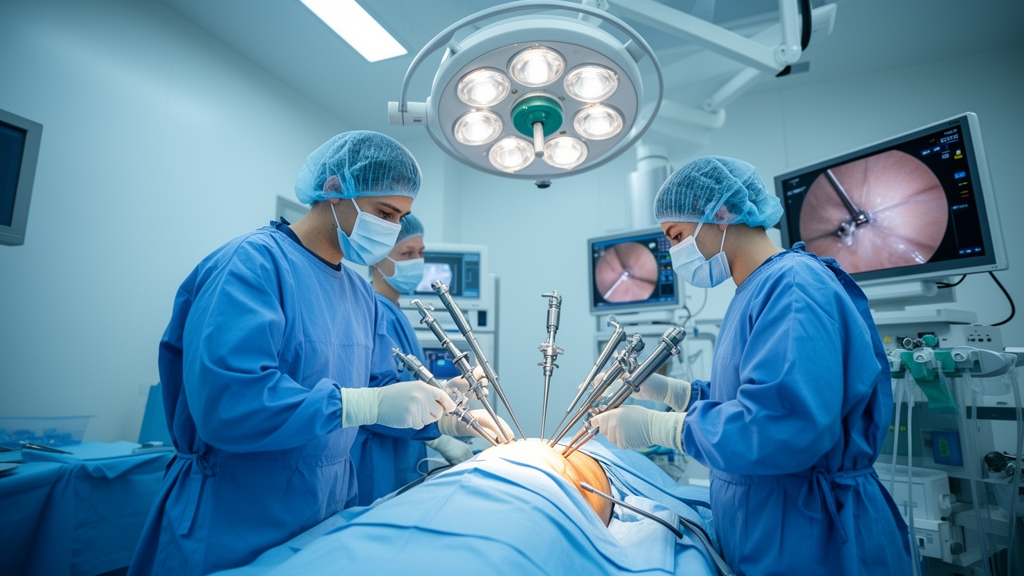
Surgical management across the cohort relied almost universally on minimally invasive approaches, which were completed in 99.7 percent of the 335 participating patients. The operating surgeons recorded a conversion rate of 2.1 percent across the ten years of clinical practice analyzed. In terms of anatomical distribution within the digestive tract, the rectum constituted the most frequently involved site, identified in 49.3 percent of the women, followed by the rectosigmoid junction, which was involved in 27.5 percent of the cases.
To address these bowel lesions, surgeons carried out several distinct types of colorectal interventions across the study population. Segmental rectosigmoidectomy represented the most common colorectal procedure, performed in 37.9 percent of the operated cohort. In comparison, shaving of endometriotic lesions was conducted in 23.3 percent of the patients, while disc excision was chosen for 18.8 percent of the women, demonstrating how procedural selection was distributed across conservative and resective strategies.
Postoperative complications occurring within thirty days of the operation were tracked and graded according to the Clavien–Dindo classification system. Across the entire cohort of 335 women, thirty-day complications occurred in 38 patients, corresponding to an overall morbidity rate of 11.3 percent with a 95 percent confidence interval spanning 8.2 to 15.1 percent. The follow-up demonstrated that late adverse events were substantial, with 22 patients—representing 6.6 percent of the cohort and bearing a 95 percent confidence interval from 4.2 to 9.8 percent—developing complications following discharge from the hospital.
Thirty-day complication rates differed significantly according to surgical technique, yielding a p-value of 0.005. Patients managed with shaving had lower complication rates, whereas higher rates were recorded following disc excision and rectosigmoidectomy. Specific adverse events also tracked with procedural invasiveness: anastomotic leakage occurred exclusively in patients undergoing segmental bowel resection. Meanwhile, disc excision was more frequently associated with postoperative anal bleeding, and shaving demonstrated the lowest overall morbidity among all three evaluated surgical approaches.
Recovery trajectories similarly diverged among the surgical techniques when evaluating the duration of inpatient hospitalization. The median length of hospital stay increased significantly alongside the extent of surgical resection, extending from 2 days after shaving to 3 days after disc excision and reaching 4 days after rectosigmoidectomy, with this upward trend yielding a p-value of 0.046. Despite the documented postoperative morbidity and procedural differences, the surgical teams observed no postoperative mortality across the entire cohort.
In their synthesis of the decade of data, the authors concluded that surgery for intestinal endometriosis in a high-volume referral centre achieves low short-term morbidity and no mortality. Although higher complication rates occurred following more extensive procedures like disc excision and rectosigmoidectomy, the researchers emphasized that these differences likely reflect underlying disease complexity and patient selection rather than technique alone. These observations support a tailored, lesion-adapted approach and underscore the necessity of accounting for patient selection when evaluating comparative surgical outcomes.
Subject of Research: Postoperative complications across surgical techniques for intestinal endometriosis
Article Title: Postoperative outcomes in intestinal endometriosis surgery: a decade of experience from a Brazilian referral centre
Article References: Estrada, D. M. L., Rinoldi, M., Palhares, V. A., de Carvalho Barbosa, E., Queiroz, F. L., Filho, A. L., França, P. R., Carneiro, P. R., de Almeida Falcão Junior, J. O., & de Carvalho Schettino, K. (2026). Postoperative outcomes in intestinal endometriosis surgery: a decade of experience from a Brazilian referral centre. International Journal of Colorectal Disease. https://doi.org/10.1007/s00384-026-05170-2
Image Credits: AI Generated
DOI: 10.1007/s00384-026-05170-2
Keywords: intestinal endometriosis, colorectal surgery, rectosigmoidectomy, disc excision, shaving technique, postoperative complications, Clavien-Dindo classification, minimally invasive surgery, anastomotic leak, postoperative anal bleeding, hospital stay length, surgical morbidity, rectal endometriosis, rectosigmoid junction, retrospective observational study, referral centre outcomes
News Source: Ophelia Keating. (November 20, 2026). Intestinal Endometriosis Surgery Morbidity Differs by Technique in Decade-Long Study. Scienmag.