• HOME
  • NEWS
  • EXPLORE
    • CAREER
      • Companies
      • Jobs
    • EVENTS
    • iGEM
      • News
      • Team
    • PHOTOS
    • VIDEO
    • WIKI
  • BLOG
  • COMMUNITY
    • FACEBOOK
    • INSTAGRAM
    • TWITTER
Monday, May 11, 2026
BIOENGINEER.ORG
No Result
View All Result
  • Login
  • HOME
  • NEWS
  • EXPLORE
    • CAREER
      • Companies
      • Jobs
        • Lecturer
        • PhD Studentship
        • Postdoc
        • Research Assistant
    • EVENTS
    • iGEM
      • News
      • Team
    • PHOTOS
    • VIDEO
    • WIKI
  • BLOG
  • COMMUNITY
    • FACEBOOK
    • INSTAGRAM
    • TWITTER
  • HOME
  • NEWS
  • EXPLORE
    • CAREER
      • Companies
      • Jobs
        • Lecturer
        • PhD Studentship
        • Postdoc
        • Research Assistant
    • EVENTS
    • iGEM
      • News
      • Team
    • PHOTOS
    • VIDEO
    • WIKI
  • BLOG
  • COMMUNITY
    • FACEBOOK
    • INSTAGRAM
    • TWITTER
No Result
View All Result
Bioengineer.org
No Result
View All Result
Home NEWS Science News Biology

Interplay of pollinators and pests influences plant evolution

Bioengineer by Bioengineer
April 11, 2019
in Biology
Reading Time: 2 mins read
0
IMAGE
Share on FacebookShare on TwitterShare on LinkedinShare on RedditShare on Telegram

IMAGE

Credit: Florian Schiestl, UZH

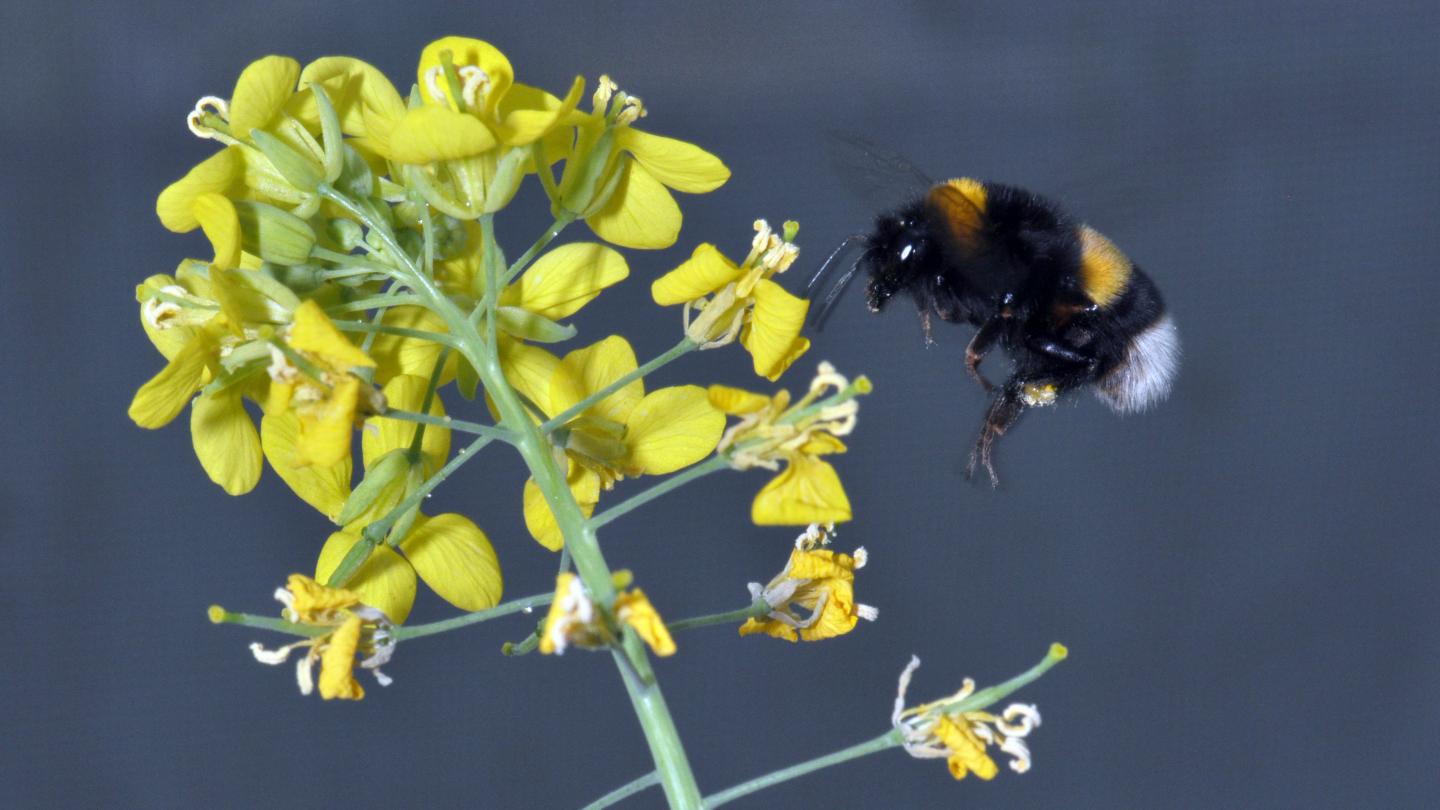
Brassica rapa plants pollinated by bumblebees evolve more attractive flowers. But this evolution is compromised if caterpillars attack the plant at the same time. With the bees pollinating them less effectively, the plants increasingly self-pollinate. In a greenhouse evolution experiment, scientists at the University of Zurich have shown just how much the effects of pollinators and pests influence each other.

In nature, plants interact with a whole range of organisms, driving the evolution of their specific characteristics. While pollinators influence floral traits and reproduction, herbivorous insects enhance the plant’s defense mechanisms. Now botanists at the University of Zurich have investigated the way these different interactions influence each other, and how rapidly plants adapt when the combination of selective agents with which they interact changes.

Experimental evolution in real time

In a two-year greenhouse experiment, Florian Schiestl, professor at UZH’s Department of Systematic and Evolutionary Botany, and doctoral candidate Sergio Ramos have demonstrated a powerful interplay between the effects of pollinating insects and those of herbivores. For their experiment they used Brassica rapa, a plant closely related to oilseed rape, interacting with bumblebees and caterpillars as selective agents. Over six generations they subjected four groups of plants to different treatments: with bee pollination only, bee pollination with herbivory (caterpillars), hand pollination without herbivory, and hand pollination with herbivory.

Balance between attraction and defense

After this experimental evolution study, the plants pollinated by bumblebees without herbivory were most attractive to the pollinators: they evolved more fragrant flowers, which tended to be larger. “These plants had adapted to the bees’ preferences during the experiment,” explains Sergio Ramos. By contrast, bee-pollinated plants with herbivory were less attractive, with higher concentrations of defensive toxic metabolites and less fragrant flowers that tended to be smaller. “The caterpillars compromise the evolution of attractive flowers, as plants assign more resources to defense,” says Ramos.

Combined impact on reproduction

The powerful interplay between the effects of bees and caterpillars was also evident in the plants’ reproductive characteristics: In the course of their evolution, for example, the bee-pollinated plants developed a tendency to spontaneously self-pollinate when they were simultaneously damaged by caterpillars. Plants attacked by caterpillars developed less attractive flowers, which affected the behavior of the bees so that they pollinated these flowers less well.

Better understanding of the mechanisms of evolution

The study shows the importance of interactive effects in the evolution of diversity. If the combination of selective agents changes, for example through loss of habitat, climate change, or a decline in pollinators, it can trigger rapid evolutionary change in plants. “The environmental changes caused by humans affect the evolutionary fate of many organisms. This has implications in terms of ecosystem stability, loss of biodiversity, and food safety,” says Florian Schiestl. He believes that an understanding of these mechanisms has never been more important than it is now.

###

Media Contact
Florian Schiestl
[email protected]

Related Journal Article

http://dx.doi.org/10.1126/science.aav6962

Tags: Agricultural Production/EconomicsBiodiversityBiologyEvolutionPlant Sciences
Share16Tweet8Share2ShareShareShare2

Related Posts

Ancient Plant Populations Reveal Fresh Insights into Climate Resilience — Biology

Ancient Plant Populations Reveal Fresh Insights into Climate Resilience

May 8, 2026
Rare Brain Disorders in Children Linked to Mutations in Lesser-Known Protein Complex — Biology

Rare Brain Disorders in Children Linked to Mutations in Lesser-Known Protein Complex

May 8, 2026

From Odd Insect to Underwater Predator: The Remarkable Evolution of a Bloodthirsty Fruit Fly

May 8, 2026

SNU Professor Sangwoo Seo’s Team Develops Next-Generation CRISPR Biocontainment Technology to Control Microbial Survival Without DNA Cleavage

May 8, 2026
Please login to join discussion

POPULAR NEWS

  • Research Indicates Potential Connection Between Prenatal Medication Exposure and Elevated Autism Risk

    840 shares
    Share 336 Tweet 210
  • New Study Reveals Plants Can Detect the Sound of Rain

    727 shares
    Share 290 Tweet 181
  • Salmonella Haem Blocks Macrophages, Boosts Infection

    61 shares
    Share 24 Tweet 15
  • Breastmilk Balances E. coli and Beneficial Bacteria in Infant Gut Microbiomes

    57 shares
    Share 23 Tweet 14

About

We bring you the latest biotechnology news from best research centers and universities around the world. Check our website.

Follow us

Recent News

New Post-Hoc Analysis Explores Daily Oral Orforglipron Use in Adults Over 65 with Obesity, Regardless of Diabetes Status

Evaluating Digoxin Use in Patients with Symptomatic Rheumatic Heart Disease

Evaluating the Effectiveness and Safety of Digitalis Glycosides in Treating Heart Failure

Subscribe to Blog via Email

Enter your email address to subscribe to this blog and receive notifications of new posts by email.

Join 82 other subscribers
  • Contact Us

Bioengineer.org © Copyright 2023 All Rights Reserved.

Welcome Back!

Login to your account below

Forgotten Password?

Retrieve your password

Please enter your username or email address to reset your password.

Log In
No Result
View All Result
  • Homepages
    • Home Page 1
    • Home Page 2
  • News
  • National
  • Business
  • Health
  • Lifestyle
  • Science

Bioengineer.org © Copyright 2023 All Rights Reserved.