$1.2 million grant will expand clinical training to 21 additional predoctoral interns through 2021
Credit: MU News Bureau
COLUMBIA, Mo. – According to government data, more than 70,000 Americans died in 2017 by overdosing on opioids. In response to the opioid crisis, the US Department of Health and Human Services outlined several key priorities, including improved treatment access, use of overdose-reversing drugs and improved pain management strategies.
Now, the University of Missouri has received a $1.2 million grant from the Health Resources and Services Administration under the Graduate Psychology Education program, which will provide clinical training to doctoral students in underserved Missouri communities affected by the opioid epidemic.
“The training program seeks to create the workforce that America needs while paying special attention to high need communities, and in Missouri that means serving rural residents and urban underserved residents,” said Laura Schopp, chair and professor of health psychology and principal investigator for the training program. “Our goal is to ensure that people with opioid use disorder have access to state of the art, empirically supported treatments, and that our faculty are able to offer specialized training to the next generation of clinicians.”
The grant will use Graduate Psychology Education funding to expand the internship program from four to 11 doctoral internships in 2019, and add seven internships in 2020 and 2021. The interns provide clinical services to active duty military members at Fort Leonard Wood Army Post, patients of the Truman Medical Center in Kansas City and the rural community surrounding Waynesville. The grant will also fund telehealth clinics that run remotely and intervene to help patients with opioid use disorder and other substance abuse issues throughout the state.
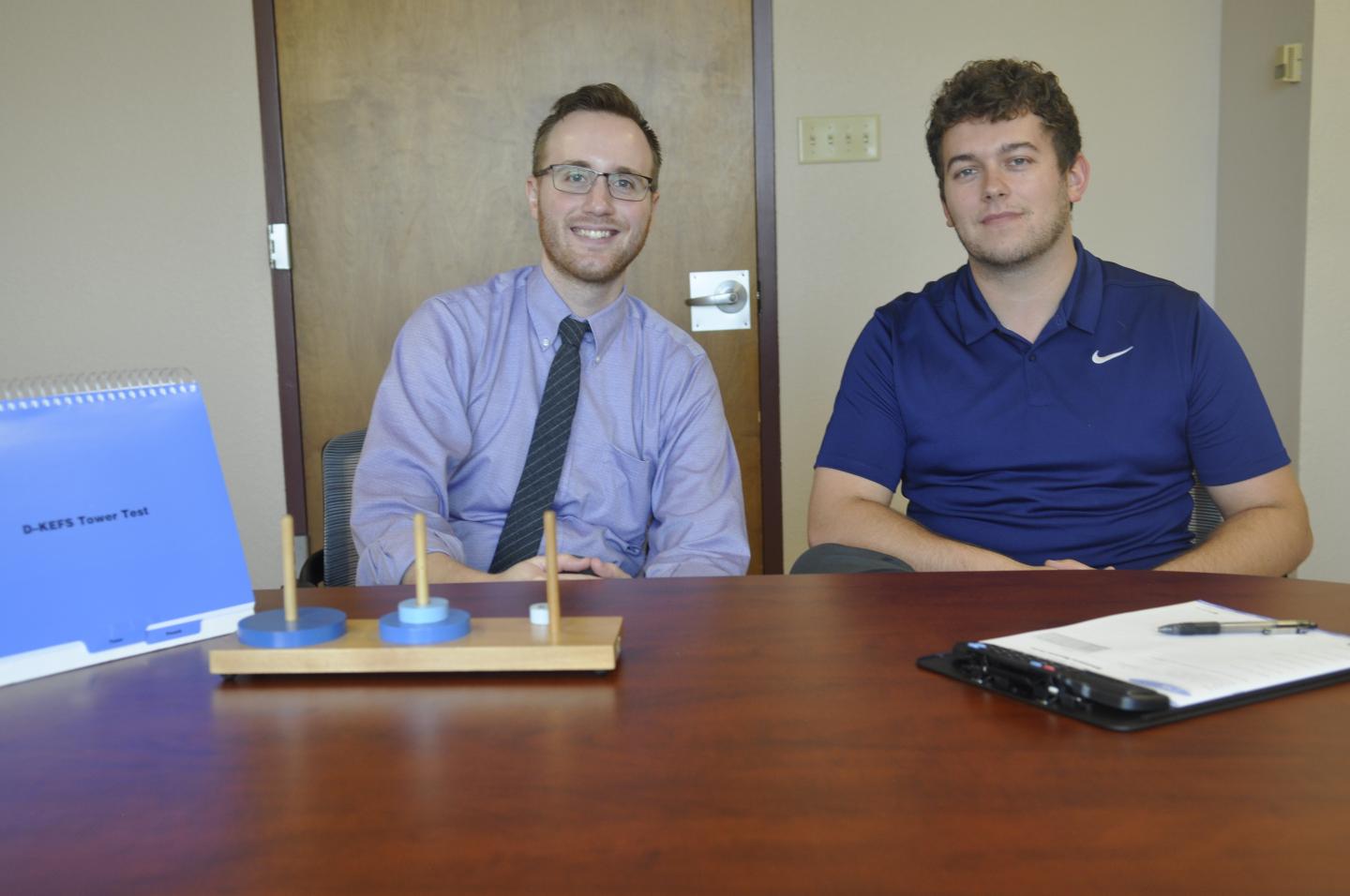
John Lace and Dylan Seitz are two of the doctoral students currently completing their clinical internships at MU and specialize in neuropsychology. Seitz is interested in the relationship between neurologic functioning and health behaviors.
“I’ve always been fascinated by the human brain as such a complex organ,” Seitz said. “All of our brains may look similar on the outside and yet as individuals we all turn out to be different from each other, so I want to better understand that from a functional perspective.”
After completing their internships and earning their doctoral degrees, Lace and Seitz hope to pursue post-doctoral training in clinical psychology and ultimately become independent psychologists.
“We are the first stop on the road to recovery,” Lace said. “Assessing patients who might be struggling with cognitive difficulties due to drug abuse can help us provide tailored recommendations so that the patients ultimately receive the best treatment plan possible.”
By working with patients who suffer from chronic health conditions, the clinics provide interns with specialized training while making a real world impact. Services include therapy sessions, patient assessments and meeting with health care professionals to provide coordinated care. Of special interest are patients whose health conditions put them at higher risk for substance use issues, such as patients with chronic pain.
“We are proud that nearly all of our recent doctoral trainees have gone into underserved environments, which is important to do because these communities always have more needs than resources available,” Schopp said. “Whether it’s rural medical centers, academic medical centers or urban high-need medical centers, if we can help alleviate that burden and improve health outcomes for Missourians suffering with chronic pain and other chronic conditions, that is what it is all about.”
The funding will support several training partnerships throughout Missouri including:
Missouri Department of Mental Health.
MU Department of Neurology.
MU Department of Surgery.
MU Department of Physical Medicine & Rehabilitation
Missouri Institute of Mental Health.
MU Thompson Center for Autism and Neurodevelopmental Disorders.
Harry S. Truman Memorial Veterans’ Administration Hospital.
###
Media Contact
Brian Consiglio
[email protected]
573-882-9144
Original Source
https:/