Investigators have established the study protocol for an international prospective multicenter observational cohort investigation, designated as the CAIGAN study, to evaluate complement activation in primary IgA nephropathy. Reported in BMC Nephrology, the project addresses primary IgA nephropathy as the most common primary glomerular disease worldwide and a principal cause of chronic kidney disease and kidney failure. Growing scientific evidence indicates that complement activation serves a central role in both disease severity and the formation of glomerular crescents. Because complement-targeted therapeutic agents continue to emerge, reliable clinical biomarkers capable of detecting individuals with active complement dysregulation have become increasingly necessary.
The CAIGAN initiative, representing Complement Activation in IgA Nephropathy, is organized as an observational cohort study across adult and pediatric nephrology centers located in Switzerland, Italy, France, and Spain. Under the prospective design, clinical teams will screen consecutive patients who undergo clinically indicated native kidney biopsies for suspected IgA nephropathy. Individuals with histopathologically confirmed primary disease will subsequently be enrolled into the observational cohort.
The study protocol establishes strict procedures and defined timelines for biological specimen collection across all participating centers. For enrolled participants, blood and urine samples designated for complement analyses will generally be gathered following histopathological confirmation of IgA nephropathy, within a four-week window following the initial native kidney biopsy and prior to starting immunosuppressive therapy. For patients presenting with a rapidly progressive clinical course who require immediate immunosuppressive treatment, biological sampling may take place before histopathological confirmation is finalized, conducted after securing informed consent and prior to the administration of any immunosuppressive drugs.
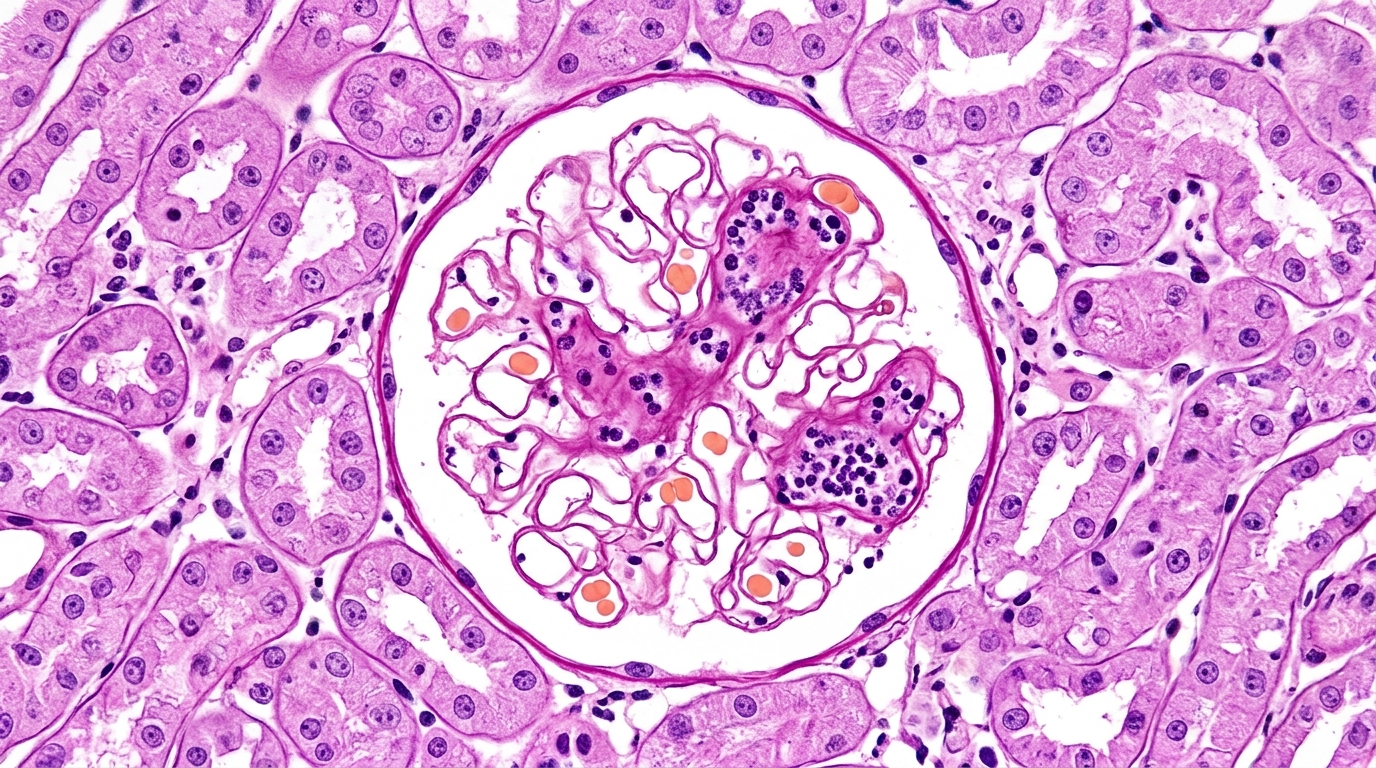
Comprehensive laboratory evaluations planned within the study encompass multi-tiered complement profiling, functional pathway assessments, and complement-related genetic analyses. Researchers will measure circulating complement proteins alongside specific activation products to map systemic pathway activity. In parallel, diagnostic kidney biopsies will be systematically evaluated and characterized according to the standardized Oxford MEST-C classification system. In addition to standard histological scoring, intrarenal complement deposition will be directly examined within a designated subgroup of participating patient tissue specimens.
The primary objective of the prospective cohort is to validate an association identified during an earlier retrospective pilot study conducted by the research group. That retrospective work demonstrated a correlation between concentrations of circulating sC5b-9 and the percentage of active glomerular crescents observed in kidney tissue.
Beyond its primary endpoint, the protocol specifies multiple secondary exploratory objectives aimed at uncovering the precise mechanisms driving complement activation and dysregulation. The research team plans to evaluate how these complement pathways associate with patient clinical phenotypes, histopathological findings, renal tissue complement deposition, genetic profiles, and longitudinal kidney outcomes. Participant follow-up data derived from routine medical care will be recorded at six-month intervals over a total period of three years, supplemented by three-month data whenever available.
By integrating complement phenotyping, genetic characterization, histopathological scoring, and three years of prospective follow-up, the CAIGAN study aims to delineate the full spectrum of complement activation in primary IgA nephropathy. The investigators emphasize that establishing this comprehensive observational framework may ultimately support the development of biomarker-guided therapeutic strategies, helping clinicians identify patient subsets most likely to benefit from targeted complement interventions.
Subject of Research: Complement activation in primary IgA nephropathy
Article Title: CAIGAN study protocol: complement activation in primary IgA nephropathy—study protocol for an international prospective multicenter observational cohort study
Article References: Guzzo, G., Pascual, M., Herrera-Gomez, F. M., Rousson, V., Mittaz-Crettol, L., Gengler, C., Chehade, H., Kistler, A. D., Fenoglio, R., Roccatello, D., Huynh-Do, U., Fakhouri, F., Teta, D., the CAIGAN Study Collaborators, Teta, D., Fakhouri, F., Chehade, H., Kim, M. J., Serra, A., … Bassi, I. (2026). CAIGAN study protocol: complement activation in primary IgA nephropathy—study protocol for an international prospective multicenter observational cohort study. BMC Nephrology. https://doi.org/10.1186/s12882-026-05502-y
Image Credits: AI Generated
DOI: 10.1186/s12882-026-05502-y
Keywords: IgA nephropathy, complement activation, CAIGAN study, prospective cohort study, glomerular disease, chronic kidney disease, kidney failure, glomerular crescents, sC5b-9, Oxford MEST-C classification, kidney biopsy, complement dysregulation, complement-targeted therapies, immunosuppressive therapy, intrarenal complement deposition, complement profiling, biomarker development
News Source: Ophelia Keating. (November 17, 2026). International Prospective Cohort Protocol Details Complement Activation in Primary IgA Nephropathy. Scienmag.