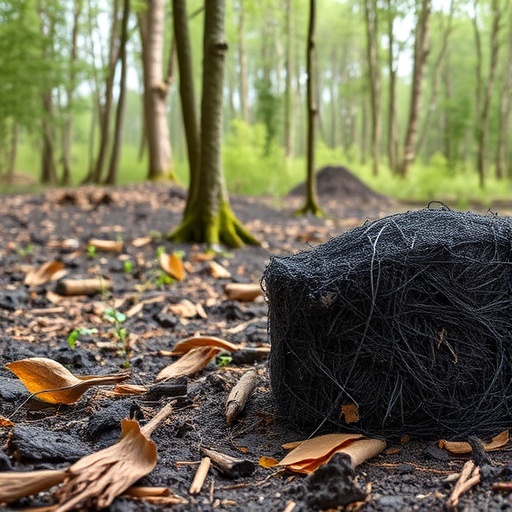
Three Decades of Biochar Research Reveal Why “Black Gold” Works Best When Tailored to the Soil
After 30 years of experiments, field trials, and global meta-analyses, scientists are developing a more precise understanding of how biochar behaves after it is added to soil—and why its benefits can vary so dramatically from one farm to another. The latest synthesis, presented during an online Forum on Biochar and Carbon Research on July 14, 2026, argues that biochar is not a universal soil treatment but a highly adaptable material whose performance depends on how it is produced and where it is used.
Prof. Stephen Joseph of The University of New South Wales, Australia, presented the review to researchers and members of the public in a webinar hosted by Prof. Jianying Shang of China Agricultural University. The event was jointly organized by the journals Biochar and Carbon Research. Joseph emphasized that the central question is no longer simply whether biochar works, but how its chemical and physical properties can be matched to the needs of particular soils, crops, climates, and agricultural systems.
Biochar is produced when plant residues, wood, manure, or other organic materials are heated in a low-oxygen environment through a process known as pyrolysis. Unlike ordinary ash, biochar retains much of the carbon-rich structure of its original biomass. Its internal pores can provide habitat for microorganisms, store water, and retain dissolved nutrients, while its surfaces contain chemically active groups capable of interacting with minerals, organic matter, and contaminants. Yet these properties are not fixed. They depend on the original feedstock, the temperature and duration of pyrolysis, the size of the particles, and any treatment applied after production.
Once incorporated into soil, biochar begins a long transformation. Joseph described three broad stages in its environmental evolution. During the initial stage, some soluble compounds and mineral ions are released from the material. These substances may temporarily influence soil acidity, nutrient availability, and microbial activity. The second stage involves the development of more reactive surfaces as the biochar interacts with oxygen, water, plant roots, and microorganisms. Oxidation can introduce functional groups containing oxygen, increasing the material’s ability to bind nutrients and metals. The third stage is long-term aging, during which biochar becomes increasingly integrated into soil aggregates and organic-mineral networks.
This aging process helps explain why biochar can behave differently several months or years after application than it did immediately after spreading. Fresh biochar may be relatively alkaline and chemically reactive, while aged biochar can develop a greater capacity to hold positively charged nutrients such as ammonium, potassium, calcium, and magnesium. Its porous structure may also become partially filled with organic compounds and microbial residues. Rather than remaining an inert carbon block, biochar gradually becomes part of the soil matrix, where its effects are shaped by moisture, temperature, mineral composition, root activity, and microbial communities.
The review presented during the webinar summarized evidence linking biochar application with improvements in several important soil properties. In acidic soils, alkaline biochars can raise pH and reduce conditions that limit root growth or increase the availability of toxic metals such as aluminum. In sandy soils, the material’s porous structure can improve water retention and reduce the loss of dissolved nutrients. Biochar may also increase soil porosity, support root development, and create microsites that shelter bacteria and fungi from environmental stress. These changes can influence nutrient cycling and improve the efficiency with which plants use water and fertilizers.
One of the most closely studied effects concerns phosphorus, an essential plant nutrient that is often poorly available in highly weathered or acidic soils. Depending on its mineral content and production conditions, biochar can either release phosphorus directly or alter the soil chemistry that controls phosphorus fixation. In some cases, it can make more phosphorus available to plant roots. Research has also found that certain biochars can reduce plant uptake of heavy metals by increasing soil pH, binding metals to reactive surfaces, or encouraging their incorporation into less soluble mineral forms. However, these outcomes depend strongly on the biochar’s composition and the specific contaminant involved.
The climate implications are equally significant but require careful accounting. Biochar can store a portion of plant-derived carbon in a form that decomposes more slowly than the original biomass, potentially keeping carbon in soil for decades or longer. Some studies have also reported reductions in nitrous oxide and methane emissions, two powerful greenhouse gases associated with agricultural soils. Biochar may influence these gases by changing oxygen availability, water movement, microbial habitats, and the transformation of nitrogen compounds. Still, the overall climate benefit depends on the entire production chain, including feedstock collection, transport, pyrolysis energy use, and the fate of co-products such as bio-oil and syngas.
Crop responses across previous studies have been highly variable. Some experiments report substantial yield increases, while others find little change or even temporary declines. The strongest benefits have generally appeared in acidic, nutrient-poor soils and in coarse-textured soils where water and nutrient retention are major constraints. In fertile soils with adequate moisture and balanced nutrient supplies, the additional gains may be smaller. Application rate, particle size, placement, irrigation, fertilizer management, and crop type can all alter the outcome. These variations challenge the idea of a single “best” biochar and instead point toward formulations designed for specific agricultural conditions.
The presentation concluded that biochar’s future will depend on integration rather than simple application. By converting agricultural and forestry residues into a stable carbon-rich material, biochar systems could connect waste management, renewable energy, soil restoration, food security, and climate mitigation. But scientists say successful deployment will require standardized testing, long-term field trials, life-cycle assessments, and careful monitoring of possible contaminants. The webinar’s central message was clear: after three decades of research, biochar is emerging not as a miracle amendment, but as a versatile technology whose greatest potential lies in matching its chemistry and structure to the precise problems faced by farmers and ecosystems.
Subject of Research: Biochar’s effects on soil health, crop productivity, nutrient cycling, greenhouse-gas emissions, heavy-metal availability, carbon storage, and sustainable agriculture.
Article Title: Three Decades of Biochar Research Reveal Why “Black Gold” Works Best When Tailored to the Soil
Web References: https://youtu.be/RFwIdU-0PWE?si=agowdFBfrqeLcbIf
Image Credits: Prof. Stephen Joseph
Keywords: biochar, soil health, sustainable agriculture, carbon storage, climate change mitigation, pyrolysis, crop yield, phosphorus availability, heavy metals, greenhouse gases, food security, circular economy
Tags: biochar and carbon sequestrationbiochar effects on crop yieldbiochar in sustainable agriculturebiochar performance variabilitybiochar production methodsbiochar soil amendmentglobal biochar research synthesisimpact of biochar on soil healthlong-term biochar researchpyrolysis process in biochar creationsoil-specific biochar benefitstailored biochar application