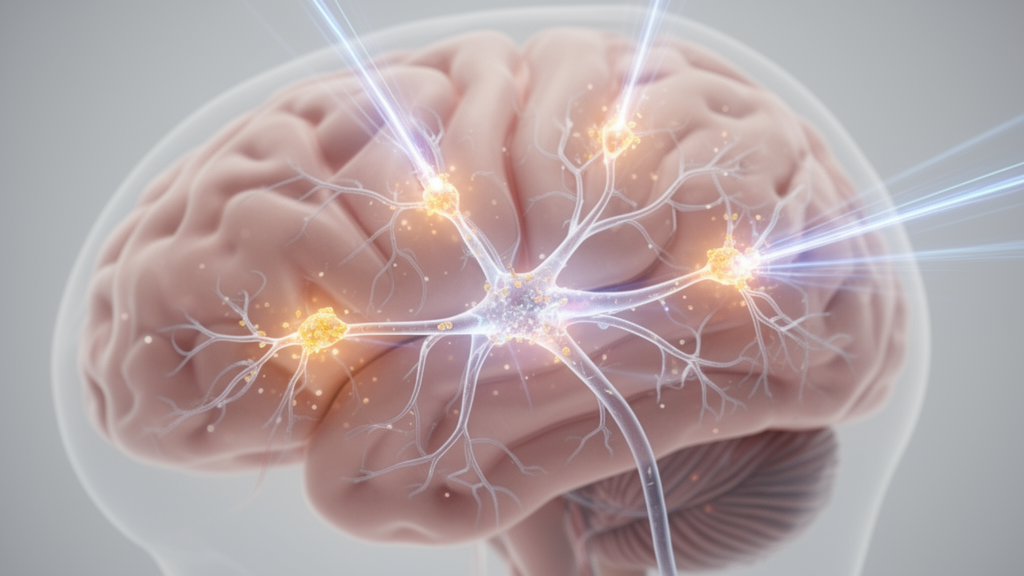
Intermittent theta burst stimulation (iTBS) directed at the primary motor cortex (M1) and the supplementary motor area (SMA) provides a selective mechanism for enhancing late-phase motor preparation.
The research involved fifteen participants performing a self-paced ballistic gripping task. Researchers applied iTBS to M1, the SMA, and a sequential combination of both (M1 + SMA) across three separate experiments. To measure the effects of the stimulation, the team analyzed the movement-related cortical potential (MRCP), focusing on four distinct components: the readiness potential, the negative slope, the motor potential, and the peak negativity. By calculating the signal-to-noise ratio on individual trials and using independent component analysis to remove artifacts, the team ensured the clarity of the MRCP data analyzed in their repeated-measures statistical study.
Results from the study revealed that stimulation site matters significantly for the modulation of motor preparation. Applying iTBS over the primary motor cortex resulted in a significant enhancement of the motor potential component. In contrast, stimulation applied directly to the supplementary motor area reduced peak negativity without altering the readiness potential. The research team noted that these effects peaked at different times; while the M1 stimulation effects were most pronounced 10 minutes post-stimulation, the effects observed from SMA and sequential stimulation reached their maximum strength at 30 minutes.
When applying sequential M1 and SMA stimulation, the researchers observed a robust facilitation of the negative slope component and a measurable increase in the signal-to-noise ratio. This specific combination suggests that multi-site stimulation may engage different neural mechanisms than single-site applications. These findings indicate that while both stimulation types modulate late-phase motor preparation, they do so through distinct cortical pathways. Early-phase activity, by contrast, remained largely unchanged across all stimulation conditions, suggesting that iTBS intervention is selective in its temporal impact.
The study authors propose that M1 stimulation primarily enhances corticospinal output, whereas sequential stimulation of both the SMA and M1 facilitates earlier cortical activity.
These findings have practical significance for the development of more responsive and reliable brain-computer interfaces. By improving the quality of the MRCP signal through targeted stimulation, developers may be able to enhance the performance of BCIs designed for individuals with motor deficits.
While the study provides evidence for the efficacy of iTBS in modulating neural components of motor preparation, it also highlights the specificity of the response.
Subject of Research: Neural modulation of motor preparation via iTBS
Article Title: Differential modulation of motor preparation by iTBS Over M1, SMA, and their combination
Article References: Wolfe, P. J., Du, R., Ravi, A., Arami, A., & Staines, W. R. (2026). Differential modulation of motor preparation by iTBS Over M1, SMA, and their combination. Journal of NeuroEngineering and Rehabilitation. https://doi.org/10.1186/s12984-026-02146-9
Image Credits: AI Generated
DOI: 10.1186/s12984-026-02146-9
Keywords: Neuroengineering, Rehabilitation, Motor Cortex, Supplementary Motor Area, iTBS, Brain Computer Interfaces, MRCP, Neural Plasticity, Motor Preparation, Cortical Stimulation, Neural Signaling, Therapeutic Neuroscience, Ballistic Gripping, Electrophysiology, Neuroscience Research
News Source: Cassandra Pierce. (November 19, 2026). Intermittent Theta Burst Stimulation Selectively Modulates Late-Phase Motor Preparation. Scienmag.