• HOME
  • NEWS
  • EXPLORE
    • CAREER
      • Companies
      • Jobs
    • EVENTS
    • iGEM
      • News
      • Team
    • PHOTOS
    • VIDEO
    • WIKI
  • BLOG
  • COMMUNITY
    • FACEBOOK
    • INSTAGRAM
    • TWITTER
Friday, August 28, 2026
BIOENGINEER.ORG
No Result
View All Result
  • Login
  • HOME
  • NEWS
  • EXPLORE
    • CAREER
      • Companies
      • Jobs
        • Lecturer
        • PhD Studentship
        • Postdoc
        • Research Assistant
    • EVENTS
    • iGEM
      • News
      • Team
    • PHOTOS
    • VIDEO
    • WIKI
  • BLOG
  • COMMUNITY
    • FACEBOOK
    • INSTAGRAM
    • TWITTER
  • HOME
  • NEWS
  • EXPLORE
    • CAREER
      • Companies
      • Jobs
        • Lecturer
        • PhD Studentship
        • Postdoc
        • Research Assistant
    • EVENTS
    • iGEM
      • News
      • Team
    • PHOTOS
    • VIDEO
    • WIKI
  • BLOG
  • COMMUNITY
    • FACEBOOK
    • INSTAGRAM
    • TWITTER
No Result
View All Result
Bioengineer.org
No Result
View All Result
Home NEWS Science News Biology

‘Intensive’ beekeeping not to blame for common bee diseases

Bioengineer by Bioengineer
July 17, 2019
in Biology
Reading Time: 2 mins read
0
IMAGE
Share on FacebookShare on TwitterShare on LinkedinShare on RedditShare on Telegram

IMAGE

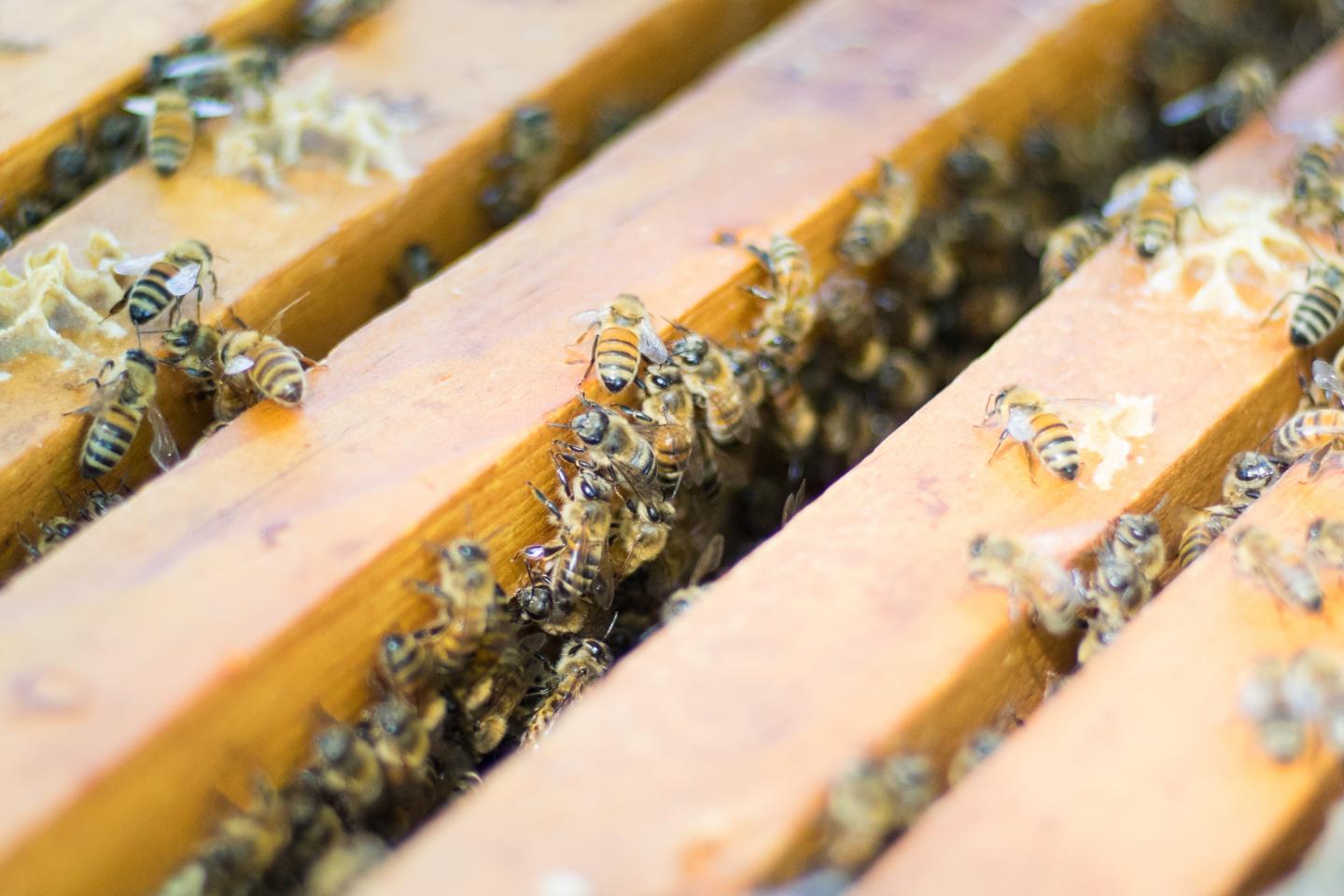
Credit: Ben Rouse

More “intensive” beekeeping does not raise the risk of diseases that harm or kill the insects, new research suggests.

Intensive agriculture – where animals or plants are kept crowded together in very high densities – is thought to result in higher rates of disease spreading.

But researchers from the University of Exeter and the University of California, Berkeley found this is not the case for honeybees.

Their study modelled the spread of multiple honeybee diseases and found that crowding many colonies together was “unlikely to greatly increase disease prevalence”.

However, the research only applies to existing honeybee diseases – and the findings suggest intensive beekeeping could accelerate the spread of new diseases.

“Crowding of animals or crops – or people – into minimal space usually increases rates of disease spread,” said Lewis Bartlett, of the University of Exeter and Emory University.

“We carried out this study because beekeepers were worried about this – especially given the many threats currently causing the decline of bees.

“To our surprise, our results show it’s very unlikely that crowding of honeybees meaningfully aids the spread of diseases that significantly harm honeybees.

“Honeybees live in close proximity to each other naturally, and our models show that adding more bees does little to raise disease risk.

“So, beekeepers don’t need to worry about how many bees they keep together as long as there is enough food for them.

“The key is not whether they encounter a disease – it’s whether they are fit and healthy enough to fight it off.”

Although the paper says intensification of beekeeping does not boost diseases among honeybees, Bartlett points out that intensive agriculture – especially use of pesticides and destruction of habitats – harms bee species including honeybees.

###

The research was partly funded by the Biotechnology and Biological Sciences Research Council and the National Institutes of Health.

The paper, published in the Journal of Applied Ecology, is entitled: “Industrial bees: The impact of apicultural intensification on local disease prevalence.”

Media Contact
Lauren Batten
[email protected]

Related Journal Article

http://dx.doi.org/10.1111/1365-2664.13461

Tags: AgricultureBiodiversityBiologyEcology/EnvironmentEntomology
Share12Tweet8Share2ShareShareShare2

Related Posts

Graphical Review of Bibliometric Methods and Applications in Health Sciences

Graphical Review of Bibliometric Methods and Applications in Health Sciences

August 28, 2026
ExpoLib Framework Builds MS/MS Exposome Library Tracking Toxicants and Biotransformation Products

ExpoLib Framework Builds MS/MS Exposome Library Tracking Toxicants and Biotransformation Products

August 28, 2026

Metabolic mapping reveals spatially distinct host carbon reprogramming during Trichinella spiralis infection

August 28, 2026

Study Compares BBB-Crossing AAV Capsids for Efficient Central Nervous System Delivery

August 28, 2026
Please login to join discussion

POPULAR NEWS

  • Trial tests pancreatic enzymes, bile acids in severely malnourished acutely ill children

    29 shares
    Share 12 Tweet 7
  • Real-World Study Tests Vitamin D’s Impact on Treatment-Free Survival in Early CLL

    29 shares
    Share 12 Tweet 7
  • GLP-1RA Type 1 Diabetes Trials Criticized for Inadequate Hypoglycemia Reporting

    29 shares
    Share 12 Tweet 7
  • Statistical Analysis Offers New Insights Into Immunity, Inflammation, and Disease

    29 shares
    Share 12 Tweet 7

About

We bring you the latest biotechnology news from best research centers and universities around the world. Check our website.

Follow us

Recent News

Trial tests pancreatic enzymes, bile acids in severely malnourished acutely ill children

Real-World Study Tests Vitamin D’s Impact on Treatment-Free Survival in Early CLL

GLP-1RA Type 1 Diabetes Trials Criticized for Inadequate Hypoglycemia Reporting

Subscribe to Blog via Email

Enter your email address to subscribe to this blog and receive notifications of new posts by email.

Join 85 other subscribers
  • Contact Us

Bioengineer.org © Copyright 2023 All Rights Reserved.

Welcome Back!

Login to your account below

Forgotten Password?

Retrieve your password

Please enter your username or email address to reset your password.

Log In
No Result
View All Result
  • Homepages
    • Home Page 1
    • Home Page 2
  • News
  • National
  • Business
  • Health
  • Lifestyle
  • Science

Bioengineer.org © Copyright 2023 All Rights Reserved.