A comprehensive scientific review published in The Scientific World Journal outlines a unified four-stage integrative bioinformatics framework designed to advance environmental biotechnology from descriptive cataloging into predictive, field-ready engineering. Rather than treating high-throughput DNA sequencing, data management repositories, and computational modeling as isolated disciplines, the review establishes an operational pipeline that systematically connects theoretical genomic potential with measurable in situ microbial activity. Environmental crises including chemical contamination, climate change, biodiversity loss, and ecosystem degradation require innovative biological solutions that transcend traditional end-of-pipe pollution treatments. Environmental biotechnology addresses these challenges by deploying microorganisms, hyperaccumulating plants, and specialized enzymes to restore contaminated soil, treat industrial wastewater, and enable sustainable resource management. However, the extreme complexity of natural microbial consortia has historically hindered the real-world translation of laboratory discoveries. By combining multiomics integration with machine learning cores, the framework provides an evidence-based roadmap to decode complex environmental datasets and guide targeted biotechnological interventions.
Within the initial stages of the framework, genomic and metagenomic analyses serve as primary tools for profiling microbial communities in soil and aquatic environments. High-throughput shotgun metagenomic sequencing decodes the taxonomic richness and metabolic repertoires of microbial populations thriving under environmental stress, identifying specific microorganisms that colonize contaminated zones. However, the review emphasizes a critical methodological bottleneck: standard DNA-based metagenomic snapshots often capture dead or inactive cells, generating inflated estimates of functional degradation capacity. Furthermore, kinetic models developed under controlled laboratory conditions frequently fail to predict degradation rates in heterogeneous field environments due to fluctuating abiotic factors such as seasonal pH shifts, temperature swings, and competition from native microbiomes. To bridge the gap between genomic potential and real-world performance, future research must prioritize active metagenomics. By coupling high-throughput sequencing with stable isotope probing and metatranscriptomics, researchers can distinguish living, metabolically contributing taxa from inactive bystanders and link specific functional gene clusters directly to in situ pollutant turnover.
The practical value of integrating multiomics is illustrated by empirical research on hydrocarbon breakdown and computational process optimization. In a featured investigation, Li and colleagues utilized high-throughput sequencing on the Illumina HiSeq 6000 platform alongside SOAPdenovo assembly to analyze microbial responses to crude oil pollution. By mapping unigenes to the Kyoto Encyclopedia of Genes and Genomes database using Diamond software, the study revealed that oil contamination upregulates monooxygenase and dioxygenase systems, mapping a complete pathway that catabolizes naphthalene into gentisic acid. Downstream community analyses using QIIME 2 and R software confirmed the selective recruitment of specialized degrading genera, notably Pseudomonas and Mycobacterium. Concurrently, automated machine learning tools are accelerating the optimization of bioremediation parameters. Implementations using H2O automated machine learning have successfully predicted optimal operational conditions, identifying a twenty-to-forty-day cultivation timeframe for maximum efficiency, while genomic profiling has uncovered specialized bacterial strains capable of achieving 99.9 percent pollutant clearance within complex soil matrices.
Advances in sequencing platforms provide the technological foundation for environmental bioinformatics, offering complementary strengths and limitations across short-read and long-read methodologies. High-throughput short-read platforms like Illumina generate massive volumes of highly accurate sequence data at low cost, making them ideal for assessing taxonomic richness and quantifying community shifts in diverse environments. In contrast, long-read sequencing technologies such as Oxford Nanopore MinION and Pacific Biosciences HiFi resolve complex structural variations and unsegmented repeat regions, allowing researchers to assemble complete circularized genomes from uncultivated microbial dark matter found in extreme environments like deep-sea hydrothermal vents. Nevertheless, the review notes that long-read platforms still exhibit elevated baseline error rates and substantial operational expenses, which restrict their continuous application in long-term environmental monitoring. The future of environmental sequencing increasingly relies on portable diagnostic devices that minimize sample-to-result latency, enabling on-site tracking of environmental DNA and adaptive site management when combined with standardized pipelines.
Effective data integration and management represent another fundamental requirement in environmental biotechnology, where handling vast and fragmented datasets remains challenging. Research conducted by Wang and Yoon demonstrates that structured data management overcomes the heterogeneity bottleneck caused by unstructured experimental records and diverse omics formats. By integrating disparate environmental DNA measurements with traditional field specimen observations through generalized linear models, their computational architecture sieved environmental noise, cutting analysis lead times from days to minutes while increasing contaminant detection accuracy above 94 percent. Because biological repositories often remain siloed, cross-referencing genomic profiles with geochemical metadata requires unified statistical standards. The review highlights that implementing findable, accessible, interoperable, and reusable data schemas is essential for analytical coherence. Shared repositories such as the Genome Taxonomy Database, SILVA, the Ribosomal Database Project, mibPOPdb, the University of Minnesota Biocatalysis and Biodegradation Database, and KBase provide critical infrastructure for standardizing multiomics information and fostering cross-disciplinary collaboration.
Standardized bioinformatics pipelines serve as the operational bridge between raw biological sequences and actionable ecological insights, structured into modular quality control, assembly, and annotation stages. Raw sequencing reads generated by Illumina or Nanopore platforms first undergo rigorous quality processing using tools such as FastQC, Trimmomatic, and Cutadapt to eliminate adapters and low-quality bases, preventing artifacts from distorting biological interpretations. Cleaned sequence data are then assembled into contigs using assemblers like MEGAHIT or metaSPAdes and binned into metagenome-assembled genomes. These genomic reconstructions are rigorously assessed for completeness and contamination using CheckM2 or GUNC, followed by dereplication via dRep to build nonredundant genomic catalogs representing local microbiomes. Taxonomic profiling platforms like GTDB-Tk subsequently assign precise evolutionary lineages, while functional annotation tools such as Prokka and eggNOG-mapper identify metabolic pathways. Finally, multiomics integration tools, including mixOmics and DRAM, synthesize genomic catalogs with transcriptomic or proteomic data, enabling systems-level modeling of complex species interactions.
Predictive computational modeling translates multiomics datasets into simulated forecasts of microbial growth kinetics and pollutant degradation in contaminated environments. By coupling unstructured mathematical models, such as Monod and Haldane kinetics, with machine learning algorithms like support vector machines, random forests, and long short-term memory networks, researchers can simulate substrate breakdown under toxic pressures. For example, investigative work by Priyadarshini and colleagues utilized kinetic models within specialized bioreactors to simulate industrial phenol removal, achieving accurate predictions that matched observed removal efficiencies between 86 percent and 99 percent. However, the authors caution that many existing predictive models function as uninterpretable black boxes with limited ecological validity. Most models rely on controlled laboratory experiments and overlook stochastic ecological variables, horizontal gene transfer, and viral-host interactions that alter microbial adaptation in the wild. Consequently, purely computational models risk severe overfitting, highlighting the need for hybrid architectures that integrate mechanistic biology with probabilistic forecasting.
In targeted practical applications, integrative bioinformatics guides precision bioremediation and bioenergy generation. By mining specialized resources such as the Plastic-MBR database, researchers can identify bacterial taxa possessing the genetic potential to break down synthetic polymers, including bacterial candidates for polyethylene terephthalate degradation and Bacillus cereus strains targeting low-density polyethylene. Structural prediction tools like AlphaFold2 characterize enzyme conformations to forecast catalytic efficiencies, enabling targeted CRISPR-Cas9 genome editing to design resilient superdegraders for heavy metal contamination. In the waste-to-energy sector, bioinformatics optimizes microbial consortia in anaerobic digestion and microbial fuel cells. Integrating microbial electrolysis cells into anaerobic digestion configurations increases methane production rates by up to 1.7 times through the selective enhancement of electroactive microorganisms. Furthermore, metatranscriptomics allows researchers to monitor the real-time gene expression of electrochemically active microbes, optimizing the conversion of volatile fatty acids from wastewater sludge into clean bioelectricity and biogas.
The review also demonstrates how integrative omics advances smart phytoremediation and environmental biosensing by unraveling complex plant-microbe interactions. In phytoremediation systems, multiomics techniques characterize the rhizosphere cross-talk between hyperaccumulator plants and plant growth-promoting rhizobacteria, identifying specific bacterial proteins and metabolites that alleviate heavy metal phytotoxicity through redox reactions and chemical chelation. By modeling root exudate profiles, researchers can design optimized plant-microbe pairings that accelerate the uptake and stabilization of toxic contaminants in highly degraded soils. In the field of environmental monitoring, bioinformatics guides the development of whole-cell biosensors by identifying sensitive regulatory proteins that respond to specific chemical toxins. For example, synthetic genetic circuits incorporating fluorescent reporter proteins such as Mer-RFP have been successfully engineered to detect toxic ionic arsenic at nanomolar concentrations. By integrating digital Boolean logic gates into these cellular bioreporters, scientists can construct portable biochips capable of evaluating complex multipollutant exposures directly within contaminated aquatic and terrestrial environments.
The end-to-end integration of this framework is validated through an industrial case study examining the microbial breakdown of recalcitrant azo dyes in textile effluents. Because dyes like Reactive Yellow F3R and Remazol Red RR possess complex chemical structures requiring multienzyme degradation pathways, researchers retrieved laccase and azoreductase sequences from the GenPept database and applied homology modeling to generate three-dimensional structural models. Subsequent molecular docking simulations evaluated binding affinities and catalytic orientations, which were corroborated by spectroscopic validation of dye cleavage alongside metagenomic identification of active degradation taxa. Despite these technological successes, the review concludes that critical challenges remain, notably multiomics heterogeneity, high-performance computational demands, and ethical issues surrounding digital sequence information and cross-border governance. Looking beyond 2025, active tools like ProteinMPNN, AlphaFold3, and single-cell genomics are driving practical innovations, whereas macroscale ecosystem digital twins and quantum machine learning simulations remain theoretical frontiers constrained by hardware limits and environmental unpredictability.
Subject of Research: Integrative bioinformatics frameworks in environmental biotechnology and bioremediation
Article Title: Integrative Bioinformatics Approaches in Environmental Biotechnology: A Review
Article References: Teklay, Y. T. (2026). Integrative Bioinformatics Approaches in Environmental Biotechnology: A Review. The Scientific World Journal, 2026(1), Article 3495506. https://doi.org/10.1155/tswj/3495506
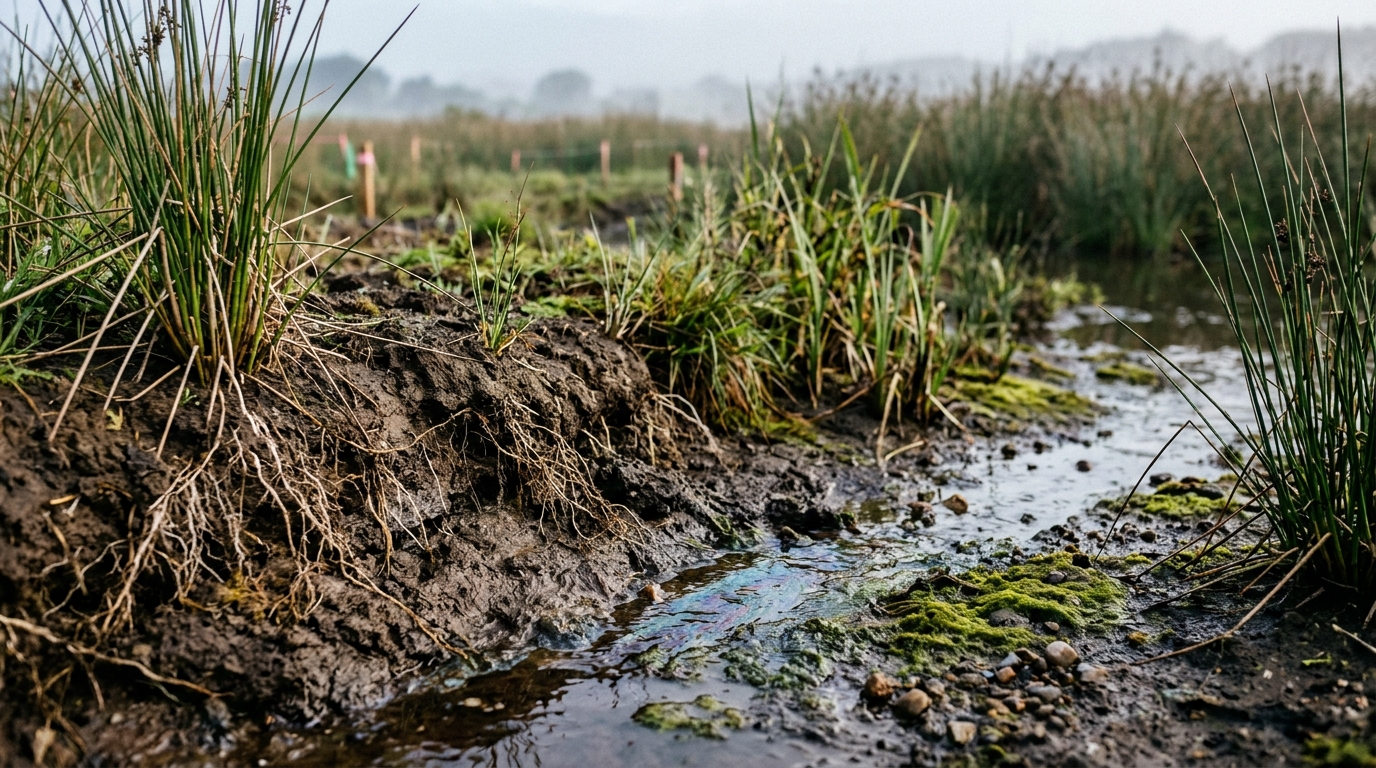
Image Credits: AI Generated
DOI: 10.1155/tswj/3495506
Keywords: environmental biotechnology, integrative bioinformatics, metagenomics, metatranscriptomics, predictive modeling, bioremediation, multiomics integration, wastewater treatment, xenobiotic degradation, whole-cell biosensors, phytoremediation, anaerobic digestion, metagenome-assembled genomes, machine learning, stable isotope probing, high-throughput sequencing, synthetic genetic circuits, FAIR data standards
News Source: Savannah Blake. (November 24, 2026). Integrative Bioinformatics Framework Links Microbial Genomic Potential to Active Field Bioremediation. Scienmag.