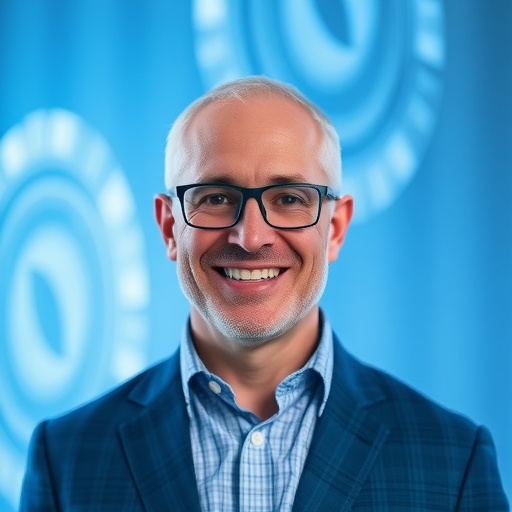
Insilico Medicine founders Dr. Alex Zhavoronkov and Dr. Feng Ren have been invited to the inaugural China Pioneer Innovative Drug Global Congress (CPIC 2026) in Shanghai, scheduled for July 22–24, 2026. The event will convene international stakeholders at the National Exhibition and Convention Center to accelerate dialogue on how advanced AI can translate into real-world drug discovery outcomes—often described as “China Speed” in innovation cycles.
At CPIC 2026, both executives are slated to deliver keynote-level insights during high-profile forums focused on global R&D progress and commercialization pathways for innovative therapeutics. Their presentations highlight how modern AI systems are shifting from experimental tools to operational platforms that can compress timelines across multiple stages of pharmaceutical development.
On July 23, Dr. Zhavoronkov will address AI-driven drug discovery from a global perspective and outline Insilico’s differentiated approach to overcoming persistent industry bottlenecks. His talk emphasizes a tightly integrated workflow built around the end-to-end Pharma.AI platform, designed to support iterative discovery, prioritization, and translation tasks while reducing friction between computational outputs and actionable experimental plans.
He will also describe the MMAI Gym, a specialized training and benchmarking framework intended to standardize model evaluation and improve performance under discovery-relevant constraints. By treating learning as a measured cycle—rather than a one-off optimization—MMAI Gym aims to raise reliability when models move from offline development into decisions that impact downstream chemistry and biology work.
Dr. Zhavoronkov will further focus on Insilico’s fully automated Robotic Chemistry and Biology Laboratory. The system represents a closed-loop validation strategy, where automated experimentation can rapidly test generated hypotheses and feed results back into the next iteration, strengthening the link between algorithmic design and clinical intent.
Later that day, Dr. Feng Ren will discuss Insilico’s blueprint for “source innovation” in AI drug discovery. His session will cover the spectrum from intelligent target identification to disruptive de novo molecular generation, illustrating how problem formulation and representation can shape downstream feasibility.
Ren will also explain how AI agent technologies are being integrated across the R&D pipeline, enabling more autonomous, workflow-aware decision-making. The goal is to use AI as a catalyst for discovery boundaries—translating scientific advances into a pipeline that can adapt as new evidence emerges.
Together, these talks position CPIC 2026 as a timely stage for viral science news: a moment when AI-driven discovery is increasingly framed not as a single breakthrough, but as an engineered capability that can be executed, benchmarked, and validated at scale.
Subject of Research: AI-driven drug discovery; pharmaceutical R&D automation; closed-loop validation
Article Title: Insilico Medicine Leaders to Speak at CPIC 2026 on AI-Driven Drug R&D and Closed-Loop Validation
News Publication Date:
Web References:
References:
Image Credits: Insilico Medicine
Keywords: AI-driven drug discovery, generative AI, RoboLab automation, closed-loop validation, Pharma.AI, MMAI Gym, AI agents, target identification, de novo molecular generation, CPIC 2026
Tags: AI clinical and technological breakthroughsAI in pharmaceutical R&DAI model benchmarking and trainingAI-driven drug discoveryChina Pioneer Innovative Drug Congresscomputational drug discovery workflowsdrug development accelerationglobal biotech collaborationInsilico Medicine innovationintegration of AI in therapeuticsPharma.AI platformreducing drug discovery timelines