In a landmark event scheduled for June 18, 2026, in Shanghai, Dr. Alex Zhavoronkov, the visionary founder and CEO of Insilico Medicine, will present groundbreaking insights at the Morgan Stanley China Biopharma Symposium. His keynote, nestled within the forum entitled “AI-Driven Drug Discovery in China: Accelerating from Hit to Clinic,” promises to illuminate the critical transition from early-stage technological breakthroughs to validated clinical successes in the realm of AI-enhanced biopharmaceutical research.
Dr. Zhavoronkov’s discourse aims to dissect the intricate pipeline of AI-driven research and development, addressing the nuanced challenges and unprecedented opportunities that AI technologies introduce. His talk will explore how artificial intelligence is reshaping target identification, molecular generation, and clinical translation processes, thereby delivering significant advances in reducing costs and improving the efficiency of preclinical drug development.
Insilico Medicine exemplifies the fusion of artificial intelligence and biotechnology, pioneering an AI-native approach that accelerates early drug discovery dramatically. Where traditional preclinical candidate nomination extends over several years with substantial molecule synthesis and testing burdens, Insilico slashes this timeline to a mere 12 to 18 months by synthesizing and evaluating a fraction of those molecules, demonstrating superior precision and accelerated workflow efficacy.
A testament to their innovative prowess, Insilico has successfully nominated 31 preclinical candidate molecules since 2021, with 13 of these candidates having achieved Investigational New Drug (IND) approvals — a critical milestone confirming their readiness for clinical testing. This track record underscores the transformative potential of integrating AI with automation and experimental sciences to surmount traditional drug development bottlenecks.
Beyond efficient candidate nomination, Insilico’s AI platform continues to evolve by leveraging comprehensive datasets and sophisticated benchmarking strategies. Their proprietary MMAI Gym stands out as a dual-purpose platform that functions as both a trainer for model development and a rigorous benchmark for scientific AI capabilities. This development environment facilitates domain-specific reasoning model training and stringent evaluation against real-world pharmaceutical tasks, pushing the boundary toward what the company envisions as ‘pharma superintelligence.’
Importantly, MMAI Gym represents a collaborative ecosystem. Partners like Human Longevity and Liquid AI have engaged with Insilico to harness this platform, marking significant strides in scientific AI’s integration across biotech industry players. Such collaborations aim to pioneer deep learning applications with real-world utility, bridging artificial and human intelligence in drug discovery pipelines.
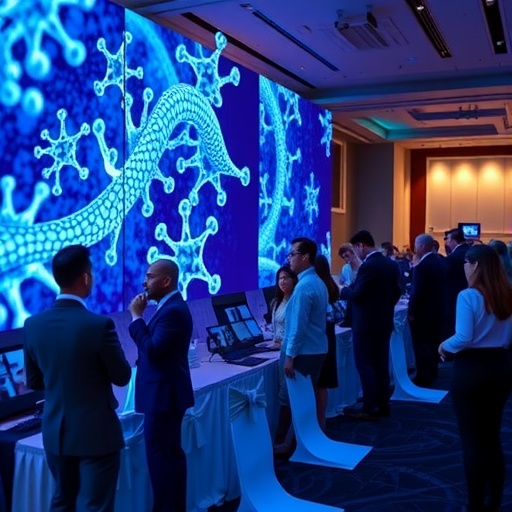
The Morgan Stanley China Biopharma Symposium itself stands as a crucial convergence point where multinational pharmaceutical executives, pioneering Chinese biotech founders, academia, and seasoned healthcare investors meet. Against a backdrop of shifting geopolitical and macroeconomic dynamics, the symposium will deliberate on the internationalization trajectory of China’s homegrown therapies. These include cutting-edge innovations targeting oncology, immunology, and metabolic diseases, regions where AI-driven drug discovery is rapidly becoming indispensable.
Among the symposium’s thematic concerns are strategic considerations surrounding cross-border licensing, multinational mergers and acquisitions, and the operational application of AI technologies to compress clinical development durations and manage cost structures effectively. Morgan Stanley’s commitment to fostering an international platform aims to harmonize clinical planning, regulatory breakthroughs, and strategic capital allocation to catalyze the next golden era of Chinese biopharma innovation on a global stage.
Insilico Medicine’s overarching mission reverberates through these developments. As a trailblazing global biotech firm, it leverages AI and automation to innovate drug discovery processes, aiming not only to address pressing clinical needs—such as fibrosis, oncology, immunology, pain, obesity, and metabolic disorders—but also to extend healthy human longevity universally. Recently listed on the Hong Kong Stock Exchange under the ticker 03696.HK, the company asserts a new frontier in biotech investment and innovation.
Their approach transcends traditional pharma boundaries, extending the reach of their Pharma.AI platform into diverse domains, from advanced materials science and agriculture to nutritional products and veterinary medicine. This breadth underscores an ambitious vision where AI-driven biotechnology functions as a transformative cross-industry technology, driving efficiency and innovation beyond singular medical applications.
Technical sophistication defines Insilico’s platform capabilities. By integrating disease-relevant biological data, molecular properties, and AI-driven generative chemistry, their systems generate novel candidate molecules optimized for efficacy, safety, and drug-like properties. This represents a paradigm shift from conventional high-throughput screening methods to intelligent, hypothesis-driven drug discovery that minimizes resource expenditure while maximizing success probabilities.
Their AI workflow embodies a closed-loop system, incorporating iterative learning from synthesized molecules’ biological assays back into model refinement. This feedback mechanism accelerates hypothesis testing, enabling dynamic adaptation to emerging data trends and facilitating rapid identification of viable therapeutic candidates. Such automation and data-driven decision-making epitomize the next wave of pharmaceutical R&D innovation.
Dr. Zhavoronkov’s forthcoming presentation will no doubt emphasize these technical facets, articulating both the current state and future trajectory of AI-driven biopharma. His insights provide a rare glimpse into how AI platforms effectively convert vast biomedical data into actionable drug development programs, bridging in silico predictions with empirical validation and clinical aspirations.
As the pharmaceutical industry grapples with ever-increasing R&D costs and regulatory complexity, insights from leaders like Insilico Medicine signal a transformational shift in methodology. The integration of AI not only promises cost containment and efficiency improvements but also heralds a new era where biomedical discovery can keep apace with humanity’s burgeoning health challenges, offering hope for faster therapeutic innovation cycles.
By convening a diverse set of global stakeholders, the Morgan Stanley China Biopharma Symposium is poised to catalyze collaborative innovation and cross-border synergies essential for globalizing China’s biopharma breakthroughs. The confluence of AI-driven technology, strategic investment, and regulatory evolution fostered at this event embodies a pivotal moment for the life sciences sector.
In conclusion, Insilico Medicine’s participation at this prestigious symposium exemplifies the vanguard of AI’s integration into drug discovery. Their prolific achievements, sophisticated platform technologies, and strategic vision underline the profound impact AI will continue to exert on modern healthcare development, charting a course toward accelerated scientific discovery and therapeutic breakthroughs accessible on a global scale.
Subject of Research: Artificial intelligence-driven drug discovery and development
Article Title: [Not specified in the source content]
News Publication Date: June 17–18, 2026
Web References:
http://www.insilico.com/
Keywords:
AI-driven drug discovery, artificial intelligence, preclinical candidate nomination, clinical translation, molecular generation, pharmaceutical innovation, automation in biotech, MMAI Gym, pharma superintelligence, biotechnology, molecular synthesis, AI platforms, drug development efficiency
Tags: accelerating preclinical drug developmentAI-driven drug discovery in ChinaAI-enhanced molecular generationAI-native drug discovery platformAI-target identification in biopharmaceuticalsclinical innovation in AI-driven researchclinical translation of AI in biopharmaearly-stage AI breakthroughs in pharmaInsilico Medicine AI biotechnologyMorgan Stanley China Biopharma Symposium 2026precision medicine and AI integrationreducing drug discovery costs with AI