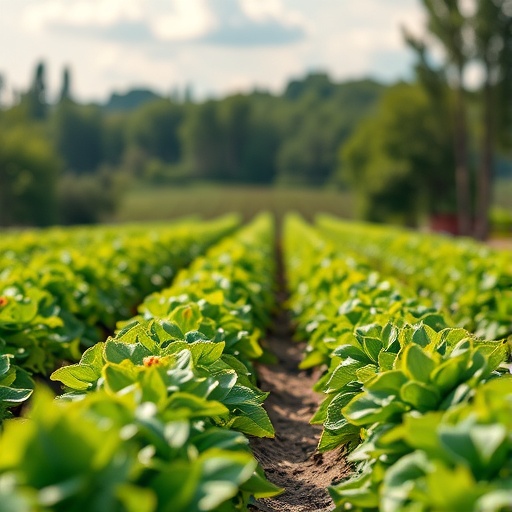
In the arena of modern agriculture, the accelerating demands of food production and environmental stresses present significant challenges for farmers and researchers alike. As the global population continues to rise, so do the expectations for efficient and sustainable agricultural practices. This is a call not just for an increase in yield but also for the adoption of innovative technologies that enhance crop protection in a way that is environmentally conscious. A recent article titled “Modern tools for sustainable agriculture: a review of intelligent crop protection technologies” by Ahmad, Alam, Hamid, and their team embarks on an in-depth exploration of how contemporary advancements can revolutionize the agricultural landscape.
At the heart of this transformation lies the emergence of intelligent crop protection technologies. These innovations leverage artificial intelligence, machine learning, and data analytics to optimize every step of the cultivation process. By analyzing soil health, predicting pest infestations, and forecasting weather patterns, farmers can make informed decisions that minimize resource use while maximizing output. Gone are the days of guesswork; the integration of technology allows farmers to act with precision and agility in managing their crops.
One of the standout features of intelligent crop protection is its capacity to integrate real-time data into everyday farming operations. Sensors placed throughout fields can assess various parameters such as soil moisture, nutrient levels, and pest activity. This data is transmitted to dashboards that enable farmers to monitor their crops from a distance, thus facilitating timely interventions when necessary. For instance, if a sensor detects declining moisture levels, farmers can initiate irrigation systems automatically, conserving water and ensuring optimal growth conditions.
Moreover, UAVs, or drones, play a pivotal role in this technological symphony. These aerial vehicles are not only revolutionizing crop monitoring but are also equipped to deliver targeted pesticides or fertilizers. High-resolution imagery captured by drones can reveal problematic areas within a field that may require immediate attention. Consequently, farmers can apply treatments precisely where needed, reducing waste and minimizing environmental impact. This targeted approach represents a significant shift away from blanket applications, further aligning with sustainable agricultural practices.
Predictive analytics adds another layer of sophistication to crop protection. By analyzing historical climate and agronomic data, advanced algorithms can forecast potential threats to crops, such as pest outbreaks or disease spread. This foresight enables farmers to develop strategies that mitigate risks before they become problematic. The ability to anticipate events rather than react to them marks a foundational shift in the way farmers approach crop protection—one that underscores the importance of planning and proactive management.
The concept of precision agriculture, which encompasses many of the findings put forth in Ahmad and colleagues’ review, elevates the discussion to a new plateau. This methodology emphasizes the use of technology to enhance farm productivity while concurrently promoting ecological sustainability. For instance, the application of drones in the identification of nutrient deficiencies allows for variable-rate application of fertilizers, ensuring that crops receive exactly what they require without overapplication that can lead to runoff and pollution.
Innovations extend beyond traditional crops and delve into the realm of genetically modified organisms (GMOs) and biotechnology. These tools allow researchers to develop crop varieties that are resistant to pests and diseases, reducing the reliance on chemical pesticides. Coupled with the aforementioned intelligent crop protection technologies, GMOs provide a holistic strategy for sustainable agriculture. By marrying genetic advancements with real-time agricultural data, farmers can enhance both yield and resilience in the face of challenges.
It is also noteworthy to mention the societal impact of intelligent crop protection technologies. By increasing productivity and reducing input costs, these technologies not only improve economic viability for farmers but also bolster food security for communities globally. This is particularly crucial in regions grappling with food scarcity; improved agricultural techniques can create a ripple effect that fosters sustainability and encourages socio-economic growth.
However, challenges remain in the transition towards these advanced technologies. One significant barrier is access; smallholder farmers in developing regions may not have the financial resources or technical know-how to implement these systems. Bridging this gap requires a collaborative effort that includes governments, NGOs, and tech companies working in tandem to provide the necessary tools, training, and resources for a successful transition.
Educational initiatives are vital for fostering a culture of innovation within agriculture. As new technologies emerge, integrating them into agricultural curricula will equip the next generation of farmers with the skills necessary to navigate these changes. Workshops and field demonstrations can help demystify intelligent crop protection for those who may be hesitant to change their longstanding practices.
Regulations surrounding the use of new agricultural technologies can also impede progress. Policymakers are challenged to keep pace with rapid advancements while ensuring safety and sustainability. Crafting thoughtful regulations that encourage innovation while protecting the environment and public health will be essential in the years to come.
In conclusion, the future of sustainable agriculture hinges on the effective utilization of intelligent crop protection technologies. The comprehensive review by Ahmad and colleagues encapsulates the transformative potential of these innovations, highlighting their ability to address pressing agricultural challenges in an ecological manner. As technology continues to evolve, so too must our approaches to agriculture, ensuring that the practices we adopt today will serve not only our current needs but also those of future generations.
The need for ongoing research and dialogue within the agricultural community cannot be overstated as it relates to developing and refining these technologies. We stand at the precipice of a new era in agriculture, one where sustainability and innovation go hand in hand to create a resilient global food system. Through collaboration and continued investment in research, the agricultural sector can overcome the challenges of today while looking towards a promising and sustainable tomorrow.
Subject of Research: Intelligent Crop Protection Technologies
Article Title: Modern tools for sustainable agriculture: a review of intelligent crop protection technologies
Article References:
Ahmad, B., Alam, A., Hamid, A. et al. Modern tools for sustainable agriculture: a review of intelligent crop protection technologies.
Discov Agric 4, 19 (2026). https://doi.org/10.1007/s44279-025-00467-2
Image Credits: AI Generated
DOI: https://doi.org/10.1007/s44279-025-00467-2
Keywords: Intelligent crop protection, sustainable agriculture, technology in farming, precision agriculture, UAV, predictive analytics, biotechnology, food security.
Tags: artificial intelligence in farmingdata analytics in agricultureenhancing soil health through technologyenvironmentally friendly pest controlfuture of sustainable crop protectionintelligent crop protection systemsmachine learning for crop managementmodern tools for sustainable farmingoptimizing crop yield with technologyprecision agriculture innovationsreal-time data in agriculturesustainable agriculture technologies