Oral ulcers, common inflammatory lesions on the mucosal lining within the mouth, present an enduring clinical challenge due to their painful nature and impact on fundamental activities such as eating and speaking. Despite their frequency, current therapeutic options remain suboptimal, largely constrained by their limited ability to maintain localized drug presence and insufficient modulation of the underlying inflammatory milieu. Much of this stems from the unique environment of the oral cavity, characterized by relentless salivary flow and mechanical stresses that rapidly dislodge topical formulations. Addressing this, a groundbreaking study spearheaded by researchers in China introduces an advanced drug delivery platform: microneedle patches imbued with exosomes derived from mesenchymal stem cells, designed specifically to surmount these delivery obstacles and revolutionize oral ulcer treatment.
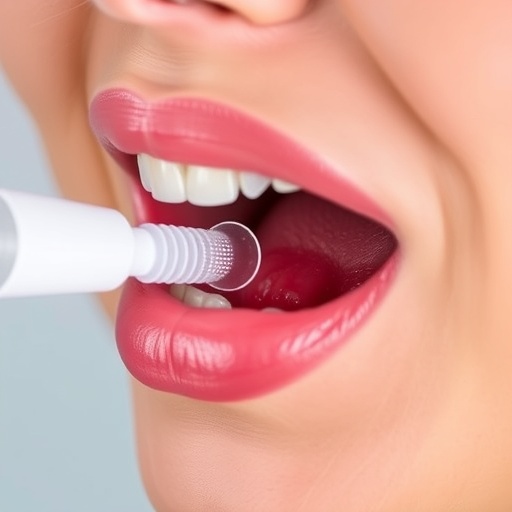
Microneedle technology has emerged as a powerful modality in transdermal and transmucosal drug delivery thanks to its minimally invasive mode of action and enhanced tissue penetration capabilities. The design of these patches ensures direct deposition of therapeutic agents into the afflicted mucosal layer rather than relying on retention at the superficial surface. By incorporating mesenchymal stem cell-derived exosomes, the patches leverage the potent cell signaling functions of these nanoscale extracellular vesicles, which are known to orchestrate immunomodulatory and regenerative processes. This dual strategy, combining physical delivery innovation and biological therapeutics, constitutes a novel paradigm for managing oral mucosal diseases.
Professor Yingjun Wang from the National Engineering Research Centre for Tissue Restoration and Reconstruction highlights the significance of this approach. “Traditional treatments fail largely due to rapid washout by saliva and inadequate tissue penetration,” Wang explains. “Our microneedle patches bypass these limitations by enabling direct, intratissue delivery of exosomes that sustain localized therapeutic effects, accelerating the resolution of inflammation and promoting mucosal repair.” This meticulous engineering of microneedles provides the necessary mechanical support and precision targeting to maximize localized retention and bioavailability of exosomal cargo within the oral microenvironment.
Experimental validation in relevant animal models further substantiated the efficacy of this delivery system. Application of the exosome-loaded microneedle patches led to pronounced acceleration in oral ulcer healing, markedly outpacing untreated controls. Detailed histological evaluations revealed a constellation of beneficial effects including diminished inflammatory infiltrates, expedient epithelial regeneration, and robust collagen matrix deposition. These tissue-level improvements signify comprehensive modulation of the ulcer microenvironment, facilitating both structural restoration and functional recovery.
To delve deeper into the mechanistic underpinnings, the research team employed single-cell RNA sequencing alongside proteomic profiling to unravel molecular and cellular dynamics post-treatment. Their analyses revealed an intricate reprogramming of the local immune landscape, particularly amongst macrophage populations and epithelial cells that play pivotal roles in inflammation and mucosal regeneration. Crucially, the intervention induced a phenotypic shift in macrophages from a classically activated, pro-inflammatory state toward an anti-inflammatory, reparative phenotype. This macrophage polarization is essential in tipping the balance from chronic inflammation toward tissue healing.
Central to this immunomodulatory cascade is thrombospondin-1 (TSP-1), identified as a critical bioactive component within the exosomes. TSP-1 interacts with its receptor, CD47, expressed on macrophages, initiating downstream signaling events that culminate in the suppression of NF-κB activity. NF-κB, a master transcriptional regulator, orchestrates pro-inflammatory gene expression, and its attenuation is strongly associated with attenuation of inflammatory responses. By modulating this signaling axis, the exosome-loaded microneedle patches effectively recalibrate macrophage behavior, dampening inflammatory cascades while fostering a microenvironment conducive to tissue regeneration.
Professor Zhengmei Lin from the Hospital of Stomatology, Sun Yat-sen University, elaborates on this molecular dialogue: “Our findings illuminate how the TSP-1/CD47 interaction suppresses NF-κB signaling in macrophages, reducing their pro-inflammatory output. This molecular insight provides a mechanistic rationale for the observed enhancements in epithelial repair and collagen remodeling in treated ulcers.” This discovery not only sheds light on the therapeutic efficacy of the microneedle-delivered exosomes but also underscores the importance of targeted modulation of immune cell cross-communication during mucosal healing.
The potential translational impact of this technology extends beyond oral ulcers. Given the conserved pathways governing mucosal inflammation and repair, this therapy could be adapted for a broad spectrum of mucosal inflammatory diseases. Its minimally invasive nature, coupled with precise delivery and potent biological activity, positions it as a versatile platform for clinical application. The controlled release capabilities intrinsic to the microneedle matrix further enhance its attractiveness for long-term management of chronic mucosal conditions.
Published in the journal Dental Research, this study represents a significant leap in the interface between regenerative medicine, immunology, and biomaterials engineering. It exemplifies how interdisciplinary innovation can overcome longstanding clinical challenges by integrating advanced biomaterials with the evolving understanding of cell-derived therapeutics. The commitment of the researchers toward mechanistic clarity and therapeutic validation highlights the robustness of their approach.
While still at the preclinical stage, the promising outcomes presented lay the groundwork for future clinical trials, which will be pivotal in assessing safety, efficacy, and patient acceptability. Additionally, scaling up the manufacturing of exosome-loaded microneedles with quality control standards intact remains a critical next step toward widespread clinical usage.
This pioneering microneedle-exosome system exemplifies the frontier of precision medicine, offering a new horizon for patients suffering from painful oral ulcers. By harnessing the body’s own regenerative signaling mechanisms via controlled, targeted delivery, it marks a transformative advance in the field of oral mucosal therapeutics. The convergence of cellular biology and biomaterial science heralds a new era wherein localized, minimally invasive therapies achieve therapeutic outcomes previously unattainable with conventional approaches.
In summary, this novel exosome-loaded microneedle patch not only addresses the fundamental challenges posed by oral ulcer treatment but also provides a blueprint for future therapeutic innovations targeting mucosal inflammation and regeneration. Its introduction into the scientific literature catalyzes further exploration of exosome-based therapies and microneedle platforms, potentially revolutionizing treatment protocols with significant clinical and quality-of-life implications for patients worldwide.
Subject of Research: Animals
Article Title: Exosome-microneedle patches accelerate oral ulcer healing by remodeling macrophage–epithelial crosstalk via TSP-1/CD47/NF-κB signaling
References:
DOI: 10.1016/j.dtrs.2026.100032
Image Credits: Yingjun Wang, Zhengmei Lin, Shuhong Kuang, et al.
Keywords: Oral ulcers, microneedle patches, mesenchymal stem cell-derived exosomes, inflammation, tissue regeneration, macrophage polarization, TSP-1, CD47, NF-κB signaling, mucosal healing, immunomodulation, regenerative medicine
Tags: advanced drug delivery oral mucosaenhanced tissue penetration microneedlesimmune modulation for oral ulcersimmunomodulatory therapy oral lesionslocalized treatment oral inflammationmesenchymal stem cell exosomesminimally invasive oral drug deliverynanoscale extracellular vesicles therapyoral ulcer healing microneedle patchovercoming salivary flow challengesregenerative medicine oral ulcerstransdermal microneedle technology