A groundbreaking advancement in the field of water purification has been achieved by a dedicated research team led by Professor KONG Lingtao at the Institute of Solid State Physics, part of the Hefei Institutes of Physical Science under the Chinese Academy of Sciences. The team has engineered a novel Metal–Organic Framework (MOF) material that not only effectively removes fluoride ions from contaminated water but also offers a unique capability for real-time visual detection through fluorescence signaling. This dual-functional innovation addresses a critical challenge that has long hindered defluoridation efforts worldwide: the need for concurrent and efficient removal coupled with immediate monitoring.
Fluoride contamination in water sources poses a significant public health risk, particularly in regions with naturally occurring high fluoride concentrations. While fluoride at low levels benefits dental health, elevated concentrations lead to severe conditions such as dental and skeletal fluorosis, affecting millions globally. Traditional defluoridation methods often suffer from limitations including low adsorption capacities, slow kinetics, and the need for separate detection instruments, which complicates and delays treatment processes. The newly developed MOF material circumvents these issues by integrating removal and sensing functionalities in one platform.
At the heart of this innovation lies the manipulation of MOF surface chemistry and crystal facet engineering facilitated by interfacial water molecules. The researchers discovered that regulating the specific exposed crystal facets of MIL-88 A(Fe) — particularly the (100) and (101) planes — enhances the adsorption affinity for fluoride ions. This surface-specific adsorption is driven by the interaction between the fluoride ions and the unique coordination environment on these crystal faces, modulated effectively by water molecules at the interface. The tailored surface structure thus optimizes adsorption sites, enabling a significant increase in fluoride capture efficiency.
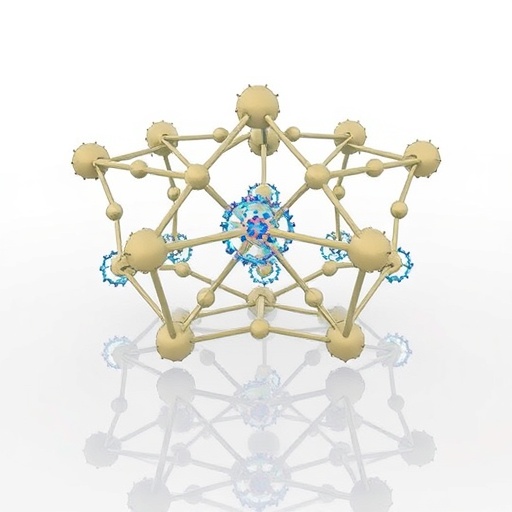
Building upon this fundamental insight, the team created an advanced dual-metal MOF incorporating both lanthanum (La) and iron (Fe) ions functionalized with amino groups (NH2). This novel La/Fe-MOF-NH2 construct synergistically couples the high affinity of lanthanum for fluoride ions with the robust structural and optical features of iron-based MOFs. The amino functional groups further enhance selectivity and binding strength. Most strikingly, the incorporation of these elements into a single MOF framework induces a fluorescence response upon fluoride uptake, enabling direct visual detection of fluoride presence in water — a feature never before realized in defluoridation materials.
The practical implications of this development are profound. The team successfully fabricated a prototype defluorination device incorporating this MOF material, allowing for real-time monitoring of fluoride concentrations through simple fluorescence observation. This dynamic sensing capability permits immediate assessment and optimization of treatment processes, ensuring water safety with unparalleled speed and convenience. Moreover, the robust selectivity and adsorption efficiency demonstrated under fluctuating environmental conditions suggest the material’s suitability for deployment in diverse and challenging water sources.
The mechanistic understanding revealed by this research offers valuable pathways for the future design and functionalization of MOFs in environmental remediation. By exploiting the interplay between crystal facet chemistry and interfacial water interactions, scientists can now tailor adsorbents with highly specific and enhanced binding properties. The fluorescent signaling mechanism embedded within the MOF structure presents an elegant solution to the persistent challenge of coupling pollutant removal with simultaneous, real-time detection.
Published in the prestigious Chemical Engineering Journal, this comprehensive study highlights not only the material’s performance but also the advanced methodologies employed for MOF synthesis, surface characterization, and fluorescence analysis. The work underscores the critical role of interdisciplinary collaboration, integrating solid-state physics, materials chemistry, and environmental engineering to tackle pressing water pollution issues. Such innovations mark a significant leap forward in the pursuit of sustainable and accessible clean water technologies.
Environmental challenges related to water contamination call for smart, multifunctional materials capable of responding adaptively to complex scenarios. The La/Fe-MOF-NH2 exemplifies this approach by coupling high-affinity adsorption with an intrinsic, non-invasive detection mechanism. This dual functionality reduces reliance on external monitoring instruments, lowers operational costs, and enables decentralized water treatment, particularly vital in underserved or remote areas.
Looking ahead, the scalability and long-term stability of this MOF-based defluoridation system remain promising. Preliminary tests show the material retains its adsorption and fluorescent properties after multiple cycles, highlighting its durability and usability in continuous water treatment operations. These findings pave the way for commercial adaptation, where this approach could revolutionize existing fluoride mitigation strategies and improve public health outcomes globally.
Beyond fluoride removal, this pioneering research sets a precedent for designing advanced MOFs targeting other hazardous ions and contaminants. By leveraging crystal facet engineering and multifunctional composite integration, the potential for creating bespoke adsorbents and sensors tailored to diverse water quality challenges becomes a tangible reality. This research thus catalyzes a broader vision of modular, efficient, and intelligent water purification solutions.
Ultimately, this new MOF development profoundly enriches the toolkit available to scientists and engineers working in water treatment. It bridges fundamental material science and applied environmental technology, illustrating how precise structural tailoring and chemical innovation can converge to address global health crises. The integration of real-time visual monitoring directly within a water purification medium symbolizes a transformative approach that will inspire future breakthroughs in environmental remediation materials.
Subject of Research: Advanced Metal–Organic Framework (MOF) materials for water purification focused on fluoride ion removal and real-time visual detection.
Article Title: Dual-functional La/Fe-MOFs-NH2 for real-time visual removal of fluoride in dynamic environments
News Publication Date: 24-Dec-2025
Web References: http://dx.doi.org/10.1016/j.cej.2025.172243
Image Credits: HE Junyong
Keywords
Physical sciences
Tags: advanced defluoridation methodschallenges in traditional defluoridation techniquesdual-functional materials in environmental scienceefficient adsorption strategies in water treatmentfluorescence signaling in water quality monitoringhigh fluoride concentration effectsinnovative water treatment solutionsintegrated fluoride removal and sensingMetal-Organic Framework for water purificationProfessor KONG Lingtao researchpublic health risks of fluoride contaminationreal-time fluoride detection technology