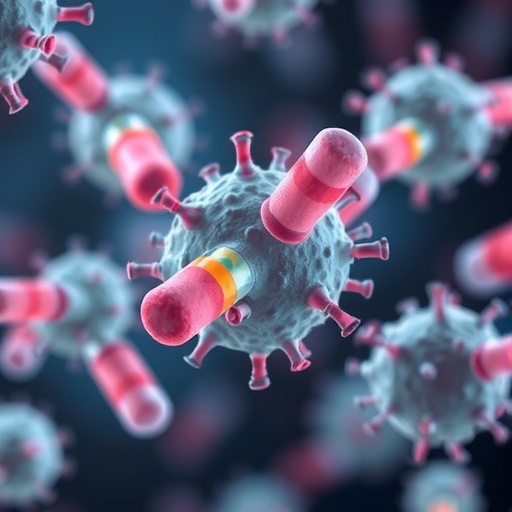
A groundbreaking innovation in antibiotic design could herald a new era in combating drug-resistant bacterial infections, addressing one of the most pressing challenges in modern medicine. Researchers based at King’s College London have pioneered an approach, dubbed ‘Efflux Resistance Breaker’ (ERB), which targets one of the core mechanisms bacteria employ to evade the lethal effects of antibiotics. By chemically modifying antibiotic molecules themselves, this strategy enhances their ability to remain within bacterial cells, thereby overcoming resistance that has rendered many treatments obsolete.
Central to the challenge of antibiotic resistance is the bacterial use of efflux pumps—specialized protein complexes embedded in bacterial cell membranes. These pumps actively expel antibiotics before intracellular concentrations can reach a therapeutic threshold, effectively neutralizing the drugs. Conventional efforts to counter this phenomenon have largely relied on pairing antibiotics with separate efflux pump inhibitors. However, such combinations suffer from limitations including increased toxicity, complex pharmacokinetics, and the potential for bacteria to develop resistance to the inhibitors themselves.
The ERB concept disrupts this paradigm by integrating resistance-breaking properties directly into the molecular framework of antibiotics. This subtle yet profound chemical redesign mitigates recognition and expulsion by efflux pumps, allowing the antibiotic molecules to accumulate to therapeutic levels inside bacterial cells. By bypassing the need for adjunctive inhibitors, the ERB approach streamlines dosing regimens and may reduce adverse side effects, something paramount for patient compliance and clinical success.
Professor Khondaker Miraz Rahman, a leading figure in medicinal chemistry at King’s College London and the study’s principal investigator, emphasizes the significance of this advancement not only for next-generation antibiotic development but also for rescuing older antibiotic classes. As he notes, the relentless rise of antimicrobial resistance coincides with an alarming dearth of truly novel antibiotics entering clinical trials. The ERB strategy represents a tactical innovation, leveraging chemical ingenuity to restore and enhance the bactericidal effectiveness of existing drugs through increased intracellular retention.
Mechanistically, ERB-modified antibiotics exhibit altered physicochemical properties that decrease their affinity for efflux pumps. This means the molecular modifications hinder the ability of these pumps to recognize and transport antibiotic molecules out of the cytoplasm. Detailed structure-activity relationship studies underpin this design, identifying chemical moieties central to pump interaction and modifying them without compromising the antibiotic’s fundamental mechanisms of bacterial target engagement or killing.
Professor J. Mark Sutton of the UK Health Security Agency, collaborating closely on the ERB project, underscores the broader implications. Efflux-mediated resistance represents a formidable obstacle because it is broadly conserved across many pathogenic bacterial species. Overcoming this hurdle through rational antibiotic engineering holds the promise of restoring efficacy against multidrug-resistant organisms, a key objective in safeguarding global public health.
Experimental validation of ERB compounds involved a series of microbiological assays confirming sustained intracellular accumulation and robust antimicrobial activity against strains exhibiting high efflux activity. The data demonstrate that ERB antibiotics maintain bactericidal potency where traditional antibiotics fail, offering compelling proof of concept. This proof is vital in convincing pharmaceutical stakeholders and regulatory bodies of the viability of ERB-enhanced molecules.
The translational potential of the ERB platform is immense. By embedding efflux resistance properties within various antibiotic scaffolds, a modular strategy emerges—one that could systematically fortify antibiotics against one of bacteria’s most common defense mechanisms. The researchers aim to commercialize this technology, fostering collaborations with pharmaceutical manufacturers to accelerate clinical development and ultimately bring these reengineered antibiotics to market.
Efflux pumps are often linked with multidrug resistance, frequently seen in pathogens responsible for hospital-acquired infections such as Pseudomonas aeruginosa and Klebsiella pneumoniae. By targeting the pumps’ substrate specificity through chemical redesign, ERB technology could revitalize treatment options against these notoriously resistant strains, reducing morbidity and mortality associated with difficult-to-treat infections.
From a medicinal chemistry viewpoint, the ERB strategy exemplifies the power of molecular engineering to circumvent biological obstacles that have traditionally stymied antibiotic efficacy. It presents a paradigm shift away from adjuvant therapies toward self-resilient antibiotic agents. This innovation is poised to reshape antibiotic discovery pipelines, aligning with the urgent global mandate to develop sustainable solutions against antimicrobial resistance.
Looking ahead, the King’s College London team is committed to expanding the chemical diversity of ERB candidates, optimizing their pharmacodynamics and pharmacokinetics, and initiating preclinical studies. Moreover, regulatory pathways must be navigated carefully, with a focus on demonstrating safety, efficacy, and superiority over existing treatments. The hope is that ERB-designed antibiotics will soon move from promising laboratory studies to transformative clinical interventions.
In summary, ERB technology marks a seminal development in antibiotic research, combining fundamental insights into bacterial physiology with cutting-edge chemical innovation. By thwarting bacterial efflux pumps from within the drug molecule itself, this approach not only promises to extend the lifespan of current antibiotics but also invigorates the quest for novel therapies in a field starved of breakthroughs. The implications for managing drug-resistant infections worldwide are profound and invoke cautious optimism for the future of infectious disease treatment.
Subject of Research: Antibiotic resistance mechanisms and drug design innovation
Article Title: Innovative ‘Efflux Resistance Breaker’ Technology Enhances Antibiotic Efficacy Against Drug-Resistant Bacteria
News Publication Date: Not provided
Web References: Not provided
References:
Journal of Medicinal Chemistry (publication of the study)
Image Credits: Not provided
Keywords: Antibiotics, Antimicrobial resistance, Efflux pumps, Drug resistance, Medicinal chemistry, Antibiotic redesign, Efflux Resistance Breaker, Drug development, Bacterial infections, Efflux pump inhibitors, Rational drug design, Clinical development
Tags: antibiotic molecular redesignbacterial efflux pump inhibitionchemical modification of antibioticscombating multidrug-resistant bacteriadrug-resistant bacterial infectionsefflux resistance breakerenhanced intracellular antibiotic retentioninnovative antibiotic designKing’s College London researchnovel antibacterial strategiesovercoming antibiotic resistanceovercoming bacterial drug evasion mechanisms