


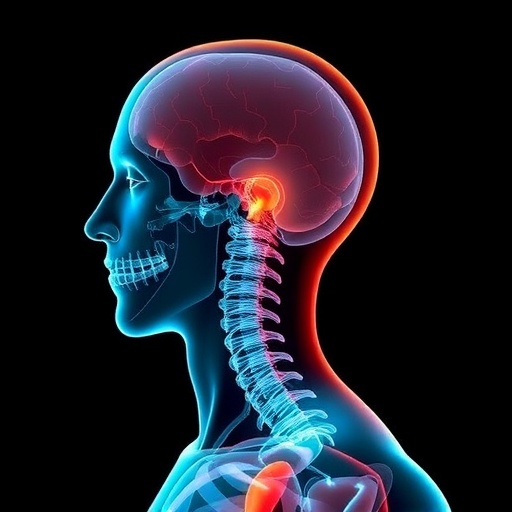
In a groundbreaking study published in the Annals of Biomedical Engineering, researchers have unveiled significant insights into the relationship between initial head posture and its effects on neck muscle responses during low-speed rear impacts. The collective work of Fice, Foulger, Mang, and their co-authors illustrates a novel understanding of how head positioning can play a pivotal role in response to vehicular collisions, particularly at speeds traditionally perceived as safe.
Low-speed rear impacts are common on roads, often leading to injuries that are not only debilitating but also notoriously chronic in nature. In this vital exploration, the authors aim to dissect the biomechanics involved when the head and neck are subjected to sudden forces in these situations. The implications of their findings extend far beyond academic curiosity; they touch upon critical areas of public health and vehicular safety standards.
Prior research had made surface-level correlations between head and neck positioning and injury outcomes, but this study goes further by embedding quantitative measures into its experimental framework. The researchers meticulously designed their experiments to capture data for various initial head postures as subjects were exposed to rear impact simulations. This innovative approach enabled them to assess the kinematic responses of the head and neck under varied conditions, thereby yielding deeper insights into biomechanics.
At the heart of the research is the analysis of neck muscle activation and head motion following rear impacts. Understanding these dynamics is crucial for developing effective preventive measures and treatment protocols for whiplash injuries. The researchers focused on identifying the variations in muscle response attributed to different head positions at the time of impact, noting distinct patterns that could guide future injury prevention strategies.
The study revealed that certain head postures, particularly those that are less neutral and more flexed or extended, can lead to dramatically different kinematic outcomes during rear impacts. This finding is critical given that many individuals maintain poor postural habits while driving, which can inadvertently put them at increased risk of injury during an accident. It underscores the importance of ergonomic awareness in everyday activities, particularly for those who spend considerable time behind the wheel.
Remarkably, the research employed advanced motion capture technology to track the movements of participants in real-time, offering unprecedented clarity in understanding the micro-dynamics of head and neck movements. This high-resolution data allows researchers not only to observe but also to quantify the torque and forces experienced by the neck muscles during these critical events. The implications of this methodological advancement reach far, particularly in areas of product design and safety engineering.
In terms of practical applications, this research could guide car manufacturers in designing headrests and seat structures that better accommodate safe postural support for drivers and passengers. Enhanced vehicle ergonomics, informed by scientific inquiry, could lead to significant reductions in the occurrence and severity of neck injuries resulting from low-speed collisions. The potential economic benefits, alongside the human cost of injury, lend compelling weight to the urgency of this research.
Furthermore, the study opens up avenues for further research, encouraging scientists to investigate how other factors—such as age, gender, and differing personal health conditions—interact with head posture to affect injury outcomes. This holistic view of biomechanics could foster comprehensive guidelines for both vehicle safety features and public health messaging aimed at reducing injury risks.
In addition to its immediate implications for vehicle safety, the research may also inform clinical practices surrounding rehabilitation for individuals suffering from whiplash injuries. A better understanding of how neck muscles engage in response to various initial postures could shape therapeutic interventions, potentially improving recovery times and patient outcomes.
Another pressing relevance of this study is its contribution to legal and insurance matters concerning vehicular collisions. Providing empirical evidence on the biomechanics of injury could help establish more precise assessments regarding liability and compensation for accident victims. The nuanced insights into neck kinematics may serve as a robust foundation for future legal standards related to vehicle safety regulations.
As society grapples with the increasing prevalence of motor vehicle accidents, the findings of this research remind us that even minor adjustments to our habitual behaviors—like maintaining a neutral head posture while driving—can have significant impacts on our safety and health. Raising awareness about the importance of posture could empower drivers to adopt safer habits behind the wheel.
The urgency and relevance of this study align with ongoing discourse on public health strategies aimed at reducing vehicular injuries. Its findings are timely, shedding light on a vital area of human biomechanics that remains underexplored yet critical for enhancing safety practices. As researchers and practitioners continue to join forces, the hope remains that such studies will inspire comprehensive changes in both public policy and safety designs, ultimately leading to safer roads.
As the researchers continue to disseminate their findings, they encourage interdisciplinary collaboration, urging engineers, healthcare professionals, and policymakers to synergize efforts toward a common goal: minimizing the risk of injuries associated with low-speed rear impacts. This research not only enhances our understanding of the human body’s responses but also galvanizes collective action toward improving our transportation systems.
Ultimately, this study is a call to action for everyone, from car manufacturers to policymakers and everyday drivers, reminding us all of the impact our choices can have on safety. With the evidence laid out, the paradigm shift needed to reduce road injuries hinges on the implementation of knowledge-based interventions and practices rooted in the science highlighted by this impactful research.
Subject of Research: The relationship between initial head posture and neck muscle responses during low-speed rear impacts.
Article Title: Initial Head Posture Affects the Neck Muscle and Head/Neck Kinematic Responses During Low-Speed Rear Impacts.
Article References:
Fice, J.B., Foulger, L.H., Mang, D.W.H. et al. Initial Head Posture Affects the Neck Muscle and Head/Neck Kinematic Responses During Low-Speed Rear Impacts.
Ann Biomed Eng (2025). https://doi.org/10.1007/s10439-025-03926-5
Image Credits: AI Generated
DOI: https://doi.org/10.1007/s10439-025-03926-5
Keywords: Whiplash, biomechanics, neck muscle activation, head posture, low-speed collisions, vehicle safety.
Tags: Annals of Biomedical Engineering studychronic neck injury preventionexperimental design in biomechanics studieshead and neck positioning in accidentsinitial head posture effectsinjury outcomes from head postureinnovative approaches in injury researchkinematic responses during rear impactslow-speed rear impact biomechanicsneck muscle responses in impactspublic health implications of impactsvehicular collision safety research



