In a groundbreaking study propelling forward our understanding of neuromuscular disorders, researchers have uncovered a promising avenue to counteract the cellular dysfunction underlying GNE myopathy, a rare and debilitating muscle disease. This recent research, published in Experimental & Molecular Medicine, sheds light on the molecular intricacies of defective autophagy—a vital cellular housekeeping process—in GNE myopathy and proposes a compelling therapeutic strategy through the targeted inhibition of noncanonical Akt–mTORC1 signaling pathways.
GNE myopathy, characterized by progressive muscle weakness and atrophy, has long challenged clinicians and scientists due to its complex genetic and molecular backgrounds. The disease originates from mutations in the GNE gene, which encodes an enzyme involved in sialic acid biosynthesis, a critical component of glycoconjugates essential for normal cellular function. The resultant biochemical disruptions have been linked to autophagy defects, but until now, the precise mechanisms and potential molecular interventions remained elusive.
Autophagy, the cell’s intrinsic system for recycling damaged organelles and misfolded proteins, is indispensable for maintaining skeletal muscle integrity. Deficiencies in this process compromise muscle cell viability, exacerbating disease symptoms observed in GNE myopathy. Crucially, the newly published study delineates how GNE mutations aberrantly activate Akt–mTORC1 signaling, a pathway traditionally known for regulating cell growth and metabolism, but here implicated in autophagy inhibition through a noncanonical mechanism.
Using multiple isogenic cellular models, which are genetically identical except for the disease-causing mutations, the study robustly demonstrates that defective autophagy in GNE myopathy can be effectively restored by pharmacologically blocking the anomalously activated Akt–mTORC1 pathway. This discovery opens a therapeutic window, suggesting that existing or novel Akt–mTORC1 inhibitors might be repurposed or optimized to halt or even reverse the progression of muscular degeneration in patients afflicted with this condition.
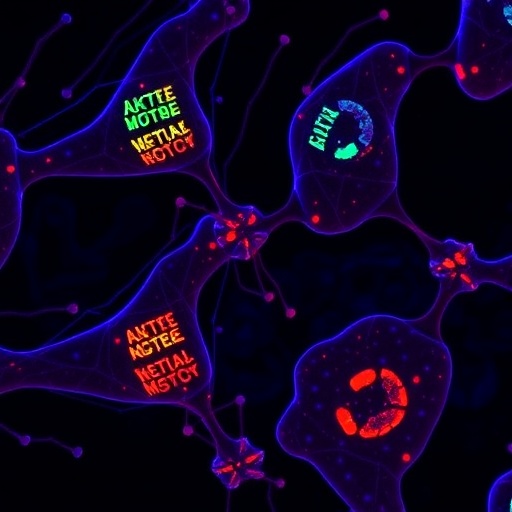
Further enriching the study’s impact, the research team applied a spectrum of molecular biology techniques, including immunoblotting, fluorescence imaging, and autophagic flux assays, to verify the restoration of autophagy. They precisely catalogued the cellular and biochemical revitalization post-inhibition, marking a pivotal shift in our comprehension of disease modification strategies beyond symptomatic treatment.
The Akt–mTORC1 axis, long a target in cancer and metabolic disease research, emerges here in a novel light: its noncanonical activation contributes directly to autophagy suppression in muscle cells harboring GNE mutations. Distinct from the canonical pathway, this aberrant signaling offers a refined target, potentially minimizing collateral effects that broad mTOR inhibition could impart on cellular functions critical to overall health.
Equally compelling is the study’s use of isogenic models, which allowed for highly controlled interrogation of mutant versus wild-type cellular responses. This methodological rigor strengthens the validity of the findings, ensuring that observed phenomena stem from GNE mutations rather than extraneous genetic variability, paving the way for precise molecular diagnosis and therapy in clinical contexts.
Beyond fundamental insights, this research aligns with contemporary trends emphasizing the reactivation of autophagy as a therapeutic modality for various degenerative diseases. By connecting a specific molecular blockade to the functional restoration of autophagy, the study contributes to a growing paradigm that champions pathway-specific interventions to tackle disease at its cellular roots.
This work also encourages a reevaluation of currently approved drugs known to affect Akt or mTOR signaling, proposing that dose modulation or compound refinement might unlock efficacy against GNE myopathy. Clinical translation is foreseeable, although further in vivo validation and careful safety profiling will be essential steps before such treatments become standard.
In the broader landscape of biomedical research, unraveling the multifaceted role of autophagy and its regulatory networks continues to be a frontier. This publication supplies a powerful case study of targeted pathway modulation rescuing cellular health, reinforcing the utility of molecular precision medicine in combating inherited muscle disorders.
Moreover, the restoration of autophagy corrects not only protein aggregation but possibly lysosomal function and metabolic imbalances intrinsic to GNE myopathy pathology. This holistic cellular recovery fosters optimism for meaningful clinical improvements extending beyond mere stabilization to potential muscle regeneration or functional enhancement.
The study’s implications resonate with those committed to resolving rare diseases, where limited patient populations and scarce resources complicate therapeutic development. Innovations such as the targeted modulation of noncanonical signaling axes offer scalable routes toward effective interventions, leveraging mechanistic insights to overcome previous therapeutic impasses.
Future research directions indicated by this pioneering work include elucidating the full spectrum of molecular players involved in noncanonical Akt–mTORC1 activation and autophagy suppression, as well as identifying biomarkers predictive of treatment response. Such efforts will refine patient stratification and optimize personalized therapeutic regimens.
The implications stretch beyond GNE myopathy. Since autophagy dysregulation features prominently in numerous neuromuscular disorders and age-related diseases, understanding and modulating this pathway via noncanonical mechanisms may herald novel treatments with broader applicability, emphasizing the study’s multidisciplinary import.
In conclusion, this study represents a major stride forward in tackling GNE myopathy by revealing that inhibition of noncanonical Akt–mTORC1 activation can restore defective autophagy across multiple genetically precise models. By bridging molecular pathology with targeted therapeutic intervention, it not only illuminates disease mechanisms but also empowers a new wave of hope for patient-tailored therapies in muscular dystrophies.
Subject of Research: Defective autophagy mechanisms in GNE myopathy and their restoration through inhibition of noncanonical Akt–mTORC1 activation.
Article Title: Defective autophagy in GNE myopathy is rescued by inhibition of noncanonical Akt–mTORC1 activation across multiple isogenic models.
Article References:
Kim, DW., Kwon, EJ., Kwon, H. et al. Defective autophagy in GNE myopathy is rescued by inhibition of noncanonical Akt–mTORC1 activation across multiple isogenic models. Exp Mol Med (2026). https://doi.org/10.1038/s12276-026-01701-7
Image Credits: AI Generated
DOI: 10 April 2026
Tags: Akt–mTORC1 signaling inhibitionautophagy restoration in skeletal muscleexperimental molecular medicine GNE studyglycoconjugate biosynthesis genetic mutationsGNE myopathy autophagy defectsmolecular mechanisms of neuromuscular disordersnoncanonical Akt pathway in autophagyprogressive muscle weakness treatmentrestoring cellular autophagy in GNE myopathysialic acid biosynthesis in muscle diseasetargeted therapies for rare muscle diseasestherapeutic strategies for muscle atrophy