


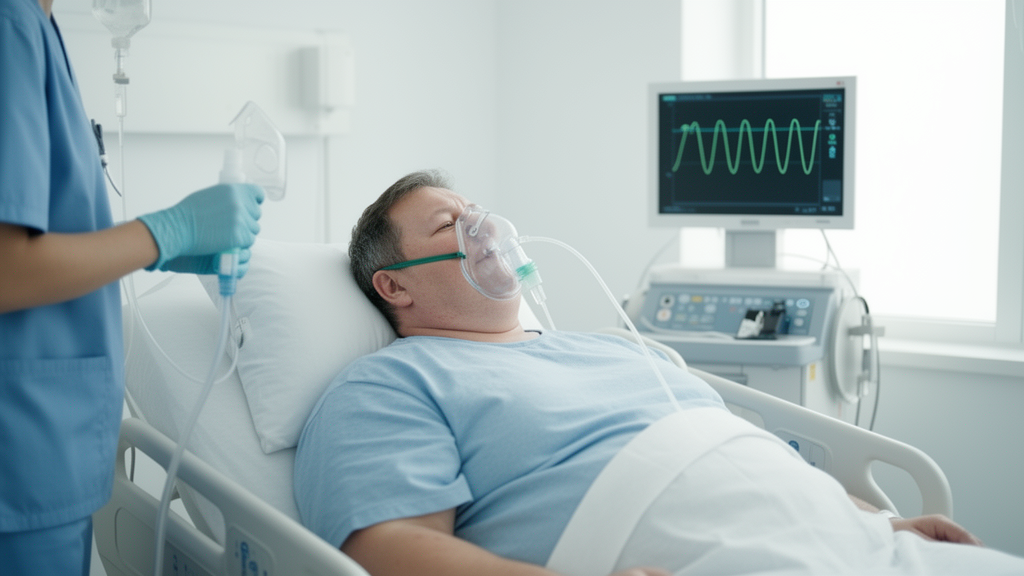
A double-blind randomized controlled trial has found that prophylactic nebulized penehyclidine hydrochloride (PHC) improved respiratory mechanics and early postoperative oxygenation in obese patients undergoing laparoscopic sleeve gastrectomy. The study, published in BMC Pulmonary Medicine, randomized sixty obese patients with a body mass index of at least 35 kg/m² to receive either nebulized PHC or its solvent, with thirty patients in each group.
The researchers therefore investigated whether prophylactic nebulized PHC, delivered the evening before surgery and again post-intubation, could improve respiratory mechanics, postoperative oxygenation, and lung aeration.
The primary outcome was the area under the curve for driving pressure during pneumoperitoneum. Patients who received PHC showed a significantly lower driving pressure area under the curve, 57 ± 11 compared with 70 ± 9 in controls, alongside a lower peak airway pressure area under the curve of 74 ± 9 versus 87 ± 7. Dynamic lung compliance was correspondingly higher in the treated group, at 96 ± 7 versus 81 ± 8, with all comparisons reaching statistical significance at P < 0.01.
The benefits extended beyond the operating table. Thirty minutes after extubation, the PHC group had a higher oxygenation index, a lower alveolar-arterial oxygen gradient, and lower lung ultrasound scores, indicating better oxygen transfer and improved lung aeration. All three differences were statistically significant at P < 0.01.
The trial also measured serum surfactant protein A (SP-A) as a secondary endpoint. The postoperative increase in SP-A was significantly smaller in patients given PHC, which the authors interpret as indicating alleviation of alveolar epithelial injury. This aligns with the authors’ interpretation that improved compliance and reduced airway pressures alleviate alveolar epithelial injury.
Clinically, the most striking difference was in early postoperative hypoxemia. Low blood oxygen occurred in 10 percent of patients treated with PHC compared with 36.67 percent of controls, a difference the authors report as statistically significant with P = 0.0303. Rates of adverse events did not differ between the two groups, indicating the intervention was well tolerated in this setting.
The trial was registered with the Chinese Clinical Trial Registry under number ChiCTR2600119005 on February 13, 2026, and the article was published as open access research on October 27, 2026. The study was double-blind, meaning neither patients nor the clinical team knew who received the active drug, which strengthens the internal validity of the physiological comparisons reported.
The authors conclude that prophylactic nebulized PHC optimizes intraoperative lung compliance and reduces airway pressures, improves early oxygenation and lung aeration, and offers a new reference approach for perioperative airway management in obese patients undergoing sleeve gastrectomy. Because the study included only sixty obese patients undergoing laparoscopic sleeve gastrectomy, the findings represent early physiological evidence rather than a demonstrated effect on long-term outcomes, and broader confirmation in other obese surgical cohorts would be needed before practice changes.
Subject of Research: Prophylactic inhaled penehyclidine hydrochloride and respiratory mechanics in obese laparoscopic surgery patients
Article Title: Effect of prophylactic inhaled penehyclidine hydrochloride on respiratory mechanics and early oxygenation in obese patients undergoing laparoscopic sleeve gastrectomy: a double-blind randomized controlled trial
Article References: Guo, Q., Li, J., Wang, S., Liu, X., & Gao, J. (2026). Effect of prophylactic inhaled penehyclidine hydrochloride on respiratory mechanics and early oxygenation in obese patients undergoing laparoscopic sleeve gastrectomy: a double-blind randomized controlled trial. BMC Pulmonary Medicine. https://doi.org/10.1186/s12890-026-04925-5
Image Credits: AI Generated
DOI: 10.1186/s12890-026-04925-5
Keywords: penehyclidine hydrochloride, obesity, laparoscopic sleeve gastrectomy, randomized controlled trial, respiratory mechanics, driving pressure, lung compliance, oxygenation index, hypoxemia, lung ultrasound, perioperative airway management, anesthesia
News Source: Ophelia Keating. (October 30, 2026). Inhaled Penehyclidine Improves Lung Mechanics in Obese Surgery Patients. Scienmag.



