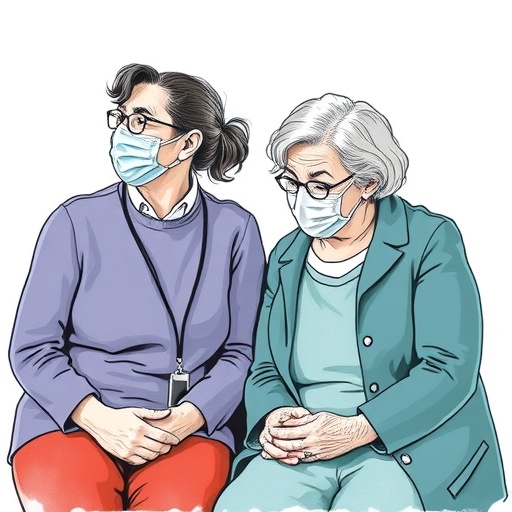
Informal caregivers who support people living with dementia often operate in the background of everyday healthcare, yet they may absorb major hidden costs. In a new study published in BMC Geriatrics, researchers frame caregivers as “invisible second patients,” emphasizing how the emotional and practical demands of dementia can reshape perceived stress.
The team investigated whether caregiver “burden” and “resilience” work in tandem—or in opposition—to influence stress outcomes. Using a dual-process perspective, the study treats burden as the strain linked to sustained caregiving duties, while resilience reflects the capacity to adapt under sustained pressure.
A central technical focus is the measurement of perceived stress as an outcome variable linked to both psychosocial strain and protective factors. Rather than assuming that stress is driven solely by workload, the analysis examines how individuals’ coping resources may buffer—or fail to buffer—the impact of caregiving challenges.
The study also positions dementia care within a stress-exposure framework: the longer and more intensely caregiving continues, the more risk accumulates for chronic stress responses. Importantly, the caregivers’ role is described as secondarily “medical” in effect, because their wellbeing changes alongside the person they support.
Results suggest that perceived stress is not uniform across caregivers. Instead, stress levels reflect a balance between burden and resilience, supporting a model in which protective psychological resources can mitigate some stress effects even when caregiving demands remain high.
This framing carries viral science news relevance: it shifts attention from the patient alone to the caregiving system surrounding the patient. When caregiver stress rises, it can indirectly affect care quality, continuity of support, and the caregiver’s ability to sustain involvement over time.
By conceptualizing caregivers as “invisible second patients,” the authors argue for interventions that target both sides of the equation. Approaches that reduce burden—through respite, practical support, and service access—may work alongside resilience-building strategies such as coping-skills training and stress-management programs.
Overall, the research underscores that dementia is a dual-care challenge. Protecting caregivers may be a necessary step to strengthen long-term wellbeing outcomes for both people with dementia and those who care for them.
Subject of Research: Informal dementia caregiving; perceived stress; burden and resilience.
Article Title: Informal caregivers of people living with dementia as invisible second patients: examining the dual role of burden and resilience in perceived stress.
Article References: Özbulut, E., Wuttke, A., Geschke, K. et al. BMC Geriatr (2026). https://doi.org/10.1186/s12877-026-07974-x
Image Credits: AI Generated
DOI: 10.1186/s12877-026-07974-x
Keywords: dementia; informal caregivers; perceived stress; burden; resilience.
Tags: buffering effects of resilience on caregiver stresscaregiver burden and resiliencecaregiver coping resources and stress outcomeschronic stress risks for informal caregiversdementia caregiver stressdual-process model of caregiving stressemotional and practical demands of dementia caregivinghidden costs of informal dementia careimpact of caregiving duration on stress levelsinvisible second patients in dementia carepsychosocial strain in informal caregivingstress-exposure framework in dementia support