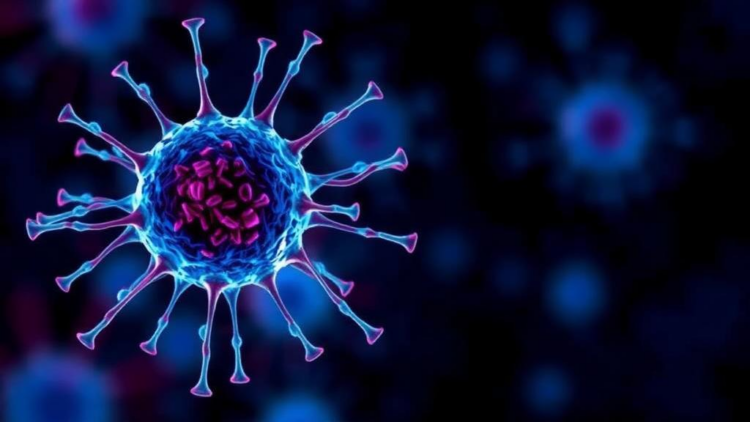
Nasal polyps are among the most stubborn and life-altering conditions in ear, nose and throat medicine. These soft, grape-like growths of chronically inflamed mucosa line the nasal passages and sinuses, and for millions of patients they mean permanent nasal obstruction, a relentless runny nose, headaches, and, perhaps most distressingly, the loss of the sense of smell. Corticosteroids and surgery can shrink or remove the tissue, but recurrence is common, and the underlying molecular drivers of why the inflammation never properly switches off have remained only partly understood. A new study from researchers in Turkey now adds an intriguing piece to that puzzle by focusing on a molecule whose entire job, in principle, is to end inflammation.
The molecule in question is maresin 1, or MaR1, a specialized pro-resolving mediator derived from docosahexaenoic acid, the omega-3 fatty acid abundant in fish oil. Specialized pro-resolving mediators were discovered relatively recently in the history of inflammation research, and they overturned a long-standing assumption that the end of an inflammatory response was simply a passive winding down. Instead, scientists led by Charles Serhan and colleagues showed that resolution is an active, orchestrated program, driven by lipid signals such as resolvins, protectins and maresins that recruit the cells needed to clear debris, quieten immune signaling and restore tissue. Maresin 1, produced by macrophages, has attracted particular attention because it both curbs inflammatory signaling and supports tissue regeneration. The question the Turkish team asked was deceptively simple: if MaR1 is the body’s own inflammation terminator, what is it doing in nasal polyps, where inflammation clearly refuses to resolve?
To find out, the researchers, led by Zulkuf Kaya of the Department of Ear, Nose and Throat Diseases at Atatürk University Research Hospital in Erzurum, together with pharmacologists from Atatürk University and Erzincan Binali Yıldırım University, recruited 60 patients. Thirty of them were undergoing endoscopic sinus surgery for nasal polyps, while the other 30, scheduled for rhinoplasty, served as controls and provided healthy nasal mucosa samples. The design is a straightforward case-control comparison, but it gives researchers a rare window into the biochemistry of polyp tissue at the moment it is removed. The work was approved by the Atatürk University Faculty of Medicine Clinical Research Ethics Committee and conducted with written informed consent from all participants, in line with the Declaration of Helsinki.
From each tissue sample the team measured the concentrations of three molecules using enzyme-linked immunosorbent assay, or ELISA, a technique that uses antibodies to quantify specific proteins with high sensitivity. Alongside MaR1, they measured transforming growth factor beta, TGF-β, a cytokine long implicated in tissue remodeling, fibrosis and the chronic wound-like state of polyp tissue, and nuclear factor erythroid 2–related factor 2, Nrf2, the master transcriptional regulator of the cellular antioxidant response. The choice of these three targets reflects a growing view in the field that nasal polyps are not merely an allergic or infectious problem, but a systems-level failure involving oxidative stress, unresolved inflammation and disordered tissue repair.
The results were striking. In the polyp group, the researchers observed that levels of both MaR1 and Nrf2 were significantly increased compared with healthy nasal mucosa, while TGF-β levels were significantly decreased. At first glance, the direction of these changes may seem counterintuitive. If MaR1 resolves inflammation and Nrf2 defends against oxidative damage, why would both be elevated in a tissue that is famously inflamed? The authors suggest that the answer lies in the dynamics of a chronic inflammatory process: the body may be mounting a compensatory response, ramping up its pro-resolving and antioxidant machinery in an attempt to contain the damage, even as the underlying drivers of inflammation persist and overwhelm it.
This interpretation fits with what is known about the biology of each player. Nrf2 normally sits dormant in the cytoplasm, bound to its inhibitor Keap1, until reactive oxygen species or electrophilic stress liberate it to travel to the nucleus and switch on a battery of antioxidant and detoxifying genes. In chronically inflamed tissues, sustained oxidative stress would be expected to activate Nrf2 persistently, and elevated levels have been reported in a range of inflammatory airway diseases. Similarly, TGF-β is a double-edged cytokine: it drives fibrosis and epithelial remodeling, processes central to polyp growth, but its measured abundance in tissue can vary with the stage of disease, the cellular composition of the sample and the interplay with other signaling pathways. A significant decrease in TGF-β in polyp tissue, as observed here, invites questions about how the remodeling program in polyps is regulated and how it might interact with the pro-resolving lipid pathways the team set out to study.
The study’s real contribution may lie in connecting these threads. By measuring MaR1 alongside Nrf2 and TGF-β in the same samples, the researchers have, for the first time in this tissue, laid out a triad of signals that could plausibly form an intracellular circuit: lipid-mediated resolution signals, antioxidant transcriptional responses and profibrotic cytokine activity, all shifting together in polyp pathophysiology. If future work confirms functional links between them, for example whether MaR1 signaling influences Nrf2 activation or modulates TGF-β-driven fibrosis in airway epithelial cells and macrophages, it would open a genuinely new therapeutic axis. Current treatments for nasal polyps, from intranasal and systemic corticosteroids to the newer biologics targeting type 2 inflammation, such as dupilumab, address specific arms of the immune response but do not directly harness the body’s own resolution program.
The idea of resolution-based therapy is one of the more exciting frontiers in inflammation medicine. Animal studies have shown that maresin 1 and related mediators can reduce tissue damage in models ranging from colitis to lung injury, and stable synthetic analogs are being explored as drug candidates. If the elevation of MaR1 in polyp tissue reflects a genuine, if insufficient, attempt at self-resolution, then supplementing that signal, perhaps with inhaled or topical formulations, could in principle help tip the balance from chronic inflammation back toward tissue homeostasis. Conversely, the altered TGF-β profile suggests that any such approach would need to account for the remodeling biology of polyps, not just the inflammatory one. The authors themselves are careful on this point, noting that potential treatments for nasal polyps may be better understood with more comprehensive and well-matched studies.
That caution is warranted. The study is a cross-sectional comparison of tissue removed at surgery, so it captures a snapshot rather than a trajectory, and it cannot establish whether the changes in MaR1, Nrf2 and TGF-β are causes or consequences of polyp formation. The control group, drawn from rhinoplasty patients, is a reasonable comparator but may differ from the polyp group in ways beyond the presence of polyps. ELISA measurements of lipid mediators in tissue are also technically demanding, and the field has learned that careful validation is essential. The authors acknowledge that larger and better-matched cohorts will be needed before the findings can guide clinical decisions. Still, the study was peer-reviewed and published open access in BMC Pharmacology and Toxicology, with the accepted manuscript released in September 2026, and it was supported by Atatürk University’s Scientific Research Projects Coordination Unit.
For patients, the significance of this work is less about immediate new treatments and more about a shift in perspective. Nasal polyps have long been treated as a problem of too much inflammation; this study reframes them, at least in part, as a problem of failed resolution, in which the body’s own peacekeeping molecules are present but apparently not prevailing. Mapping how maresin 1, Nrf2 and TGF-β interact inside the cells of the nasal mucosa could eventually point to biomarkers that identify which patients are most likely to recur after surgery, or to drugs that restore the resolution program the tissue is struggling to complete. The sense of smell, the ability to breathe freely through the nose, and freedom from a cycle of steroids and repeat operations all hang on that molecular balance. This study does not settle it, but it draws the map with considerably more detail than before.
Subject of Research: The role of the pro-resolving lipid mediator maresin 1 and the Nrf2 and TGF-β pathways in nasal polyp pathophysiology
Article Title: Investigation of maresin 1 and possible associated intracellular pathways in nasal polyp pathophysiology
Article References: Kaya, Z., Mutlu, V., Halici, Z., Kaya, Z. K., Ozcelik, A. T., Topatan, E., & Ozcelik, C. (2026). Investigation of maresin 1 and possible associated intracellular pathways in nasal polyp pathophysiology. BMC Pharmacology and Toxicology. https://doi.org/10.1186/s40360-026-01242-9
Image Credits: AI Generated
DOI: 10.1186/s40360-026-01242-9
Keywords: maresin 1, nasal polyps, Nrf2, TGF-β, inflammation resolution, specialized pro-resolving mediators, docosahexaenoic acid, ELISA, chronic rhinosinusitis, oxidative stress, otolaryngology, BMC Pharmacology and Toxicology
Cite Scienmag News
APA MLA Chicago
Ophelia Keating. (September 30, 2026). Inflammation-Resolving Molecule Maresin 1 Emerges as a Key Player in Nasal Polyps. Scienmag. https://scienmag.com/inflammation-resolving-molecule-maresin-1-emerges-as-a-key-player-in-nasal-polyps/
Ophelia Keating. “Inflammation-Resolving Molecule Maresin 1 Emerges as a Key Player in Nasal Polyps.” Scienmag, 30 September 2026, https://scienmag.com/inflammation-resolving-molecule-maresin-1-emerges-as-a-key-player-in-nasal-polyps/. Accessed 30 September 2026.
Ophelia Keating. “Inflammation-Resolving Molecule Maresin 1 Emerges as a Key Player in Nasal Polyps.” Scienmag. September 30, 2026. https://scienmag.com/inflammation-resolving-molecule-maresin-1-emerges-as-a-key-player-in-nasal-polyps/
Copy citation Download RIS
Tags: active inflammation resolution pathwaysBMC Pharmacology and Toxicologychronic rhinosinusitisdocosahexaenoic acidELISAimpact of Maresin 1 on sinus inflammationinflammation resolutioninflammation-driving molecules in nasal mucosalipid mediators in inflammation resolutionmaresin 1Maresin 1 in chronic nasal inflammationmolecular mechanisms of nasal polyp recurrencenasal polypsNasal polyps inflammationnew insights into chronic nasal inflammation managementNRF2otolaryngologyOxidative stresspotential therapeutic targets for nasal polypsresolution of inflammation in ENT medicinerole of omega-3 fatty acids in nasal healthspecialized pro-resolving mediatorsspecialized pro-resolving mediators and nasal tissue repairTGF-β