• HOME
  • NEWS
  • EXPLORE
    • CAREER
      • Companies
      • Jobs
    • EVENTS
    • iGEM
      • News
      • Team
    • PHOTOS
    • VIDEO
    • WIKI
  • BLOG
  • COMMUNITY
    • FACEBOOK
    • INSTAGRAM
    • TWITTER
Wednesday, June 24, 2026
BIOENGINEER.ORG
No Result
View All Result
  • Login
  • HOME
  • NEWS
  • EXPLORE
    • CAREER
      • Companies
      • Jobs
        • Lecturer
        • PhD Studentship
        • Postdoc
        • Research Assistant
    • EVENTS
    • iGEM
      • News
      • Team
    • PHOTOS
    • VIDEO
    • WIKI
  • BLOG
  • COMMUNITY
    • FACEBOOK
    • INSTAGRAM
    • TWITTER
  • HOME
  • NEWS
  • EXPLORE
    • CAREER
      • Companies
      • Jobs
        • Lecturer
        • PhD Studentship
        • Postdoc
        • Research Assistant
    • EVENTS
    • iGEM
      • News
      • Team
    • PHOTOS
    • VIDEO
    • WIKI
  • BLOG
  • COMMUNITY
    • FACEBOOK
    • INSTAGRAM
    • TWITTER
No Result
View All Result
Bioengineer.org
No Result
View All Result
Home NEWS Science News

Inflammation in regeneration: A friend or foe?

Bioengineer by Bioengineer
March 7, 2017
in Science News
Reading Time: 2 mins read
0
Share on FacebookShare on TwitterShare on LinkedinShare on RedditShare on Telegram
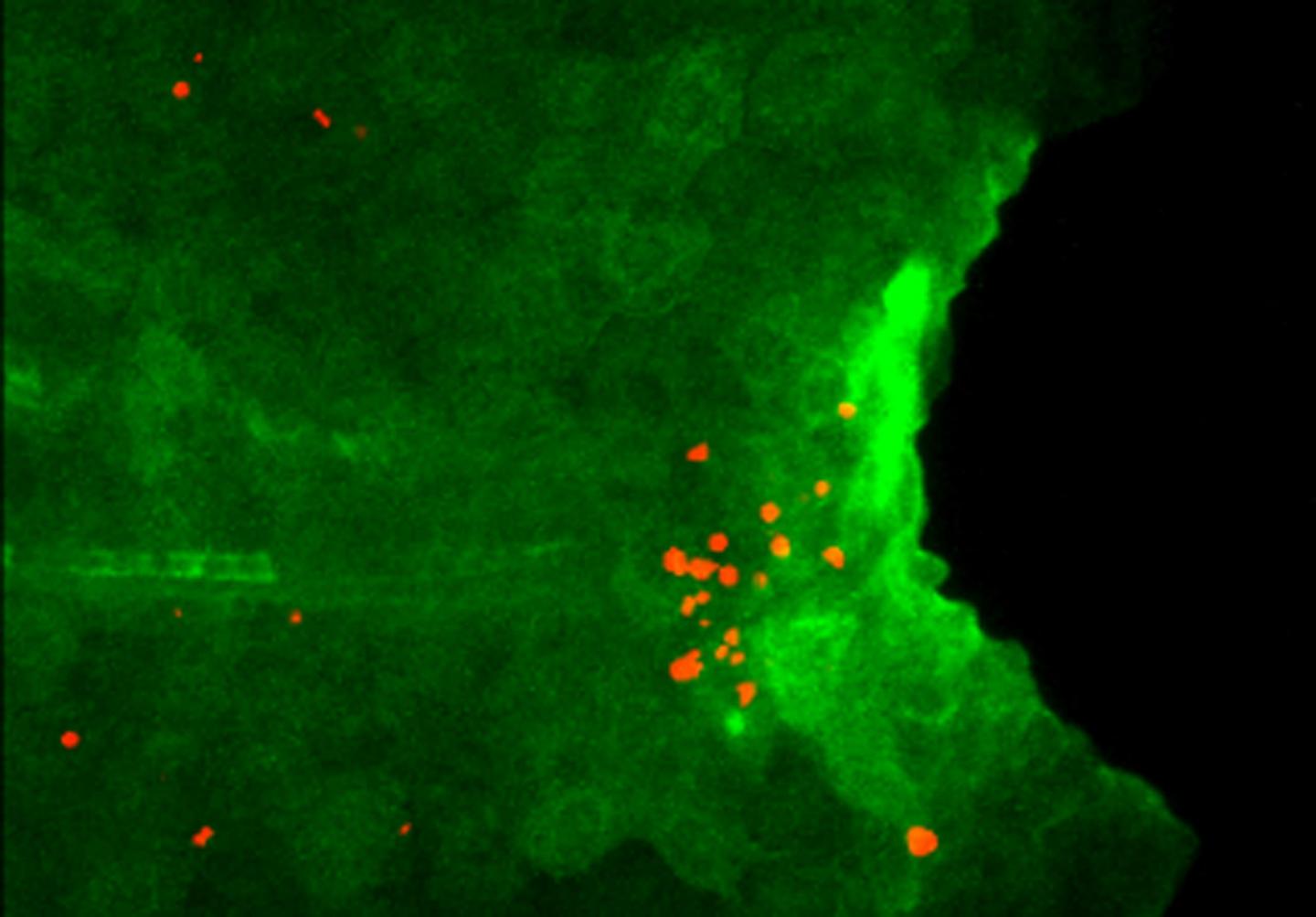
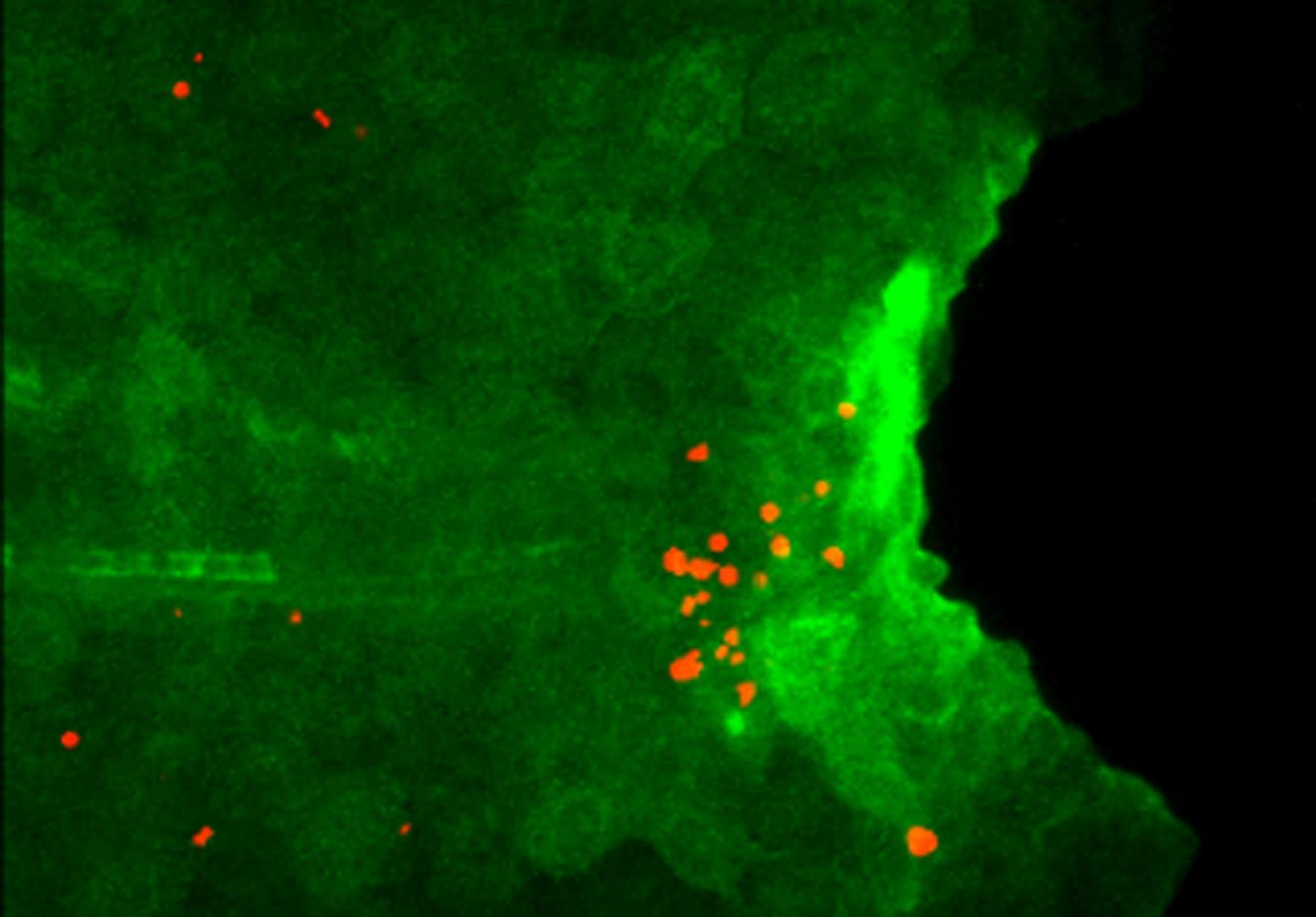
IMAGE

Credit: Tokyo Institute of techonology

Regeneration is an inherent property of life. However, the potential to regenerate differs across species: while fish and amphibians can re-grow appendages such as limbs, tails, and fins, mammals, including humans, cannot restore injured organs to their original shape and function. Therefore, elucidation of molecular mechanisms underlying the amazing regenerative capacity of lower vertebrates can show approaches to restore complex organs in humans, which is a clinical goal of the future.

An international team of scientists led by Associate Professor Atsushi Kawakami from Tokyo Institute of Technology have disclosed a mechanism regulating regeneration of the caudal fin in zebrafish. To identify key molecules responsible for tissue repair, they compared gene transcription in the larvae of the wild-type and mutant zebrafish deficient in fin regeneration. They found that some inflammatory mediators, especially cytokine interleukin 1 beta (Il1b), were upregulated in the mutant and remained there for a long time after amputation of the larval tail. The mutant zebrafish also lacked myeloid cells such as macrophages, necessary to prevent programmed cell death (apoptosis) of the regenerative cells. The scientists therefore suspected a link among the increase in Il1b, absence of macrophages, and death of regenerative cells.

Il1b is considered to be mostly produced by myeloid cells. Surprisingly, after fin amputation, Il1b was primarily observed in epithelial cells surrounding the site of injury where it caused inflammation and apoptosis of the regenerative cells and inhibited the extension of the fin fold. However, if macrophages come to action, they could suppress Il1b expression, attenuate inflammation, and promote survival of the regenerative cells in the fin, thus behaving as critical regulators of inflammation during tissue repair.

All these data point to the negative effect of Il1b on the regenerative processes taking place after fin amputation. Yet, it is not that simple. By creating an Il1b-deficient zebrafish, the researchers found that transient, contrary to prolonged, presence of Il1b activated the expression of regeneration-induced genes and was essential for cell proliferation at the amputation site and regeneration of the injured fin.

Thus, the study of Dr. Kawakami and his colleagues revealed an unexpected association between regeneration and inflammation which acts as a double-edge sword: while acute inflammation is necessary to initiate tissue repair, chronic inflammation blocks further regeneration (Figure 2). As Il1b is evolutionary conserved in vertebrates, it remains to be determined whether similar mechanisms can function in mammals, including humans, as well as to identify anti-inflammatory factors released by macrophages.

###

Media Contact

Emiko Kawaguchi
[email protected]
81-357-342-975

http://www.titech.ac.jp/english/index.html

############

Story Source: Materials provided by Scienmag
Share12Tweet8Share2ShareShareShare2

Related Posts

How Zebrafish Could Hold the Key to Developing Treatments for CADASIL

June 24, 2026
New Technology Uncovers How the Heart Produces Cells with Regenerative Potential — Technology and Engineering

New Technology Uncovers How the Heart Produces Cells with Regenerative Potential

June 24, 2026

Harnessing Machine Learning to Solve Complex Inverse Problems in Semiconductor Analysis

June 24, 2026

Exercise and Liraglutide Boost Vascular Health, Reduce Inflammation

June 24, 2026
Please login to join discussion

POPULAR NEWS

  • Saying Goodbye to PGY-6: Pediatric Fellowship Realities

    103 shares
    Share 41 Tweet 26
  • Multi-Hospital Study Reveals Long Covid Burden Is Twice as High as Current Estimates

    92 shares
    Share 36 Tweet 23
  • Detection of EDCs in Breast Milk and Infant Urine Up to Six Months Highlights Early Exposure Risks

    77 shares
    Share 31 Tweet 19
  • New Drug Candidate Developed at McMaster Shows Potential for Treating Brain Cancer

    58 shares
    Share 23 Tweet 15

About

We bring you the latest biotechnology news from best research centers and universities around the world. Check our website.

Follow us

Recent News

How Zebrafish Could Hold the Key to Developing Treatments for CADASIL

New Technology Uncovers How the Heart Produces Cells with Regenerative Potential

Harnessing Machine Learning to Solve Complex Inverse Problems in Semiconductor Analysis

Subscribe to Blog via Email

Enter your email address to subscribe to this blog and receive notifications of new posts by email.

Join 82 other subscribers
  • Contact Us

Bioengineer.org © Copyright 2023 All Rights Reserved.

Welcome Back!

Login to your account below

Forgotten Password?

Retrieve your password

Please enter your username or email address to reset your password.

Log In
No Result
View All Result
  • Homepages
    • Home Page 1
    • Home Page 2
  • News
  • National
  • Business
  • Health
  • Lifestyle
  • Science

Bioengineer.org © Copyright 2023 All Rights Reserved.