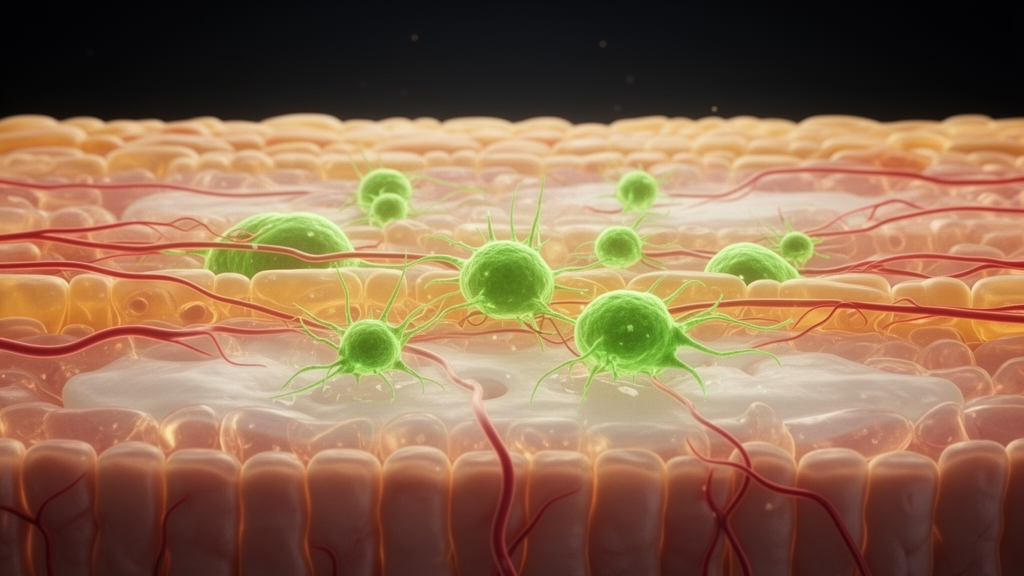
Macrophages that flood into the retina after a stroke-like injury are not simply agents of damage, according to a new mouse study published in the Journal of Translational Medicine. The research, led by Shuhan Meng and colleagues with senior author Xiaobo Xia, suggests that infiltrating monocyte-derived macrophages, or MDMs, actively support the repair of retinal neurons and blood vessels after ischemia-reperfusion injury, a model relevant to conditions such as diabetic retinopathy and retinal vein occlusion.
Ischemic retinopathies are major causes of irreversible vision loss worldwide, and MDMs have commonly been viewed as drivers of post-ischemic inflammation. The team set out to examine whether these cells might instead contribute to the retina’s endogenous repair processes, and at which stage of injury they might do so.
Using a mouse model of retinal ischemia-reperfusion injury, in which blood supply to the retina is temporarily cut off and then restored, the researchers performed longitudinal transcriptomic profiling to track how gene expression changes in infiltrating MDMs over time. They observed that the temporal pattern of MDM infiltration paralleled both the initial neurovascular injury and the subsequent repair phase that followed.
The transcriptomic analyses revealed that infiltrating MDMs retained a transcriptional program associated with neurovascular remodeling throughout their residence in the injured retina. In other words, rather than abandoning a reparative identity, these cells appeared to maintain a molecular signature linked to rebuilding neural tissue and vasculature during their time in the damaged eye.
To test whether the cells were functionally important for repair, the team used clodronate liposomes to deplete monocytes and macrophages. Depletion compromised the restoration of the blood-retinal barrier and overall tissue repair after injury, while exacerbating the loss of retinal ganglion cells and worsening visual dysfunction. When the researchers reconstituted the depleted animals with bone marrow-derived macrophages, the defective retinal neurovascular remodeling was rescued, pointing to a causal role for these cells in recovery.
Upstream regulator analysis identified TREM2 and MAFB as candidate regulators governing the transcriptional reprogramming of retinal-infiltrating MDMs.
In laboratory experiments, stimulating bone marrow-derived macrophages with 4D9, an agonistic antibody that activates TREM2, upregulated molecules related to neurovascular remodeling and enhanced the cells’ phagocytic capacity, their ability to engulf debris. Conditioned medium taken from these activated macrophages partially restored ZO-1 protein levels in bEnd.3 endothelial cells that had been exposed to oxygen-glucose deprivation and reperfusion injury, an in vitro model of the vascular stress caused by ischemia.
The pro-repair phenotype induced by TREM2 activation was attenuated when MAFB was knocked down, suggesting that MAFB acts downstream of TREM2 in driving the reparative program. The authors note that these findings support a previously underappreciated reparative role for MDMs in neurovascular remodeling after retinal ischemia-reperfusion injury.
The work remains at the preclinical stage, based on a mouse model, transcriptomic profiling, macrophage depletion and reconstitution experiments, and cell-culture assays, so the results cannot yet be extended directly to human patients.
Subject of Research: The reparative role of infiltrating monocyte-derived macrophages in retinal repair after ischemia-reperfusion injury
Article Title: Infiltrating monocyte-derived macrophages promote neurovascular remodeling after retinal ischemia/reperfusion injury
Article References: Meng, S., Zhao, D., Fang, W., Chen, S., & Xia, X. (2026). Infiltrating monocyte-derived macrophages promote neurovascular remodeling after retinal ischemia/reperfusion injury. Journal of Translational Medicine. https://doi.org/10.1186/s12967-026-09099-6
Image Credits: AI Generated
DOI: 10.1186/s12967-026-09099-6
Keywords: macrophages, retinal ischemia-reperfusion, neurovascular remodeling, blood-retinal barrier, TREM2, MAFB, diabetic retinopathy, retinal ganglion cells, monocyte-derived macrophages, ischemic retinopathy, bone marrow-derived macrophages, phagocytosis
News Source: Ophelia Keating. (October 28, 2026). Infiltrating Macrophages Help Repair the Retina After Ischemic Injury, Mouse Study Finds. Scienmag.