


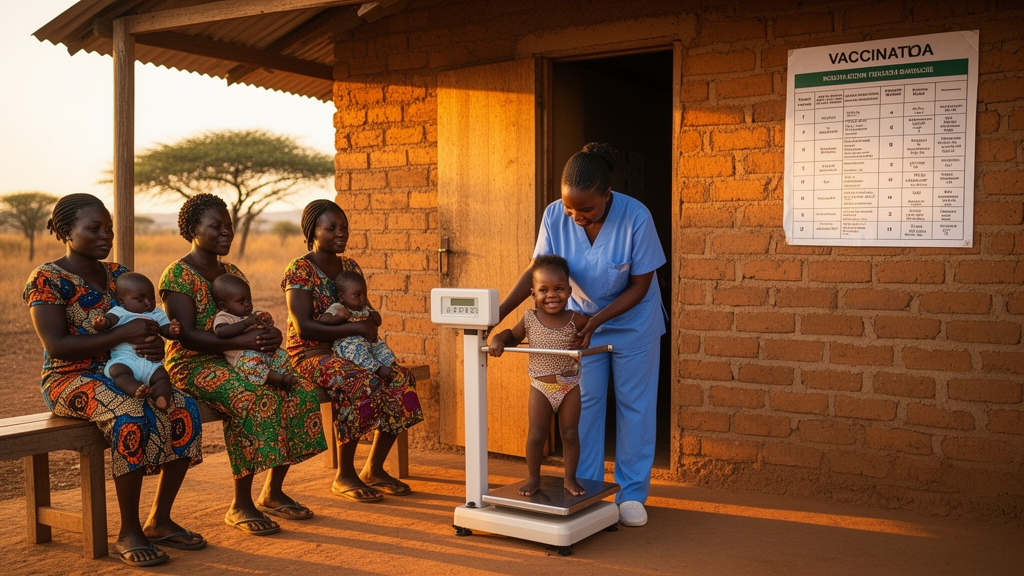
Life expectancy across 14 Southern African Development Community countries is shaped most strongly by infant mortality, under-five mortality and HIV prevalence, according to a new open-access study published in Discover Analytics on 1 October 2026. The research, led by Talent Kondo with Sithokozile Bafana and Mosty Kenama, analyses a 13-year historical period from 2010 to 2022 and projects regional trends forward to 2027.
The study set out to analyse the historical impacts of health and economic indicators on life expectancy and to forecast development trends across the region. Its panel dataset covers 14 SADC nations, a sample the authors describe as robust for longitudinal analysis of how mortality-related and economic variables move together over time.
Methodologically, the research combines econometric and machine learning approaches. The authors employ a Generalized Method of Moments (GMM) estimator to account for endogeneity, alongside a Random Forest model designed to capture non-linear predictive dynamics that conventional linear models may miss. Model diagnostics, including variance inflation factor tests and Arellano–Bond serial correlation tests, are reported as confirming the validity of the estimators, while a Hausman test justified the preference for a Fixed Effects model to address country-specific unobserved heterogeneity.
The empirical findings identify infant mortality, under-five mortality and HIV prevalence as the most significant negative predictors of life expectancy. The Random Forest model ranked these as the dominant determinants, with infant mortality receiving a variable importance score of 0.541. In other words, in this dataset the single strongest predictor of how long people live in these countries is how many infants die before their first birthday.
The GMM estimation also highlighted two economic patterns. The analysis found a diminishing marginal return on government health expenditure, meaning additional spending was associated with progressively smaller gains, and an accelerating positive impact of GDP on longevity. The authors argue that life expectancy gains in the region are currently decoupled from GDP growth, challenging the assumption that macroeconomic growth automatically resolves mortality crises.
Projections from 2023 to 2027 suggest continued regional growth in life expectancy, but with stark disparities persisting between countries. Mauritius is forecast to maintain the highest life expectancy at 74.44 years, while Lesotho and the Democratic Republic of the Congo are projected to remain at the lower end, at approximately 61 to 63 years. These are model-based forecasts rather than observed outcomes, and they extend beyond the historical data window on which the models were trained.
On the basis of these findings, the authors recommend that policy shift from a singular focus on economic output toward targeted interventions in maternal and child health and HIV control. They propose that SADC member states institutionalize aggressive Maternal and Child Health programmes prioritizing sustainable funding for prenatal care, neonatal intensive care units and universal immunization as the primary lever for rapid health improvements. The paper notes that, given the strong negative association between HIV prevalence and life expectancy in its analysis, interventions that effectively reduce HIV prevalence may be associated with improved life expectancy outcomes.
Further recommendations include coordinated cross-border health protocols and a formal Health Technology Transfer Fund to replicate successful primary healthcare models in lower-performing nations. The authors also call on national governments to transition from input-based to outcome-based health budgeting, directing financial resources toward frontline services rather than administrative overhead. As with all policy recommendations in the paper, these are proposed actions based on the study’s associations and projections, not demonstrated effects of implemented programmes.
The authors frame the study’s novelty in three parts: integrating GMM with non-linear machine learning to capture threshold-dependent relationships; providing granular, country-specific projections for all 14 SADC nations through 2027 rather than aggregate regional averages; and introducing an outcome-based policy framework that identifies infant mortality and viral load suppression as the primary levers for regional health convergence. The work is published as open access in volume 4 of Discover Analytics, article number 41, and its findings are specific to the 14 SADC countries and the 2010 to 2022 study period analysed.
Subject of Research: Statistical analysis of the relationship between mortality indicators, HIV prevalence, economic factors and life expectancy in 14 SADC countries with projections to 2027
Article Title: Life expectancy nexus mortality in 14 selected SADC countries with trend analysis
Article References: Kondo, T., Bafana, S., & Kenama, M. (2026). Life expectancy nexus mortality in 14 selected SADC countries with trend analysis. Discover Analytics, 4(1), Article 41. https://doi.org/10.1007/s44257-026-00088-z
Image Credits: AI Generated
DOI: 10.1007/s44257-026-00088-z
Keywords: life expectancy, SADC, infant mortality, under-five mortality, HIV prevalence, GDP, government health expenditure, Random Forest, GMM, forecasting, Mauritius, Lesotho
News Source: Harold Sullivan. (October 28, 2026). Infant mortality, HIV and under-five deaths drive life expectancy gaps across 14 SADC countries. Scienmag.



