• HOME
  • NEWS
  • EXPLORE
    • CAREER
      • Companies
      • Jobs
    • EVENTS
    • iGEM
      • News
      • Team
    • PHOTOS
    • VIDEO
    • WIKI
  • BLOG
  • COMMUNITY
    • FACEBOOK
    • INSTAGRAM
    • TWITTER
Tuesday, December 30, 2025
BIOENGINEER.ORG
No Result
View All Result
  • Login
  • HOME
  • NEWS
  • EXPLORE
    • CAREER
      • Companies
      • Jobs
        • Lecturer
        • PhD Studentship
        • Postdoc
        • Research Assistant
    • EVENTS
    • iGEM
      • News
      • Team
    • PHOTOS
    • VIDEO
    • WIKI
  • BLOG
  • COMMUNITY
    • FACEBOOK
    • INSTAGRAM
    • TWITTER
  • HOME
  • NEWS
  • EXPLORE
    • CAREER
      • Companies
      • Jobs
        • Lecturer
        • PhD Studentship
        • Postdoc
        • Research Assistant
    • EVENTS
    • iGEM
      • News
      • Team
    • PHOTOS
    • VIDEO
    • WIKI
  • BLOG
  • COMMUNITY
    • FACEBOOK
    • INSTAGRAM
    • TWITTER
No Result
View All Result
Bioengineer.org
No Result
View All Result
Home NEWS Science News Biology

Industry-made pits are beneficial for beavers and wolverines, study shows

Bioengineer by Bioengineer
July 16, 2020
in Biology
Reading Time: 2 mins read
0
IMAGE
Share on FacebookShare on TwitterShare on LinkedinShare on RedditShare on Telegram

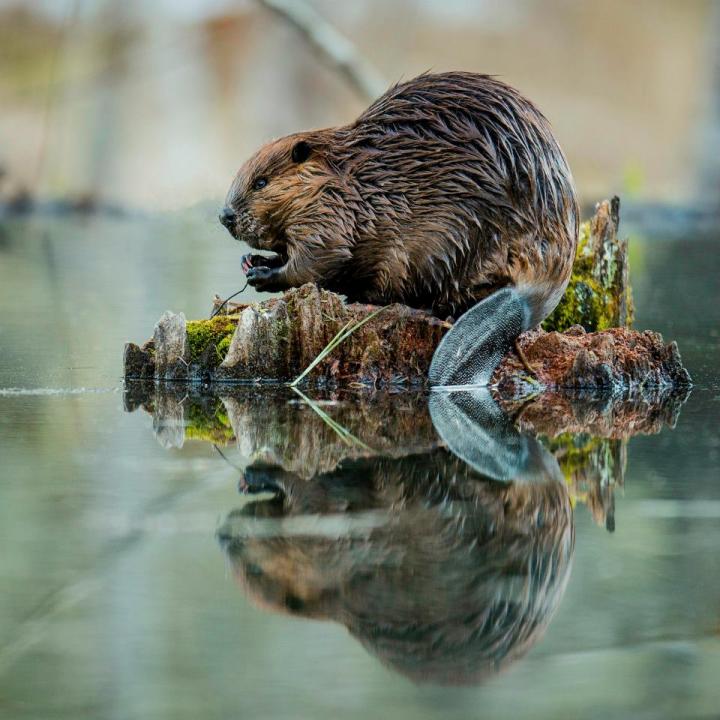
In Northern Alberta, pits created by industry activity may support beavers and subsequently wolverines
IMAGE

Credit: A. Colton.

Beavers and wolverines in Northern Alberta are using industry-created borrow pits as homes and feeding grounds, according to a new study by University of Alberta ecologists.

The research examined the relationship between local wildlife and borrow pits, which are industry-created sites where material such as soil, gravel, or sand has been dug up for road construction. The results show that when revegetated the sites provide homes for beavers, which in turn support the survival of wolverines.

“The borrow pits enhance habitats for a number of species of wildlife in the bogs of Northern Alberta,” said Mark Boyce, co-author on the paper, professor in the Department of Biological Sciences, and Alberta Conservation Association Chair in Fisheries and Wildlife.

“The deep water and adjacent forage create excellent habitats for beavers. And wolverines thrive when beavers do. Not only do they prey on beavers, wolverines also have been shown to use beaver lodges as dens where they have their cubs.”

The displacement of wildlife by industrial development is a complex issue, Boyce explains. “In this case, industrial development created the borrow pits that are now used by beavers that actually enhances habitats for our wilderness icon, the wolverine.”

The research was led by PhD student Matthew Scrafford, who formed a partnership with the Dene Tha First Nation that proved instrumental for the study.

“The most important partner on this research was the Dene Tha First Nations,” said Boyce. “Several young people in the area were enthusiastic about the project. They were instrumental in building traps and supporting our research.”

###

This research was funded by the Alberta Conservation Association, the Alberta Trappers Association, and Husky Energy.

The paper, “Beaver (Castor canadensis) use of borrow pits in an industrial landscape in northwestern Alberta,” was published in the Journal of Environmental Management (doi: 10.1016/j.jenvman.2020.110800).

Media Contact
Katie Willis
[email protected]

Original Source

https://www.ualberta.ca/science/news/2020/july/beavers-industry.html

Related Journal Article

http://dx.doi.org/10.1016/j.jenvman.2020.110800

Tags: BiodiversityBiologyEcology/EnvironmentMarine/Freshwater BiologyPollution/Remediation
Share13Tweet8Share2ShareShareShare2

Related Posts

Dictyostelium discoideum Adapts Gene Expression to Hypoxia

Dictyostelium discoideum Adapts Gene Expression to Hypoxia

December 30, 2025
Impact of Sex and Gender on Clinical Outcomes: Review

Impact of Sex and Gender on Clinical Outcomes: Review

December 29, 2025

Thousands of Lytic Phages Found in Bacterial Genomes

December 29, 2025

Persistent Virulent Phages Found Across Bacterial Isolates

December 29, 2025
Please login to join discussion

POPULAR NEWS

  • Robotic Waist Tether for Research Into Metabolic Cost of Walking

    NSF funds machine-learning research at UNO and UNL to study energy requirements of walking in older adults

    71 shares
    Share 28 Tweet 18
  • Exploring Audiology Accessibility in Johannesburg, South Africa

    51 shares
    Share 20 Tweet 13
  • Nurses’ Views on Online Learning: Effects on Performance

    70 shares
    Share 28 Tweet 18
  • SARS-CoV-2 Subvariants Affect Outcomes in Elderly Hip Fractures

    44 shares
    Share 18 Tweet 11

About

We bring you the latest biotechnology news from best research centers and universities around the world. Check our website.

Follow us

Recent News

How Sensory Processing Affects Learning in Autism and ADHD

Unique Metabolic Markers in Diabetic Foot Diagnosis

Assessing Herbal Medicine Safety Knowledge Among Tanzanian Healthcare Workers

Subscribe to Blog via Email

Enter your email address to subscribe to this blog and receive notifications of new posts by email.

Join 71 other subscribers
  • Contact Us

Bioengineer.org © Copyright 2023 All Rights Reserved.

Welcome Back!

Login to your account below

Forgotten Password?

Retrieve your password

Please enter your username or email address to reset your password.

Log In
No Result
View All Result
  • Homepages
    • Home Page 1
    • Home Page 2
  • News
  • National
  • Business
  • Health
  • Lifestyle
  • Science

Bioengineer.org © Copyright 2023 All Rights Reserved.