• HOME
  • NEWS
  • EXPLORE
    • CAREER
      • Companies
      • Jobs
    • EVENTS
    • iGEM
      • News
      • Team
    • PHOTOS
    • VIDEO
    • WIKI
  • BLOG
  • COMMUNITY
    • FACEBOOK
    • INSTAGRAM
    • TWITTER
Monday, September 28, 2026
BIOENGINEER.ORG
No Result
View All Result
  • Login
  • HOME
  • NEWS
  • EXPLORE
    • CAREER
      • Companies
      • Jobs
        • Lecturer
        • PhD Studentship
        • Postdoc
        • Research Assistant
    • EVENTS
    • iGEM
      • News
      • Team
    • PHOTOS
    • VIDEO
    • WIKI
  • BLOG
  • COMMUNITY
    • FACEBOOK
    • INSTAGRAM
    • TWITTER
  • HOME
  • NEWS
  • EXPLORE
    • CAREER
      • Companies
      • Jobs
        • Lecturer
        • PhD Studentship
        • Postdoc
        • Research Assistant
    • EVENTS
    • iGEM
      • News
      • Team
    • PHOTOS
    • VIDEO
    • WIKI
  • BLOG
  • COMMUNITY
    • FACEBOOK
    • INSTAGRAM
    • TWITTER
No Result
View All Result
Bioengineer.org
No Result
View All Result
Home NEWS Science News Chemistry

Inducing plasma in biomass could make biogas easier to produce

Bioengineer by Bioengineer
September 22, 2020
in Chemistry
Reading Time: 3 mins read
0
IMAGE
Share on FacebookShare on TwitterShare on LinkedinShare on RedditShare on Telegram

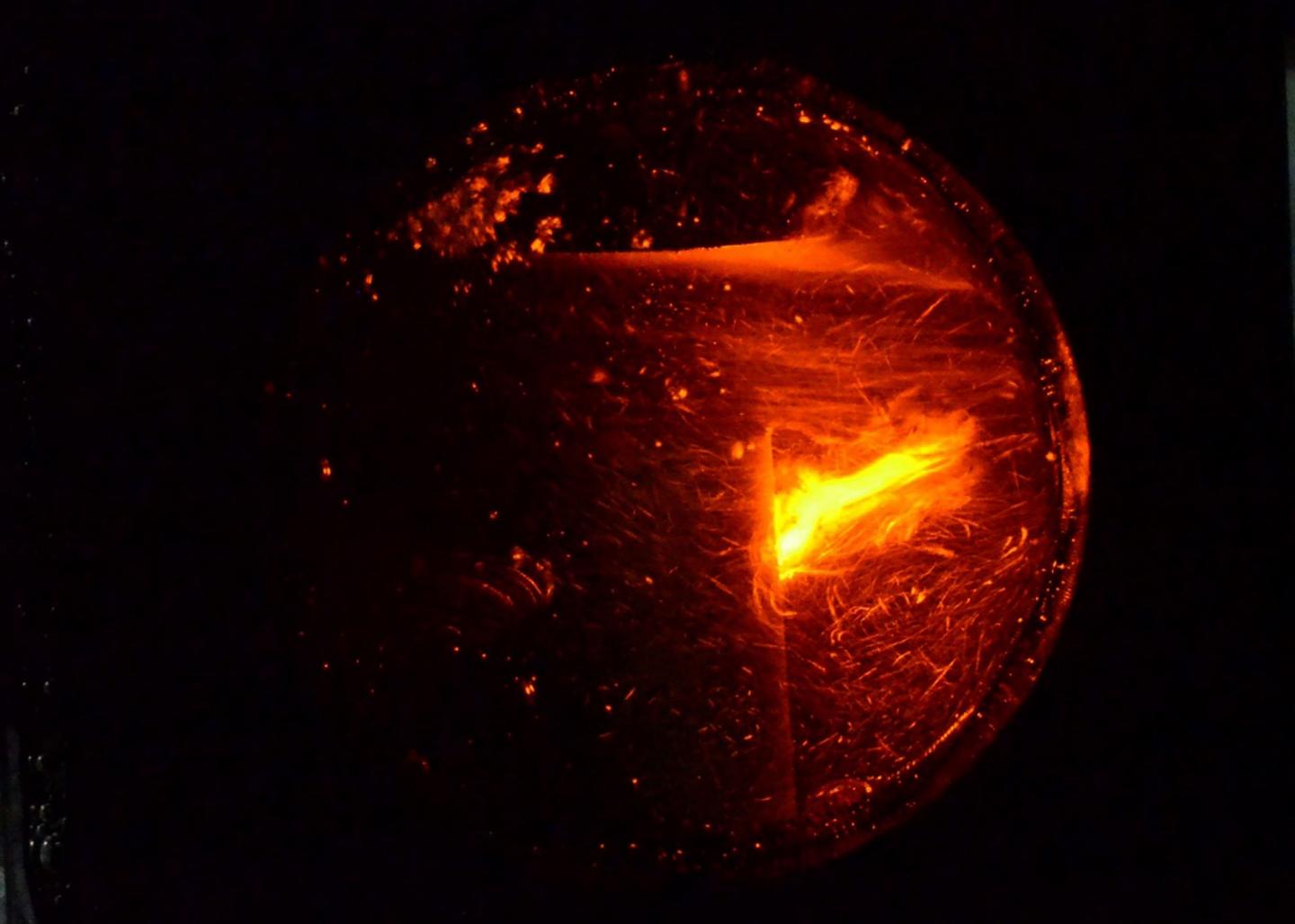
With the help of microwave pulses, plasma induced into polymer solutions helps break down thick material, lowering the viscosity and possibly breaking polymer chains.
IMAGE

Credit: B. Honnorat, V. Brüser, and J.F. Kolb

WASHINGTON, September 22, 2020 — Producing biogas from the bacterial breakdown of biomass presents options for a greener energy future, but the complex composition of biomass comes with a long list of challenges.

Cellulose and woody lignocellulose in biomass are especially hard for bacteria to digest, making the process inefficient. Chemical, physical, or mechanical processes, or several of them combined, can be used for pretreatment to make biomass easier to digest, but many of the current solutions are expensive or inefficient or rely on corrosive chemicals.

In research supported by the European Regional Development Fund, published in AIP Advances, by AIP Publishing, researchers at the Leibniz Institute of Plasma Science and Technology are testing plasma formation in biomass and finding a promising method for pretreatment of biomass.

“The plasma can be seen as a reactive gas, which contains populations of particles that contain several electron volts of kinetic energy. This energy can be used to break the bond of the chemicals and break the bonds of molecules with which they interact,” author Bruno Honnorat said.

“The most surprising thing was to be able to obtain plasma discharge conditions in a moving liquid. The presence of a flow considerably complicates the situation compared to all the other experimental setups studied in the literature.”

The work involves creation of a reactor in which 2-kilowatt microwave pulses injected into a moving liquid model induce plasma formation within one millisecond. The totality of the microwave power is concentrated to a small cavity, containing less than 1 milliliter of liquid, which is heated, vaporized, and finally ignited, forming an expanding plasma bubble.

The plasma-liquid interaction forms reactive species, including oxidizing agents, such as hydroxyl radicals and hydrogen peroxides, that help break down the biomass and decrease the viscosity, or resistance to flow, of the biomass material. In partnership with an industrial agriculture partner, the process will be further tested at full scale in a biogas plant.

The authors plan to continue their work by more closely examining whether the plasma breaks the polymer chain and investigating plasma-bubble dynamics to evaluate the size and shape evolution, lifetime, and pressure of bubbles in the plasma to better understand the reactive species created in the plasma.

Their work could be used for increasing biogas production, improving the efficiency of microwave-plasma-liquid interactions, and functionalizing and modifying polymer length in polymer science.

###

The article, “Microwave plasma discharges for biomass pretreatment: Degradation of a sodium carboxymethyl cellulose model,” is authored by B. Honnorat, V. Brüser, and J.F. Kolb. The article will appear in AIP Advances on Sept. 22, 2020 (DOI: 10.1063/5.0018626). After that date, it can be accessed at https://aip.scitation.org/doi/10.1063/5.0018626.

ABOUT THE JOURNAL

AIP Advances is an open access journal publishing in all areas of physical sciences–applied, theoretical, and experimental. The inclusive scope of AIP Advances makes it an essential outlet for scientists across the physical sciences. See https://aip.scitation.org/journal/adv.

Media Contact
Larry Frum
[email protected]

Related Journal Article

http://dx.doi.org/10.1063/5.0018626

Tags: BacteriologyBiologyBiomechanics/BiophysicsChemistry/Physics/Materials SciencesEnergy/Fuel (non-petroleum)Polymer Chemistry
Share12Tweet8Share2ShareShareShare2

Related Posts

Sponge-Powered Reactor Keeps Fish Farm Water Clean Without Water Exchanges

Sponge-Powered Reactor Keeps Fish Farm Water Clean Without Water Exchanges

September 27, 2026
Scientists Turn Chemistry Into a Single Number That Measures the Complexity of Chinese Baijiu Aroma

Scientists Turn Chemistry Into a Single Number That Measures the Complexity of Chinese Baijiu Aroma

September 27, 2026

Strontium-Doped Bioactive Glass Turns Everyday Friction Into a Water-Cleaning Powerhouse

September 27, 2026

Quantum Simulations Reveal the Hidden Electronic Architecture of Methisazone

September 26, 2026
Please login to join discussion

POPULAR NEWS

  • Trunk Control May Hold a Key to Balance and Fall Risk in Older Adults

    29 shares
    Share 12 Tweet 7
  • AI Tells Doctors When It Is Unsure About Cancer Treatment Success

    29 shares
    Share 12 Tweet 7
  • Engineered mini CRISPR enzyme gets a 60-fold power boost for gene editing

    29 shares
    Share 12 Tweet 7
  • When Autism Diagnoses Fade: Early Intervention and Milder Symptoms Mark Children Who Lose the Label

    29 shares
    Share 12 Tweet 7

About

We bring you the latest biotechnology news from best research centers and universities around the world. Check our website.

Follow us

Recent News

Trunk Control May Hold a Key to Balance and Fall Risk in Older Adults

AI Tells Doctors When It Is Unsure About Cancer Treatment Success

Engineered mini CRISPR enzyme gets a 60-fold power boost for gene editing

Subscribe to Blog via Email

Enter your email address to subscribe to this blog and receive notifications of new posts by email.

Join 85 other subscribers
  • Contact Us

Bioengineer.org © Copyright 2023 All Rights Reserved.

Welcome Back!

Login to your account below

Forgotten Password?

Retrieve your password

Please enter your username or email address to reset your password.

Log In
No Result
View All Result
  • Homepages
    • Home Page 1
    • Home Page 2
  • News
  • National
  • Business
  • Health
  • Lifestyle
  • Science

Bioengineer.org © Copyright 2023 All Rights Reserved.