Tropical forests are some of the most threatened ecosystems on Earth, largely due to recent human activities. To better understand how tropical forests responded to human impacts on time scales from hundreds to thousands of years ago, scientists unearth lessons from the past that are relevant to the conservation of tropical environments going forward. A Special Feature in Proceedings of the National Academy of Sciences co-edited by Smithsonian Tropical Research Institute and National Museum of Natural History senior scientist Emerita, Dolores Piperno, shares their results.
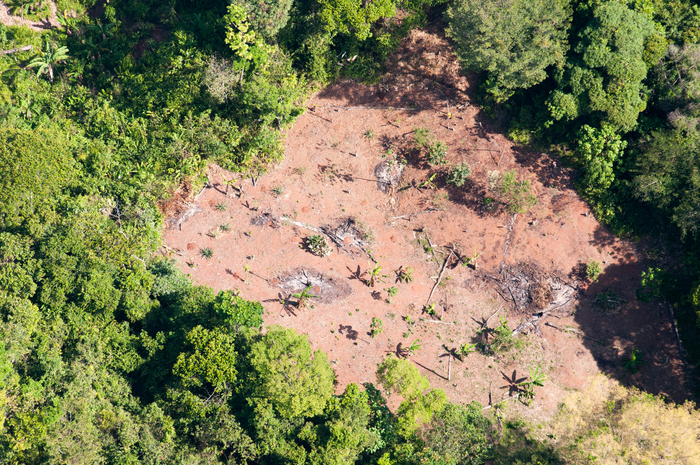
Credit: Steven Paton, Smithsonian Tropical Research Institute
Tropical forests are some of the most threatened ecosystems on Earth, largely due to recent human activities. To better understand how tropical forests responded to human impacts on time scales from hundreds to thousands of years ago, scientists unearth lessons from the past that are relevant to the conservation of tropical environments going forward. A Special Feature in Proceedings of the National Academy of Sciences co-edited by Smithsonian Tropical Research Institute and National Museum of Natural History senior scientist Emerita, Dolores Piperno, shares their results.
Humans have been modifying tropical habitats for thousands of years. Through the lenses of a variety of disciplines—archaeology, paleoecology, history and climate science—the authors take a deep-time approach to discover how ancient human societies understood tropical ecosystem dynamics, and to reveal their wisdom and adaptability to their natural surroundings.
On island systems in the Pacific and Caribbean, humans adapted to intertangled terrestrial and marine ecosystems, taking advantage of resources from both habitats to ensure their long-term survival.
In the vast and diverse Amazonian ecosystems, prehistoric societies adapted their behavior to varying environmental conditions that influenced the availability of natural resources and suitability for growing crops such as maize and manioc. In southwest Amazonia, humans appeared to be actively managing the landscape to control climatic conditions such as rainfall. Meanwhile, in a previously unstudied region of the Amazon forest in Perú, analyses showed that indigenous inhabitants did not significantly modify their surroundings for over 5,000 years.
In different tropical habitats, pollen records indicate that humans in southern China and southeast Asia were clearing tropical forests for wetland rice production between 3,000 to 2,000 years ago, leading to lasting impacts on their biodiversity.
This Special Feature also reveals that ancient human societies such as the Maya in Mesoamerica and the Khmer in southeast Asia, experienced similar vulnerabilities to environmental stressors and exhibited similar responses, despite cultural differences and their distance from one another in space and time.
More recent records from island ecosystems such as Papua New Guinea, the Canary Islands and Cabo Verde show how impacts on forests and wetlands following colonization by Europeans depart from more sustainable human interactions with the environment practiced for generations before colonists arrived.
The volume concludes with a review of more than 50 case studies of tropical ecosystems from around the world, highlighting how indigenous people have long been stewards of nature and demonstrating the importance of incorporating indigenous knowledge into conservation and sustainability efforts.
The authors hope that this Special Feature encourages policy makers and ecologists to further engage with paleo and social science scholars, and to recognize the importance of indigenous traditional management practices from the past to the present and beyond, in the development of sustainable and resilient futures for humans and tropical ecosystems.
The Smithsonian Tropical Research Institute, headquartered in Panama City, Panama, is part of the Smithsonian Institution. The Institute furthers the understanding of tropical nature and its importance to human welfare, trains students to conduct research in the tropics and promotes conservation by increasing public awareness of the beauty and importance of tropical ecosystems.
Journal
Proceedings of the National Academy of Sciences
DOI
10.1073/pnas.2109243118
Article Title
Tropical forests as key sites of the “Anthropocene”: Past and present perspectives
Article Publication Date
27-Sep-2021