A Sacred Feather Could Help Save One of the World’s Rarest Cockatoos
On Seram Island in Indonesia, an endangered cockatoo is at the center of an unusual conservation breakthrough. The Huaulu Indigenous community has adapted a centuries-old initiation ceremony so that young men can continue to observe a sacred tradition without hunting wild birds. Instead of using feathers taken from salmon-crested cockatoos, the community now uses naturally moulted feathers collected through a conservation-supported “feather bank.” Researchers say the agreement demonstrates how cultural continuity and species protection can reinforce each other rather than remain in conflict.
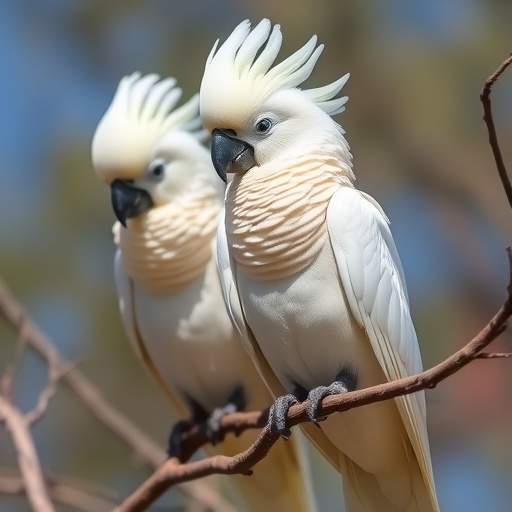
The salmon-crested cockatoo, Cacatua moluccensis, is endemic to the Maluku region of Indonesia and is recognized as an endangered species. Its large white body, vivid salmon-colored crest and restricted geographic range have made it highly vulnerable to population decline. Although habitat pressures affect many island species, the researchers identify commercial wildlife trafficking as the principal driver of the cockatoo’s decline. Capturing birds for the illegal pet trade can remove breeding adults from small, isolated populations, where the loss of even a limited number of individuals may have serious consequences for long-term recovery.
For generations, crest feathers played a central role in the Huaulu Cidaku initiation ceremony, which marks a young man’s transition into adulthood. The feathers were worn as part of the ceremonial presentation and were valued not simply for their appearance, but for their relationship to the spiritual power of the bird. In the past, obtaining them could involve hunting salmon-crested cockatoos. The new conservation arrangement changes the source of the feathers while preserving their cultural meaning: naturally shed feathers, rather than feathers obtained through killing, are supplied for ritual use.
The distinction is biologically important. Birds regularly replace worn feathers through moulting, a natural process in which old feathers are shed and new ones grow. A naturally moulted feather contains the physical characteristics of the species but does not require the death or capture of the bird. In rehabilitation and wildlife rescue centres, these feathers can be collected under controlled conditions, documented and stored until they are needed. This approach creates a traceable supply while removing the incentive to hunt wild cockatoos for ceremonial materials.
The initiative was developed through collaboration among Huaulu elders, conservation researchers, Mansuela National Park authorities and the Indonesian conservation organization Perkumpulan Konservasi Kakatua Indonesia, or KKI. Rather than imposing a prohibition from outside, the team used interviews, participatory fieldwork and focus group discussions to examine how the ceremony could evolve without losing its customary significance. The research was conducted with community members between 2019 and 2025, allowing the agreement to emerge through repeated consultation rather than a single short-term intervention.
According to senior author George Olah of The Australian National University’s Fenner School of Environment and Society, the findings challenge the assumption that traditional practices and wildlife conservation are automatically incompatible. The study suggests that the spiritual potency of the Cidaku ceremony is linked less to the violence of the hunt than to the species itself and the bird’s place within Huaulu cultural understanding. As a result, replacing hunted feathers with authentic moulted feathers can maintain the ritual’s integrity while reducing pressure on wild populations.
The arrangement has also been formally recognized by the Indonesian Government, giving the community-led solution an institutional foundation. Such recognition may be significant because conservation rules that exclude local communities can produce distrust, concealment or ineffective enforcement. By contrast, a feather bank creates a practical mechanism for aligning customary law with wildlife management. It also recognizes the Huaulu as active stewards of the Seram landscape, rather than treating them as the primary cause of a decline driven largely by commercial trafficking.
The researchers describe the project as an example of biocultural conservation, an approach that treats biological diversity and cultural identity as interconnected. In technical terms, the strategy addresses both direct mortality and the social conditions that influence hunting behavior. Providing a legal and culturally acceptable alternative reduces demand for feathers sourced from wild birds, while community participation can strengthen monitoring, compliance and local protection of habitat. The model may be especially valuable on islands, where isolated populations often have limited genetic and demographic resilience.
Lead author Dwi Agustina of Universitas Gadjah Mada and KKI said the agreement shows why conservation interventions are more likely to succeed when Indigenous communities help design them. The team argues that protecting the salmon-crested cockatoo cannot be separated from protecting the cultural relationships that give the bird meaning. The study does not propose freezing Huaulu culture in the past; instead, it documents how a living tradition can adapt while retaining its identity. The researchers hope similar partnerships will be considered in other regions where sacred practices, endangered wildlife and conservation policy intersect.
The research is published in the Journal of Ethnobiology under the title “Sacred Rituals and Endangered Birds: A Biocultural Approach to Cockatoo Conservation on Seram Island, Indonesia.” Its central message is both scientific and social: preventing extinction may require more than protected areas and enforcement. It may also depend on understanding how communities value species, how rituals use biological materials and how carefully designed alternatives can remove pressure from wild populations. On Seram, a naturally shed feather has become a symbol of that possibility—preserving a ceremony while giving one of the world’s rarest cockatoos a better chance to survive.
Subject of Research: Animals
Article Title: Sacred Rituals and Endangered Birds: A Biocultural Approach to Cockatoo Conservation on Seram Island, Indonesia
News Publication Date: 3-Jul-2026
Web References: Journal of Ethnobiology article: https://journals.sagepub.com/doi/10.1177/02780771261463246; Additional images: https://drive.google.com/drive/folders/1h9t5VKAaGDy3iv_EzSfRjlen3hPlpYWn; Video abstract: https://www.youtube.com/watch?v=NIRis1g6NaY
References: Journal of Ethnobiology, DOI: 10.1177/02780771261463246
Image Credits: Balázs Tisza, Wildlife Messengers
Keywords: salmon-crested cockatoo, Cacatua moluccensis, Seram Island, Indonesia, Huaulu people, Indigenous conservation, biocultural conservation, wildlife trafficking, feather bank, endangered species, conservation biology, ethnobiology
Tags: combatting illegal pet trade in Indonesiacommunity-based conservation initiativesculturally integrated wildlife conservationendangered cockatoo protectionfeather bank conservation methodsIndigenous-led bird conservationisland endemic bird conservationMaluku cockatoo habitat preservationSacred Feather tradition in Huaulu culturesalmon-crested cockatoo population recoveryspecies protection and cultural traditionssustainable wildlife management practices