• HOME
  • NEWS
  • EXPLORE
    • CAREER
      • Companies
      • Jobs
    • EVENTS
    • iGEM
      • News
      • Team
    • PHOTOS
    • VIDEO
    • WIKI
  • BLOG
  • COMMUNITY
    • FACEBOOK
    • INSTAGRAM
    • TWITTER
Wednesday, May 13, 2026
BIOENGINEER.ORG
No Result
View All Result
  • Login
  • HOME
  • NEWS
  • EXPLORE
    • CAREER
      • Companies
      • Jobs
        • Lecturer
        • PhD Studentship
        • Postdoc
        • Research Assistant
    • EVENTS
    • iGEM
      • News
      • Team
    • PHOTOS
    • VIDEO
    • WIKI
  • BLOG
  • COMMUNITY
    • FACEBOOK
    • INSTAGRAM
    • TWITTER
  • HOME
  • NEWS
  • EXPLORE
    • CAREER
      • Companies
      • Jobs
        • Lecturer
        • PhD Studentship
        • Postdoc
        • Research Assistant
    • EVENTS
    • iGEM
      • News
      • Team
    • PHOTOS
    • VIDEO
    • WIKI
  • BLOG
  • COMMUNITY
    • FACEBOOK
    • INSTAGRAM
    • TWITTER
No Result
View All Result
Bioengineer.org
No Result
View All Result
Home NEWS Science News Biology

Indigenous collaboration and leadership key to managing sea otter population recovery

Bioengineer by Bioengineer
May 22, 2020
in Biology
Reading Time: 3 mins read
0
IMAGE
Share on FacebookShare on TwitterShare on LinkedinShare on RedditShare on Telegram

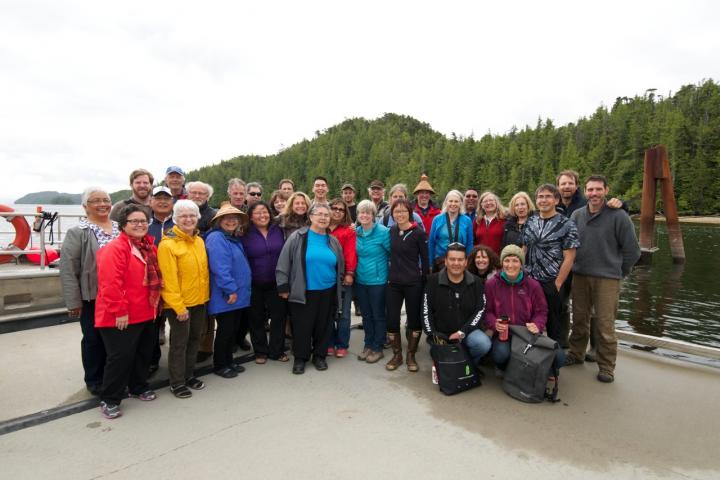
IMAGE

Credit: Ilja Herb

A new study highlights the need to engage Indigenous communities in managing sea otter population recovery to improve coexistence between humans and this challenging predator.

The sea otters’ recovery along the northwest coast of North America presents a challenge for coastal communities because both otters and humans like to eat shellfish, such as sea urchins, crabs, clams and abalone. Expanding populations of sea otters and their arrival in new areas are heavily impacting First Nations and Tribes that rely on harvesting shellfish.

SFU lead author Jenn Burt says the study focused beyond the challenges to seek solutions going forward. “We documented Indigenous peoples’ perspectives which illuminated key strategies to help improve sea otter management and overall coexistence with sea otters.”

Most research focuses on how sea otter recovery greatly reduces shellfish abundance or expands kelp forests, rather than on how Indigenous communities are impacted, or how they are adapting to the returning sea otters’ threat to their food security, cultural traditions, and livelihoods.

Recognizing that Indigenous perspectives were largely absent from dialogues about sea otter recovery and management, SFU researchers reached out to initiate the Coastal Voices collaboration.

Coastal Voices is a partnership with Indigenous leaders and knowledge holders representing 19 First Nations and Tribes from Alaska to British Columbia.

Based on information revealed in workshops, interviews, and multiple community surveys, SFU researchers and collaborating Indigenous leaders found that human-otter coexistence can be enabled by strengthening Indigenous governance authority and establishing locally designed, adaptive co-management plans for sea otters.

The study, published this week in People and Nature also suggests that navigating sea otter recovery can be improved by incorporating Indigenous knowledge into sea otter management plans, and building networks and forums for community discussions about sea otter and marine resource management.

“Our people actively managed a balanced relationship with sea otters for millennia,” says co-author and Haida matriarch Kii’iljuus (Barbara Wilson), a recent SFU alumnus.

“Our work with Coastal Voices and this study helps show how those rights and knowledge need to be recognized and be part of contemporary sea otter management.”

Anne Salomon, a professor in SFU’s School of Resource and Environmental Management, co-authored the study and co-led the Coastal Voices research partnership.

“This research reveals that enhancing Indigenous people’s ability to coexist with sea otters will require a transformation in the current governance of fisheries and marine spaces in Canada, if we are to navigate towards a system that is more ecologically sustainable and socially just,” says Salomon.

Despite challenges, the authors say transformation is possible. They found that adaptive governance and Indigenous co-management of marine mammals exist in other coastal regions in northern Canada and the U.S. They suggest that increasing Indigenous leadership and Canadian government commitments to Reconciliation may provide opportunities for new approaches and more collaborative marine resource management.

###

Media Contact
Melissa Shaw
[email protected]

Original Source

https://www.sfu.ca/university-communications/media-releases/2020/05/-indigenous-collaboration-and-leadership-key-to-managing-sea-ott.html

Related Journal Article

http://dx.doi.org/10.1002/pan3.10090

Tags: Ecology/EnvironmentGuidelines/Treaties/AgreementsNaturePolicy/Ethics
Share12Tweet8Share2ShareShareShare2

Related Posts

Cutting-Edge Genomic Techniques Reveal Unexpected Cellular Changes in the Aging Brain — Biology

Cutting-Edge Genomic Techniques Reveal Unexpected Cellular Changes in the Aging Brain

May 12, 2026
USC Researchers Initiate Study on the Most Advanced Lab-Grown Kidney Structures — Biology

USC Researchers Initiate Study on the Most Advanced Lab-Grown Kidney Structures

May 12, 2026

Childbirth in Humans Is Not Uniquely Challenging Among Mammals, New Research Shows

May 12, 2026

From Complexity to Clarity: Unraveling the “Topological Laws” Governing Cell Death

May 11, 2026
Please login to join discussion

POPULAR NEWS

  • Research Indicates Potential Connection Between Prenatal Medication Exposure and Elevated Autism Risk

    842 shares
    Share 337 Tweet 211
  • New Study Reveals Plants Can Detect the Sound of Rain

    728 shares
    Share 290 Tweet 182
  • Salmonella Haem Blocks Macrophages, Boosts Infection

    62 shares
    Share 25 Tweet 16
  • Breastmilk Balances E. coli and Beneficial Bacteria in Infant Gut Microbiomes

    57 shares
    Share 23 Tweet 14

About

BIOENGINEER.ORG

We bring you the latest biotechnology news from best research centers and universities around the world. Check our website.

Follow us

Recent News

Postmenopausal Women Face Increased Mortality Risk from Osteoporosis, New Research Shows

AI Predicts Hospital Admissions from Emergency Departments

Robust Magnetoelectric Backscatter System Boosts Bioelectronic Implants

Subscribe to Blog via Email

Enter your email address to subscribe to this blog and receive notifications of new posts by email.

Join 82 other subscribers
  • Contact Us

Bioengineer.org © Copyright 2023 All Rights Reserved.

Welcome Back!

Login to your account below

Forgotten Password?

Retrieve your password

Please enter your username or email address to reset your password.

Log In
No Result
View All Result
  • Homepages
    • Home Page 1
    • Home Page 2
  • News
  • National
  • Business
  • Health
  • Lifestyle
  • Science

Bioengineer.org © Copyright 2023 All Rights Reserved.