• HOME
  • NEWS
  • EXPLORE
    • CAREER
      • Companies
      • Jobs
    • EVENTS
    • iGEM
      • News
      • Team
    • PHOTOS
    • VIDEO
    • WIKI
  • BLOG
  • COMMUNITY
    • FACEBOOK
    • INSTAGRAM
    • TWITTER
Sunday, May 10, 2026
BIOENGINEER.ORG
No Result
View All Result
  • Login
  • HOME
  • NEWS
  • EXPLORE
    • CAREER
      • Companies
      • Jobs
        • Lecturer
        • PhD Studentship
        • Postdoc
        • Research Assistant
    • EVENTS
    • iGEM
      • News
      • Team
    • PHOTOS
    • VIDEO
    • WIKI
  • BLOG
  • COMMUNITY
    • FACEBOOK
    • INSTAGRAM
    • TWITTER
  • HOME
  • NEWS
  • EXPLORE
    • CAREER
      • Companies
      • Jobs
        • Lecturer
        • PhD Studentship
        • Postdoc
        • Research Assistant
    • EVENTS
    • iGEM
      • News
      • Team
    • PHOTOS
    • VIDEO
    • WIKI
  • BLOG
  • COMMUNITY
    • FACEBOOK
    • INSTAGRAM
    • TWITTER
No Result
View All Result
Bioengineer.org
No Result
View All Result
Home NEWS Science News Health

Increasingly complex mini-brains

Bioengineer by Bioengineer
March 7, 2019
in Health
Reading Time: 2 mins read
0
IMAGE
Share on FacebookShare on TwitterShare on LinkedinShare on RedditShare on Telegram

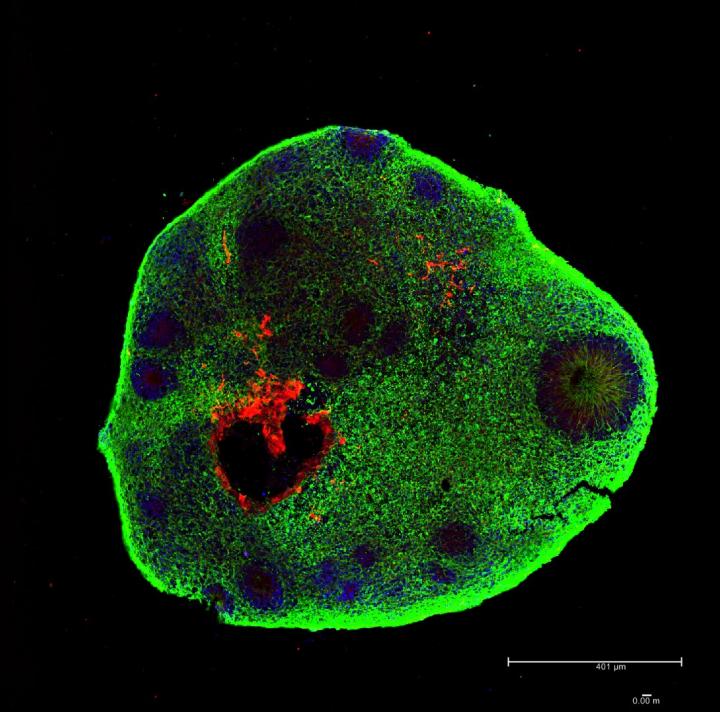
Brazilian scientists produce brain organoids with primitive eyes using computational fluid dynamics
IMAGE

Credit: D’Or Institute for Research and Education.

Scientists improved the initial steps of a standard protocol and produced organoids displaying regionalized brain structures, including retinal pigmented cells. The announcement was published today in BMC Developmental Biology by the D’Or Institute for Research and Education’s team.

Human brain organoids are aggregates formed by nervous cells obtained from cell reprogramming. Within this technique, cells extracted from skin or urine of volunteers are transformed into stem cells and then into neurons and other nervous cell types. They are cultivated for weeks, until they start forming agglomerates that resemble an embryonic brain.

For the past few years, scientists are trying to perfect this model in order to create organoids increasingly complex and similar to those on later stages of development.

Since 2016, in partnership with the Federal University of Rio de Janeiro (UFRJ), scientists from the D’Or Institute have cultivated human brain organoids to study neurological diseases and the effects of new drugs on the nervous system.

They put nerve cells in a nutrient-rich liquid, similar to the development environment of the human embryo. From there, those mini-brains develop in a self-regulated process. In other words, all one must do is make sure they have the right environment to develop.

Recently, the team lead by Stevens Rehen has been able to refine the environment where the cells are maintained. “These organoids are a demonstration that it is possible to repeat, in the laboratory, increasingly advanced gradients of human brain development,” says Rehen. “We developed a cost-effective suspension method on orbital steering plates as an alternative for the cultivation of brain organoids with retinal pigmented cells”.

###

Media Contact
Daniel Rinaldi
[email protected]

Related Journal Article

http://dx.doi.org/10.1186/s12861-019-0183-y

Tags: BiologyBiomechanics/BiophysicsBiomedical/Environmental/Chemical EngineeringCell BiologyDevelopmental/Reproductive Biologyneurobiology
Share12Tweet8Share2ShareShareShare2

Related Posts

Evaluating Digoxin Use in Patients with Symptomatic Rheumatic Heart Disease

May 10, 2026

Evaluating the Effectiveness and Safety of Digitalis Glycosides in Treating Heart Failure

May 10, 2026

Urdu Fall Risk Questionnaire Adapted for Elderly

May 10, 2026

Key Pharmacological Markers for HIV Prevention in MSM

May 10, 2026
Please login to join discussion

POPULAR NEWS

  • Research Indicates Potential Connection Between Prenatal Medication Exposure and Elevated Autism Risk

    840 shares
    Share 336 Tweet 210
  • New Study Reveals Plants Can Detect the Sound of Rain

    727 shares
    Share 290 Tweet 181
  • Scientists Investigate Possible Connection Between COVID-19 and Increased Lung Cancer Risk

    68 shares
    Share 27 Tweet 17
  • Salmonella Haem Blocks Macrophages, Boosts Infection

    61 shares
    Share 24 Tweet 15

About

We bring you the latest biotechnology news from best research centers and universities around the world. Check our website.

Follow us

Recent News

Evaluating Digoxin Use in Patients with Symptomatic Rheumatic Heart Disease

Evaluating the Effectiveness and Safety of Digitalis Glycosides in Treating Heart Failure

Urdu Fall Risk Questionnaire Adapted for Elderly

Subscribe to Blog via Email

Success! An email was just sent to confirm your subscription. Please find the email now and click 'Confirm' to start subscribing.

Join 82 other subscribers
  • Contact Us

Bioengineer.org © Copyright 2023 All Rights Reserved.

Welcome Back!

Login to your account below

Forgotten Password?

Retrieve your password

Please enter your username or email address to reset your password.

Log In
No Result
View All Result
  • Homepages
    • Home Page 1
    • Home Page 2
  • News
  • National
  • Business
  • Health
  • Lifestyle
  • Science

Bioengineer.org © Copyright 2023 All Rights Reserved.