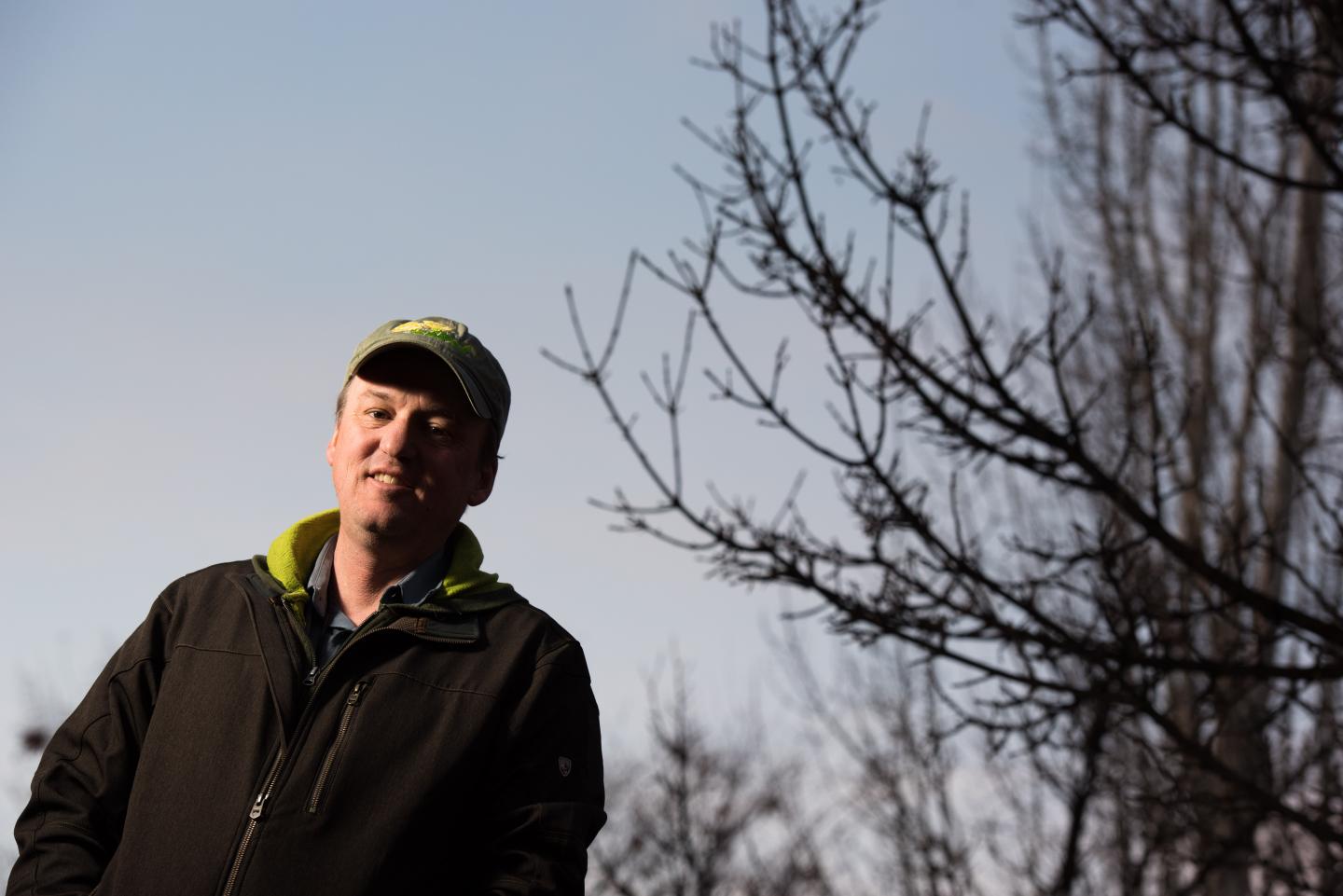
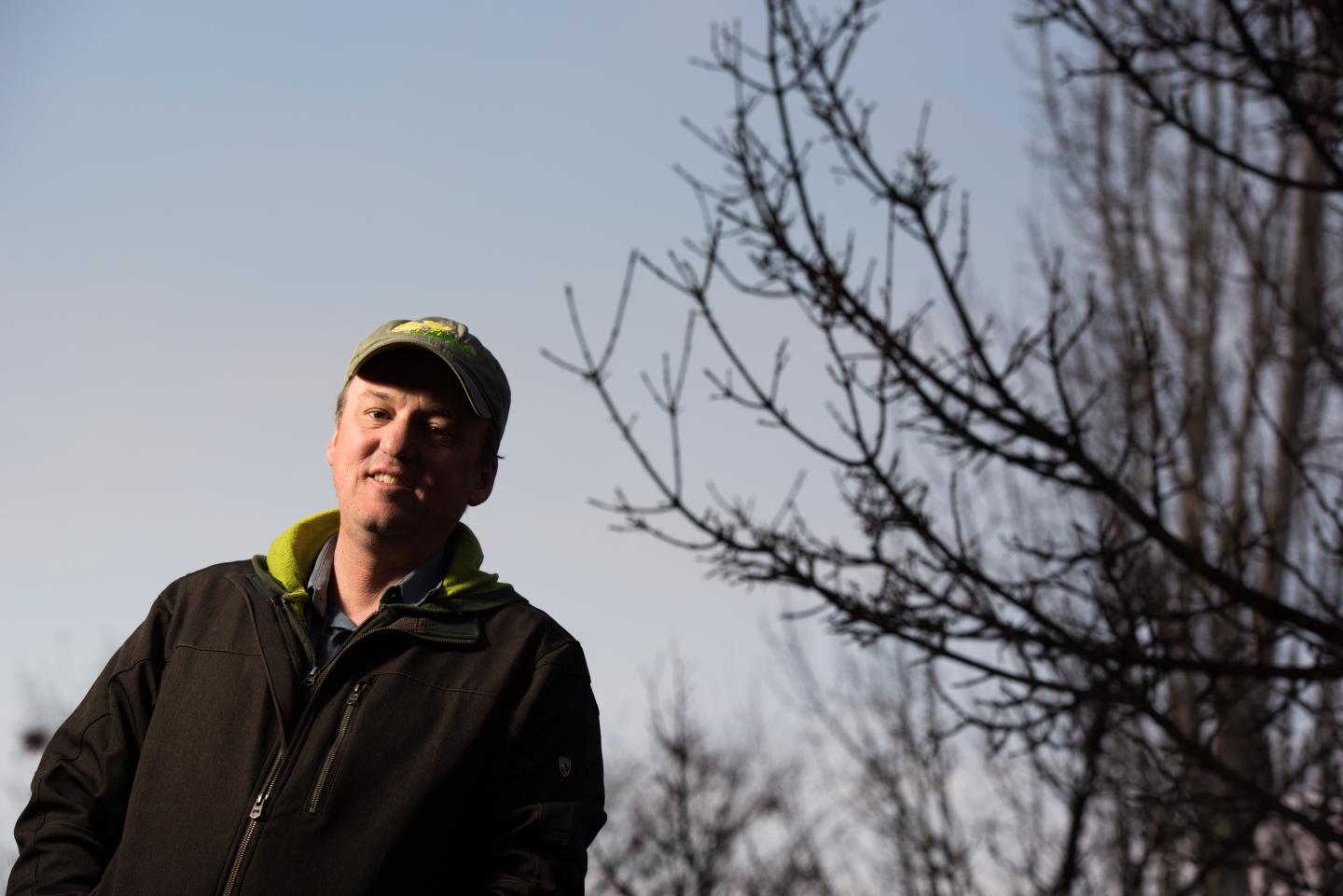
Credit: Photo courtesy of Andrea Starr/PNNL
A mix of factors is contributing to an increasing mortality rate of trees in the moist tropics, where trees in some areas are dying at about twice the rate that they were 35 years ago, according to a far-reaching study examining tree health in the tropical zone that spans South America to Africa to Southeast Asia.
And scientists believe the trend will continue.
"No matter how you look at it, trees in the moist tropics will likely die at elevated rates through the end of this century relative to their mortality rates in the past," said Nate McDowell of the Department of Energy's Pacific Northwest National Laboratory, who is lead author of the study published Feb. 16 in the journal New Phytologist.
"There is a host of factors that appear to be driving mortality, and the likelihood of those factors occurring is increasing," added McDowell, who headed the team of scientists from more than two dozen institutions across the globe who were involved in the study.
McDowell and colleagues analyzed several factors affecting trees in the moist tropics, including rising temperatures and carbon dioxide levels, drought, fires, more potent storms, insect infestation, and the abundance of woody vines known as lianas. Drawing on a host of studies, McDowell's team compiled evidence that showed that nearly all of these drivers are increasing with the rising rate of mortality of trees in the moist tropics.
Though confronted by a variety of threats, tree mortality in the tropics often boils down to two phenomena: "Carbon starvation" due to lack of food and "hydraulic failure" due to a lack of water.
Since the observed global temperature increase is correlated with increasing levels of carbon dioxide – a food source for trees – it might seem that trees would flourish. But ironically, the higher temperatures choke off trees' ability to absorb CO2, in addition to intensifying their loss of water.
The reason goes back to the tiny pores, called stomata, which exist on leaves and needles and are the channels through which trees absorb CO2 and cool off through evaporation. When conditions become hot and dry, trees conserve moisture, and they do so by closing their stomata. That closure, though, means the trees can't absorb carbon dioxide. And if stomata remain closed for a long enough time, it can result in carbon starvation.
"It's like going to an all-you-can-eat buffet with duct tape over your mouth," said McDowell. "There may be plenty of food, but it doesn't matter how much food is on the table if you can't eat."
Even with the closure of their stomata, plants still lose water when it's hot, and hydraulic failure – a lack of water a tree needs to survive – poses at least as much a threat as carbon starvation.
The lack of water can happen in many ways. Rising temperatures pull more moisture out of trees due to higher evaporation rates. In addition, increased fires not only kill trees directly, but the heat generated literally sucks the moisture out of nearby trees that have survived. Finally, in a world of rising temperatures, lianas often out-compete tropical trees for resources like light, water, and nutrients. The vines can break tree limbs, creating fresh wounds for attack by pathogens or insects.
The trees that are able to cope in a warmer world by absorbing more carbon dioxide are at higher risk of death in multiple ways. Bigger trees are more vulnerable to lightning strikes and damage from high winds, and they must consume more water than their smaller counterparts. All that places them at greater risk from stressors like wind, lightning, and lack of water.
Trees in the moist tropics play an especially important role in Earth's ability to regulate carbon dioxide, absorbing much more carbon proportionally than all the other forests combined. Their deaths reduce the planet's ability to cope with the high levels of CO2 that caused them to die to begin with, said McDowell, whose study was funded by DOE's Office of Science.
"Trees have a great ability to survive, but there is only so much they can withstand – the question we now face is identifying those thresholds so we can predict risk to tropical forests," added McDowell.
###
Media Contact
Tom Rickey
[email protected]
@PNNLab
http://www.pnnl.gov/news
Related Journal Article
http://dx.doi.org/10.1111/nph.15027